Magnetic drive pumps have long been valued for one defining advantage: zero leakage. By eliminating mechanical seals, mag-drive pumps remove one of the most common failure points in fluid handling systems. Yet beneath this reliability lies a lesser-known vulnerability, one that can turn a robust pump into a costly write-off in minutes.
Demagnetisation remains the number one cause of catastrophic magnetic drive pump failure. As industrial environments become more demanding and uptime expectations continue to rise, hardware alone is no longer enough. Smart monitoring and predictive diagnostics are now essential to protecting these critical assets.
For operators running high-value processes, the evolution from passive equipment to self-protecting systems is no longer optional.
The Core Threat: Demagnetisation
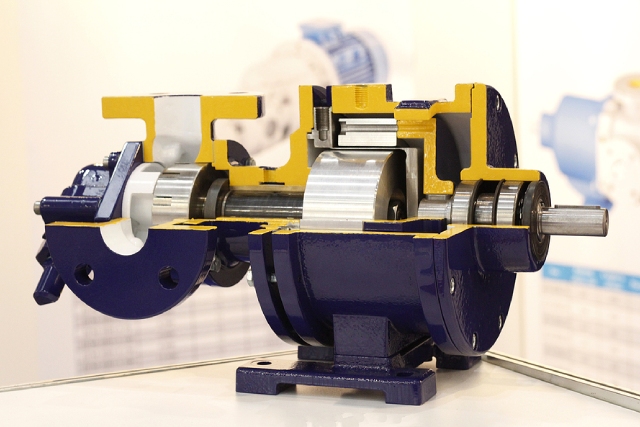
Magnetic drive pumps achieve their leak-proof performance by using magnetic coupling to transmit torque from the motor to the impeller. With no direct mechanical connection and no shaft seal, the pump is inherently safer for hazardous or corrosive fluids.
However, this design comes with a trade-off: extreme sensitivity to heat.
Unlike sealed pumps that may tolerate short periods of abnormal operation, mag-drive pumps rely on the pumped fluid itself to provide cooling, particularly around the containment shell that separates the inner and outer magnet assemblies.
When that cooling is compromised, damage escalates rapidly.
How Dry-Running Triggers A Vicious Cycle
Dry-running is the most dangerous operating condition for a magnetic drive pump. Without fluid to absorb and carry away heat, eddy currents generated within the containment shell cause temperatures to spike almost instantaneously.
This creates a vicious cycle:
- Rising temperatures increase magnetic losses
- Increased losses generate even more heat
- Heat continues to build with no effective dissipation
Once the temperature exceeds the Curie Point of the magnets, especially in Neodymium-based assemblies, the damage becomes permanent. The magnets lose their ability to maintain magnetic alignment, resulting in decoupling or total torque failure.
At this stage, restarting the pump does not solve the problem. The magnetic force is simply gone.
The True Cost Of Demagnetisation
Demagnetisation is rarely a minor repair.
In most cases, the inner and outer magnet assemblies must be replaced entirely. Depending on pump size and material specifications, this can cost between 50 and 70 percent of a new pump. Add unplanned downtime, process disruption, and emergency labour, and the financial impact escalates further.
For facilities operating multiple pumps, particularly those managing a pump in Singapore across distributed industrial sites, the cumulative risk is significant.
Preventing demagnetisation, therefore, is not just a maintenance concern. It is a business-critical priority.
Smart Mag-Drives As Self-Protecting Assets
The next evolution of magnetic drive pumps lies in intelligence. A Smart Mag-Drive is no longer just a piece of hardware; it is a self-aware, self-protecting asset capable of responding faster than human intervention ever could.
By integrating Industrial Internet of Things (IoT) sensors directly into pump systems, Winston Engineering creates a digital shield around the most vulnerable components.
This approach bridges advanced pump engineering with real-time diagnostics, ensuring protection against dry-running, cavitation, and excessive torque before damage occurs.
Power Load Monitoring For Instant Detection
One of the earliest indicators of dry-running or cavitation is a sudden change in motor load.
Power load monitors continuously track motor behaviour in real time. When fluid flow is lost or compromised, the motor experiences an immediate drop in resistance. Smart monitoring systems detect this deviation within milliseconds and trigger an automatic pump shutdown.
This response time is critical. By tripping the pump faster than any operator could react, heat buildup is prevented before it reaches destructive levels.
Temperature Monitoring At The Containment Shell
The containment shell is the thermal heart of a magnetic drive pump and the most critical point to monitor.
Smart Mag-Drive systems use precision sensors such as platinum resistance temperature detectors (PT100) mounted directly on the shell. These sensors provide continuous, high-accuracy temperature readings.
If temperatures begin to rise beyond safe thresholds, automated alerts are sent directly to maintenance teams via mobile devices or control systems. This allows corrective action long before the magnets approach their Curie Point.
Rather than discovering a failure after the fact, teams gain early visibility into abnormal conditions as they develop.
Vibration Analysis And Decoupling Detection
Excessive torque, process upsets, or abnormal operating conditions can cause partial decoupling; where magnets begin to slip rather than rotate synchronously.
Vibration analysis sensors identify these subtle changes long before mechanical damage occurs. Patterns associated with misalignment, bearing wear, or magnetic slippage are detected early, allowing corrective measures such as flow adjustment or controlled shutdowns.
This level of insight transforms maintenance from reactive to predictive.
Predictive Maintenance Powered By WE Service
Sensors alone do not deliver value without intelligence behind the data. This is where Winston Engineering’s WE Service becomes the brain of the Smart Mag-Drive ecosystem.
Rather than relying on fixed inspection intervals, WE Service uses real operating data to determine actual equipment condition.
Condition-Based Over Calendar-Based Maintenance
Traditional maintenance schedules often require pumps to be opened every six months, regardless of whether wear is present. This approach increases labour costs and introduces unnecessary risk during reassembly.
With condition-based maintenance, service interventions occur only when data indicates they are needed. Bearings, magnets, and internal components are serviced at the optimal moment – neither too early nor too late.
This results in longer component life, reduced maintenance spend, and improved reliability.
Minimising Downtime Through Early Intervention
Perhaps the greatest benefit of smart monitoring is its ability to detect incipient faults – small issues that have not yet escalated into failures.
By identifying abnormal trends early, maintenance can be scheduled as planned interventions rather than emergency shutdowns. Minor adjustments replace catastrophic overhauls, and production continuity is preserved.
The result is measurable reductions in downtime, spare parts consumption, and lifecycle costs.
Building Resilience Into Critical Pump Systems
Smart Mag-Drives represent a shift in how industrial assets are designed, operated, and maintained. They move beyond passive reliability and into active protection, where the pump itself participates in safeguarding its performance.
For industries where safety, uptime, and cost control are non-negotiable, this integration of hardware and digital intelligence defines the future of pumping systems.
Looking Ahead With Winston Engineering
As industrial environments continue to adopt Industry 4.0 principles, the convergence of smart hardware and predictive diagnostics will only accelerate. Magnetic drive pumps, once seen as purely mechanical solutions, are now becoming intelligent assets capable of defending themselves against their greatest threat.
To learn more about Smart Mag-Drive solutions, IoT-enabled monitoring, and predictive maintenance strategies, explore the latest insights and expertise from Winston Engineering.
By transforming pumps into data-driven, self-protecting systems, Winston Engineering is helping operators move from failure prevention to operational confidence.