Running a large factory in Singapore is no small feat. Between managing operations, keeping your workforce productive, and staying on top of costs, energy efficiency can sometimes fall to the bottom of the to-do list. But with Singapore’s push towards sustainability and tighter regulations around industrial energy use, mandatory energy audits are becoming a reality that factory owners and facility managers simply cannot ignore.
If you have been hearing the term thrown around but are not quite sure what it means for your business, this guide is here to break it all down in plain English.
Why Energy Audits Are Now on the Radar
Singapore has long been serious about its environmental targets. The country’s Green Plan 2030 outlines ambitious goals around carbon emissions, energy efficiency, and sustainable industry practices. Large factories, being some of the biggest energy consumers in the country, are naturally in the spotlight.
An energy audit is essentially a thorough assessment of how your facility uses energy. It identifies where energy is being wasted, where costs can be cut, and where improvements can be made. For large industrial operations, this is not just a nice-to-have exercise. It is fast becoming a regulatory requirement.
Understanding what matters for energy audits in 2026 means staying ahead of compliance deadlines and not being caught off guard when inspectors or assessors come knocking.
What Does a Mandatory Energy Audit Actually Involve?
The scope of an energy audit can vary depending on the size and complexity of your facility, but in general, you can expect the process to cover:
- A review of your overall energy consumption patterns
- An assessment of major energy-consuming systems such as HVAC, lighting, and production machinery
- A detailed look at your compressed air system, which is one of the most significant energy costs in manufacturing
- Identification of inefficiencies and recommendations for improvement
For many factories, the compressed air system alone can account for a substantial portion of the total energy bill. Leaks, pressure drops, and inefficient compressors all add up. This is why auditing this system specifically is so valuable.
The Role of Data Logging in a Proper Energy Audit
One of the most effective ways to conduct a meaningful energy audit is through data logging. Rather than relying on estimates or spot checks, data logging gives you a continuous, accurate picture of how energy is being consumed across your facility.
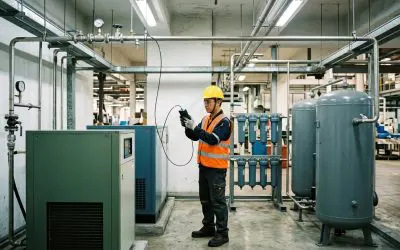
Winston Engineering uses the iiTrak data logger, a practical and reliable tool that takes the guesswork out of energy assessments. The process is refreshingly straightforward and follows three clear steps. First, the data logger is set up on your compressed air system to collect readings over a period of time. Second, the collected data is analysed to identify patterns, inefficiencies, and areas of waste. Third, the findings are used to pinpoint specific opportunities for cost reduction and energy savings.
This is not a one-size-fits-all approach. The iiTrak data logger captures real-world performance data from your actual installation, which means the recommendations that come out of the audit are relevant and actionable for your specific situation. There is no vague advice here, just clear insights backed by hard numbers.
What Happens if You Do Not Comply?
Skipping a mandatory energy audit is not worth the risk. In Singapore, non-compliance with energy-related regulations can result in financial penalties, and more importantly, it puts your business behind the curve in an environment where efficiency and sustainability are increasingly tied to competitive advantage.
Beyond the regulatory angle, the financial case for audits is compelling on its own. Many factories that undergo a proper energy audit are surprised to find that their compressed air systems are leaking energy in ways they had never noticed. Even a small reduction in energy waste can translate to meaningful savings over the course of a year, especially with Singapore’s energy costs.
Common Misconceptions About Energy Audits
A lot of factory managers assume that energy audits are disruptive, expensive, or only relevant for older facilities. None of that is really true.
Modern data logging tools make audits far less intrusive than they used to be. The iiTrak device, for instance, can be set up without shutting down operations, so your production line keeps running while the assessment is underway. And newer facilities are not off the hook either. Even recently built factories can have inefficiencies in system design or operational habits that quietly drive up energy costs.
The audit is not about pointing fingers. It is about giving you the information you need to make smarter decisions.
Preparing Your Factory for an Energy Audit
If a mandatory audit is on the horizon, a bit of preparation goes a long way. Start by gathering your recent energy bills and any existing data on your compressed air system. Having a clear picture of your baseline consumption makes the audit process smoother and ensures the data logger results are interpreted in the right context.
It also helps to speak with your team on the floor. The people who operate the equipment every day often have insights about inefficiencies that do not show up on paper. Combine that knowledge with solid data from a logger like iiTrak, and you have a very strong foundation for meaningful improvements.
Taking the Next Step
Energy audits do not have to be stressful. With the right partner and the right tools, the process is straightforward, informative, and genuinely useful for your bottom line.
If your factory is approaching an audit deadline or you simply want to get ahead of the curve, Winston Engineering can help. Our data logging energy audit service uses the iiTrak system to give you clear, reliable insights into your compressed air system and where your energy dollars are going.

Author Bio
Team Winston Engineering

Team Winston Engineering is made up of pump specialists, engineers, and industry experts with over 40 years of hands-on experience in fluid management solutions. Founded in Singapore in 1977, Winston Engineering has grown into Southeast Asia's leading pump specialist, serving industries ranging from oil and gas to water treatment, HVAC, and power generation. With regional offices across Singapore, Malaysia, Indonesia, and China, the team brings deep technical expertise and a customer-first approach to every project, backed by the region's only state-of-the-art pump test bay.
See all posts by Team Winston Engineering »