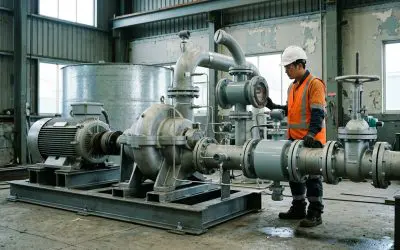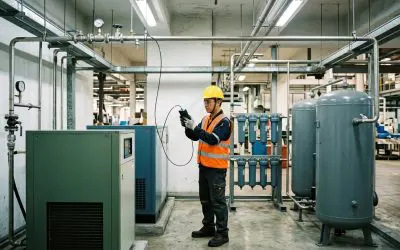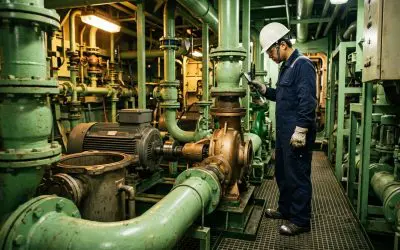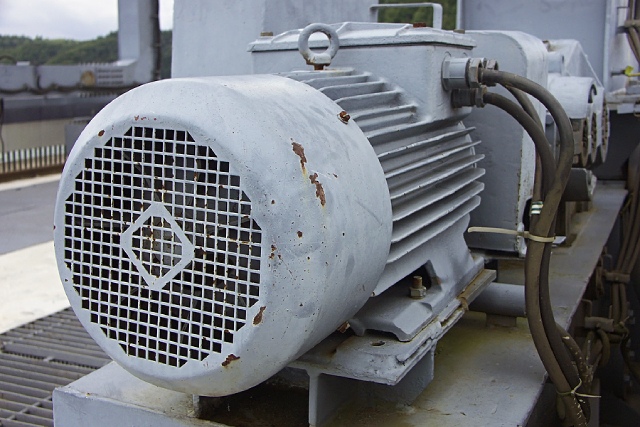
Walk through any factory floor in Singapore and you’ll hear it before you see it: the steady hum of electric motors driving pumps, fans, compressors and conveyors around the clock. Most plant managers rarely think about these motors until something breaks down or the electricity bill arrives looking heavier than usual. Yet the efficiency class stamped quietly on that motor’s nameplate shapes both outcomes more than most people realise.
For years, IE3 has been the standard fitted to most new industrial motors sold across Singapore and much of the world. IE4 motors are now becoming more common on the market, promising lower energy losses and stronger long-term savings. The question facing many buyers and facility managers is straightforward: does paying more upfront for IE4 actually pay off, or does IE3 remain the smarter choice for most applications?
What IE3 and IE4 Actually Mean
IE3 and IE4 are efficiency classes defined under the international standard IEC 60034-30-1. They work as a grading scale for how much electrical energy a motor converts into useful mechanical work, and how much gets lost as heat along the way.
IE3, known as Premium Efficiency, has been the baseline requirement for many new motors sold across numerous markets for well over a decade. IE4, or Super Premium Efficiency, sits a step above that baseline. The exact efficiency percentage varies depending on motor size and pole configuration, but as a rough guide, IE4 motors typically reduce energy losses by a further 15 to 20 percent compared with an equivalent IE3 model.
Here’s a simplified comparison across common motor sizes, based on a standard 4-pole, 50Hz configuration:
| Motor Output | IE3 Efficiency | IE4 Efficiency |
| 7.5 kW | 90.4% | 92.0% |
| 22 kW | 92.6% | 94.0% |
| 55 kW | 94.3% | 95.4% |
| 110 kW | 95.1% | 96.2% |
These figures look modest on paper, but on a motor running continuously, even a single percentage point of improvement adds up to a meaningful saving over a full year.
Why the Gap Between IE3 and IE4 Adds Up
Every percentage point a motor loses to inefficiency turns into heat and noise, and eventually shows up as cost on the electricity bill. Singapore’s industrial tariffs make this especially relevant, given how many plants run their equipment for long shifts or around the clock. Some larger facilities, particularly those subject to mandatory energy audits, are paying closer attention to every percentage point of efficiency they can capture.
Take a 55kW motor running 16 hours a day as an example. Switching from IE3 to IE4 could trim annual energy consumption by several thousand kilowatt-hours, depending on the load and duty cycle involved. At a typical industrial tariff, that difference could translate into several hundred dollars in savings each year for a single motor, and considerably more once a facility’s full motor fleet is taken into account. Multiply that across a site running dozens of motors on pumps and compressors, and the cumulative saving starts to look significant enough to influence a procurement decision.
How to Check Your Motor’s Current Class
Most motors carry their efficiency class right on the nameplate, usually printed alongside the power rating, voltage and frequency. Look for a marking such as IE2, IE3 or IE4 stamped near the serial number. If a motor was installed years ago and the nameplate doesn’t mention an IE class at all, there’s a good chance it predates current efficiency standards, which usually means it’s running well below today’s IE3 baseline.
For anyone unsure what’s currently installed across a site, a quick walk-through with a torch and a notepad is often enough to flag motors due for review. Older units approaching the end of their working life are usually the best candidates for an upgrade, since the cost of a new motor is already on the table regardless of which efficiency rating gets chosen.
When IE3 Still Makes Sense
IE4 motors typically cost more upfront and aren’t always readily available in every size or mounting configuration. For equipment that runs only occasionally, such as a standby pump or a seasonal ventilation fan, the extra investment in IE4 might take years to pay back through energy savings alone.
IE3 remains a sound, cost-effective option for:
- Standby or backup equipment with low annual run hours
- Older systems where a full motor replacement isn’t due for several years
- Budget-conscious projects where upfront capital costs outweigh long-term running costs
When IE4 Earns Its Keep
For motors running near continuously, particularly in demanding applications such as pumping systems, compressors or large fans, IE4 tends to pay for itself sooner than expected. Long operating hours combined with high power draw mean small efficiency gains compound quickly.
IE4 becomes the stronger option when:
- The motor operates more than 4,000 hours a year
- Energy costs make up a large share of overall operating expenses
- The business is working towards sustainability targets or energy reporting commitments
- A new installation or replacement is already planned, since retrofitting later usually costs more than specifying correctly the first time
Beyond Efficiency Class: Other Factors to Weigh
Efficiency class alone won’t tell the whole story. Motor sizing and load profile both shape real-world energy use, as does how well a pump or compressor system is matched to its motor in the first place. An oversized IE4 motor running well below its rated load can still waste more energy than a properly sized IE3 motor doing the same job.
Pump cavitation and mismatched impeller sizing can force a motor to work harder than it should. Worn seals cause a similar problem, quietly eating into whatever efficiency gain an upgraded motor class promised on paper. Choosing the right efficiency class is only part of the equation; the surrounding system needs to support it.
Compatibility with existing infrastructure deserves attention too. Some IE4 designs, particularly permanent magnet synchronous motors, only reach their rated efficiency when paired with a matching variable speed drive, which adds to the installation cost beyond the motor itself. A straightforward induction motor swap is rarely as simple as ticking a higher efficiency box on a spec sheet.
Making the Right Call
There’s no single answer that fits every application. A standby fan ticking over a few hours a month doesn’t need the same motor class as a compressor running three shifts a day. The right call comes from looking at run hours, load, energy costs and future plans together before settling on IE3 or IE4.
If you’re weighing up motor efficiency classes for a new installation or an upcoming pump overhaul, the team at Winston Engineering can help assess your equipment and recommend the right specification for your operation. Get in touch with Winston Engineering today to discuss your motor and pump requirements.

Author Bio
Team Winston Engineering

Team Winston Engineering is made up of pump specialists, engineers, and industry experts with over 40 years of hands-on experience in fluid management solutions. Founded in Singapore in 1977, Winston Engineering has grown into Southeast Asia's leading pump specialist, serving industries ranging from oil and gas to water treatment, HVAC, and power generation. With regional offices across Singapore, Malaysia, Indonesia, and China, the team brings deep technical expertise and a customer-first approach to every project, backed by the region's only state-of-the-art pump test bay.
See all posts by Team Winston Engineering »