The oil and gas industry not only plays a vital role in meeting global energy demands, but also serves as the backbone of complex production processes. However, managing these operations requires reliable and efficient equipment, which means pump selection cannot be done carelessly.
Although pumps may seem simple, choosing the right pump for oil production greatly affects operational results. That is why the role of specialized pumps in oil processing must be carefully considered.
To help you gain a comprehensive understanding, Winston Indonesia has prepared detailed information about pumps used in the oil industry. From centrifugal pumps to reciprocating plunger pumps, this guide provides the insights needed to make the right decision when selecting equipment that suits the specific requirements of the oil and gas industry.
Overview of Oil Pumps
In the oil and gas industry, pumps play an irreplaceable role. They function as the driving force behind the extraction, transportation, and processing of crude oil.
Pumps can be considered the heart of the system, ensuring the smooth flow of oil from wells or reservoirs to the next stages of production. Their importance lies not only in efficiently transferring oil, but also in their ability to overcome various technical challenges and harsh environmental conditions.
Oil pumps are generally designed to handle fluids with varying viscosities, ranging from light oils to highly viscous fluids. One of the most commonly used types is the centrifugal pump, which operates using centrifugal force to move oil through piping systems.
However, centrifugal pumps are not the only option. Several other pump types also play important roles in the industry. Selecting the right pump depends heavily on field conditions, the type of oil being produced, and other technical requirements.
Therefore, understanding the characteristics of each pump type and its ability to adapt to production requirements is essential to ensure efficient and reliable operations in the petroleum industry.
Types of Pumps Used in Oil Production
Various pump types are used in the oil and gas industry to ensure smooth extraction and processing operations. Each pump has unique characteristics designed to meet specific production needs.
1. Centrifugal Pump
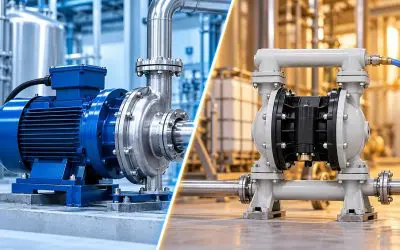
Centrifugal pumps use centrifugal force to move oil through piping systems. Through a rotating impeller, the pump generates centrifugal force that pushes the fluid outward.
These pumps are highly effective for handling large volumes at high flow rates, making them ideal for transferring low-viscosity fluids.
2. Diaphragm Pump
Diaphragm pumps operate using a flexible diaphragm that contracts and expands to move oil.
One major advantage of diaphragm pumps is their ability to handle viscous fluids or liquids containing solid particles. This makes them a reliable solution for harsh operating environments.
3. Progressive Cavity Pump
Progressive cavity pumps (PCP) are designed to transfer fluids with varying viscosity levels.
Their operating principle involves a rotating rotor inside a stator cavity, creating continuous flow and stable pressure. These pumps are effective for handling thicker oils or fluids containing solids.
4. Gear Pump
Gear pumps use gears to move oil and other fluids.
Due to their ability to handle high-viscosity liquids, gear pumps are ideal for transferring various types of oil. Another key advantage is their precise flow control, making them a dependable solution in oil production processes.
5. Reciprocating Plunger Pump
Reciprocating plunger pumps work using the up-and-down motion of a piston to transfer fluid.
These pumps are commonly used in high-pressure applications and are capable of handling oil containing gas. Their main advantage is the ability to generate high pressure, making them ideal for production processes requiring precise performance.
6. Metering Pump
Metering pumps play an important role in ensuring accurate and controlled fluid injection.
In the oil and gas industry, precise measurement is critical. Metering pumps address this need by regulating fluid flow according to operational requirements.
Related Products


The Role of Plunger Pumps and Metering Pumps in Chemical Injection
Plunger pumps and metering pumps should not simply be viewed as pumps for transferring oil. In oil and gas operations, these pump types are more commonly used for chemical injection applications, such as injecting:
- Corrosion inhibitors
- Demulsifiers
- Scale inhibitors
- Biocides
- Other process chemicals
Plunger pumps are particularly suitable for applications requiring high pressure. For example, the Graco Python XL from Winston is designed for chemical injection in low-gas-pressure wells and can operate at pressures up to 12,000 psi.
Metering pumps ensure that the volume of injected chemicals remains accurate and consistent. Pump capacity selection must be adjusted according to:
- Chemical dosage requirements
- Injection point pressure
- Fluid viscosity
- Seal and wetted-part material compatibility
Important Factors in Selecting Pumps for the Oil Industry
Pump selection should not be based solely on pump type. Several important factors must be evaluated beforehand, including:
- Fluid composition, such as oil, water, gas, sand, or sludge ratio
- Fluid viscosity and temperature
- Required flow rate and discharge pressure
- Solid content and abrasion level
- Corrosion risks caused by H₂S, CO₂, salts, or chemicals
- Suction conditions and cavitation potential
- Self-priming or dry-running requirements
- Availability of electricity, compressed air, or other drive systems
- Ease of inspection, maintenance, and spare part availability
Pump Solutions for Oil and Fluid Handling Applications
For transferring oil, fuel, or high-viscosity fluids, gear pumps are often a suitable solution because they can provide stable flow even with thick liquids.
The G Series Rotary Gear Pumps from Winston are specifically designed for oil and fuel transfer applications and can handle a wide viscosity range depending on the application configuration.
For thick, abrasive, or solids-containing fluids, progressive cavity pumps may be considered. The Sydex K Series from Winston is designed to deliver stable, pulse-free flow and is suitable for oily fluids and drilling mud applications in the oil and gas sector.
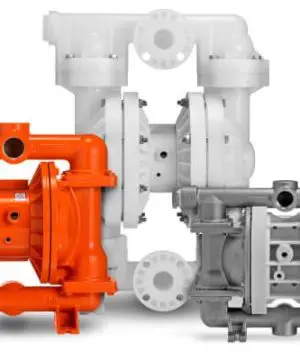
Meanwhile, diaphragm pumps are more suitable for chemical transfer, lubricants, oily water, drainage systems, or applications requiring self-priming capability and dry-running tolerance. Winston’s Wilden Pro-Flo products offer these characteristics for various industrial applications.
Conclusion
Those are several types of pumps commonly used in oil production operations. From the explanation above, it is clear that selecting pumps for oil processing cannot be done arbitrarily.
To ensure you have access to high-quality pumps that meet the specific needs of the oil and gas industry, do not hesitate to visit Winston Indonesia. With a commitment to innovation, quality, and customer satisfaction, Winston Indonesia not only provides top-quality products, but also delivers the right solutions to handle various field challenges.
Choose high-quality pumps from Winston Indonesia to ensure maximum efficiency and long-term reliability in the dynamic oil and gas industry.
Reference Sources
- Pumps Used in Oil and Gas Industry
- Types of Pumps in Oil and Gas Industry | Upstream, Midstream, Downstream
- Pumps Used in the Oil and Gas Industry