In many industrial processes, liquid mixing plays a critical role in producing consistent, high-quality products. Industries such as chemical processing, water treatment, food and beverage manufacturing, pharmaceuticals, and pollution control all rely on efficient mixing to maintain both production efficiency and product quality.
To meet these requirements, industrial agitators are widely used. These mechanical devices are designed to mix liquids, dissolve substances, maintain homogeneous mixtures, and prevent solids from settling at the bottom of tanks.
Industrial mixing involves much more than simply stirring materials inside a tank. Many manufacturing processes require stable, uniform mixtures that consistently meet quality standards. Whether in chemical production, water treatment, food and beverage processing, pharmaceutical manufacturing, or environmental applications, effective mixing is essential. This is why industrial agitators have become indispensable equipment in a wide range of industries.
What Is an Industrial Agitator?
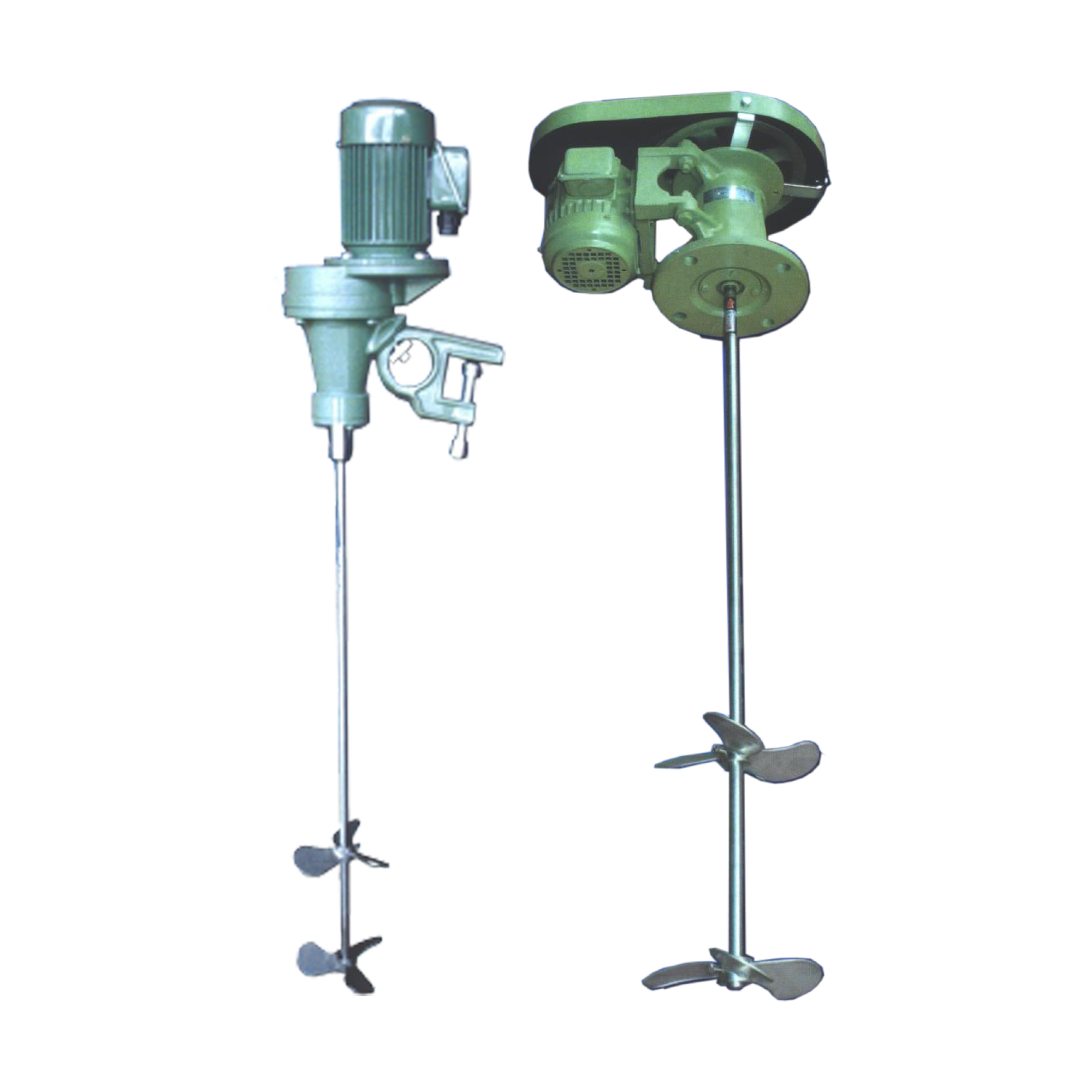
An industrial agitator is a mechanical mixing device used to blend liquids or solutions inside a tank. It typically consists of a drive motor, shaft, propeller, and a mounting system that secures the unit to the tank.
Unlike manual stirring, an industrial agitator operates continuously at a consistent speed and torque. This ensures more uniform mixing, particularly when handling large liquid volumes or applications requiring a high degree of consistency.
Functions of an Industrial Agitator
The primary function of an agitator is to create fluid circulation inside a tank, allowing the contents to mix uniformly. In addition to homogenization, industrial agitators perform several other important functions, including:
- Mixing two or more liquids.
- Dissolving chemicals into a solution.
- Maintaining a homogeneous mixture throughout the process.
- Preventing solid particles from settling at the bottom of the tank.
- Accelerating mixing processes and chemical reactions.
Because of these capabilities, agitators are widely used in water treatment plants, chemical manufacturing, food and beverage production, pharmaceutical processing, and various industrial manufacturing applications.
How an Industrial Agitator Works
The operating principle of an industrial agitator is relatively straightforward. The electric motor rotates the shaft, which in turn drives the propeller inside the tank. As the propeller rotates, it generates fluid flow and turbulence, causing the liquid to circulate and mix evenly throughout the vessel.
Several factors influence the performance of an agitator, including:
- Tank capacity
- Motor power
- Shaft length
- Propeller diameter and design
- Rotational speed
- Fluid characteristics, including viscosity
The better the agitator specifications match the application requirements, the more efficient and effective the mixing process will be.
Choosing the Right Industrial Agitator
1. Match the Agitator to the Tank Capacity
Tank size is one of the most important considerations when selecting an agitator.
For small to medium-sized tanks, the Shinko TG Series offers a practical solution. Its lightweight design, simple C-clamp mounting system, and compact construction make it suitable for tanks with capacities of up to approximately 5,000 liters.
For larger tanks, the Shinko TV Series is designed to handle capacities of up to 12,000 liters. This series features a V-belt speed drive, which helps provide smoother operation while minimizing operating noise.
2. Select the Appropriate Motor Power
Fluids with low viscosity generally require less motor power, while thicker or more viscous liquids demand higher torque to achieve effective mixing.
The Shinko TG Series is available with motor outputs ranging from 0.1 to 0.75 kW, whereas the Shinko TV Series offers motor capacities from 0.2 to 2.2 kW, making it suitable for more demanding industrial applications.
Choosing the correct motor size not only improves mixing performance but also helps optimize energy efficiency.
3. Consider Shaft Length and Propeller Size
The shaft length should be selected according to the height of the mixing tank to ensure that the propeller operates at the optimal position.
Propeller size and design also influence the flow pattern generated inside the tank. Shinko agitators utilize SS304 stainless steel propellers, providing excellent corrosion resistance and making them suitable for a wide variety of industrial applications.
Recommended Agitators for Industrial Applications
When selecting an industrial agitator, purchase decisions should be based not only on price but also on tank capacity, fluid characteristics, mixing requirements, and actual operating conditions.
For light- to medium-duty applications, the Shinko TG Series offers a simple, efficient, and easy-to-install solution.
For larger-capacity tanks or continuous-duty operations, the Shinko TV Series provides enhanced performance, smoother operation, and lower noise levels, making it well suited for demanding industrial environments.
Conclusion
Industrial agitators are essential components in many manufacturing processes because they maintain homogeneous, stable, and efficient liquid mixing. Selecting the appropriate agitator based on tank capacity, fluid characteristics, and operational requirements can significantly improve production efficiency while reducing long-term operating and maintenance costs.
Contact Winston Indonesia
If you are looking for an industrial agitator solution for water treatment, chemical processing, food and beverage production, or other industrial applications, the Winston Indonesia team is ready to assist you.
Contact Winston Indonesia today for professional consultation and expert recommendations to help you select the most suitable agitator for your operational requirements.

Author Bio
Rian

Team PT Winston technically driven member of PT Winston Indonesia with strong practical knowledge of pumps and fluid handling solutions. We work closely with customers to understand their operating requirements, recommend suitable pump solutions, and introduce products that can improve reliability, efficiency, and overall system performance. With a hands-on and solution-oriented approach, We help bridge technical requirements with practical product selection, ensuring customers receive the right pumping solution for their applications.
See all posts by Rian »