Source Image: Pinterest
A centrifugal pump is one of the most commonly used types of pumps across various industries. From water treatment and manufacturing to petrochemical industries, this pump plays an essential role in transferring fluids efficiently. In this article, we will discuss the main components of a centrifugal pump, how it works, and how each part functions together harmoniously to ensure optimal performance.
What Is a Centrifugal Pump?
A centrifugal pump is a dynamic pump that operates using centrifugal force to move fluids from one place to another. Its working principle involves the rotation of an impeller, which converts mechanical energy into kinetic energy and fluid pressure.
This type of pump is widely used in many applications because of its simple design, ease of maintenance, and ability to handle large fluid volumes with high efficiency.
Main Components of EUROFLO Centrifugal Pumps
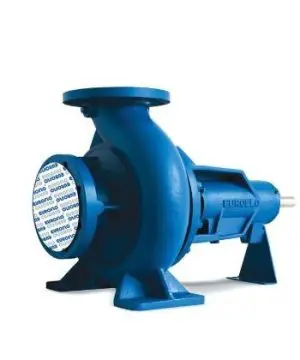
Centrifugal pumps are among the most widely used pumps in various industries, including water treatment, HVAC systems, and the oil and gas sector. EUROFLO, as one of the leading pump manufacturers, offers a wide range of centrifugal pumps, including Bare Shaft Pumps (EU Series).
Understanding the main components of a pump is essential for evaluating its performance. Below are the primary components found in EUROFLO centrifugal pumps and their respective functions:
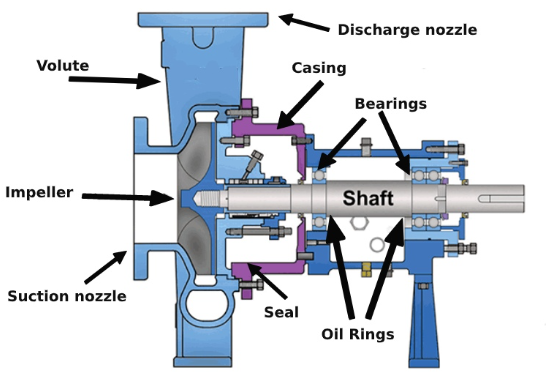
1. Casing (Volute Casing) – Pump Housing
The casing or volute casing functions as the housing that contains the pumped fluid and directs the flow discharged from the impeller. In addition, the casing helps increase fluid pressure before the liquid exits the pump.
The casing material can be made of Cast Iron (standard), Ductile Iron, or Stainless Steel (SS304/SS316), depending on the application requirements.
2. Impeller – Main Fluid Flow Driver
The impeller is the most crucial component in a centrifugal pump. This component is shaped like a rotating disc with blades that provide kinetic energy to the fluid.
Impellers can be made from various materials, such as:
- Brass (standard) → Suitable for general applications
- Cast Iron → Durable and commonly used for industrial applications
- Stainless Steel (SS304/SS316) → Used for corrosive fluids
The impeller type significantly affects the pump’s efficiency and resistance to different types of liquids.
3. Shaft – Impeller Drive Shaft
The shaft functions to transmit rotation from the motor to the impeller, allowing fluid movement within the system.
The shaft is generally made of SS420 (standard), with optional SS304 or SS316 materials available for improved corrosion resistance.
4. Mechanical Seal – Fluid Seal to Prevent Leakage
The mechanical seal is a sealing component designed to prevent liquid leakage from inside the pump through the shaft.
It consists of two rings (one rotating and one stationary) and is commonly made from materials such as Carbon-Ceramic/Viton, Carbon-SiC/Viton, or Carbon-SiC/EPDM to ensure high durability against various fluid types.
5. Gland Packing
In addition to mechanical seals, some EUROFLO pumps also provide Gland Packing as a sealing option.
Gland packing uses braided material to compress the space between the shaft and casing in order to reduce fluid leakage.
6. Bearing – Shaft Support to Reduce Friction
Bearings are essential components that support the shaft and allow stable rotation with minimal friction.
EUROFLO pumps use several types of bearings, including deep groove ball bearings, which provide stability and improve operational efficiency.
7. Wear Ring – Additional Protection for the Casing and Impeller
Wear rings are used to reduce wear on the impeller and casing caused by friction during pump operation.
These components help extend the pump’s service life by reducing internal leakage and improving pump efficiency.
How Does a Centrifugal Pump Work?
1. Suction Stage
Fluid enters through the suction pipe toward the center of the impeller due to pressure differences.
2. Fluid Acceleration Stage
As the impeller rotates, the fluid gains kinetic energy and is pushed outward toward the casing.
3. Energy Conversion Stage
The pump casing converts kinetic energy into pressure energy before the fluid is discharged through the discharge pipe.
Factors Affecting Efficiency
- Impeller rotational speed
- Impeller and casing design
- Condition of suction and discharge pipes
Tips for Choosing the Right Centrifugal Pump
Determine the Required Capacity and Head
- Capacity (GPM/LPM) indicates the amount of fluid pumped per unit of time.
- Head (meters or feet) indicates the maximum height the pump can achieve.
Consider the Impeller Type
- For viscous liquids or fluids containing particles, choose an open impeller.
- For clean liquids and high-pressure applications, use a closed impeller.
Select the Appropriate Material
- Cast Iron: Commonly used for water and non-corrosive fluids
- Stainless Steel: Corrosion-resistant, suitable for chemicals and food industries
- Bronze: Frequently used in marine applications
Check Energy Efficiency
Choose a high-efficiency pump to reduce electricity consumption and operational costs.
Understanding every centrifugal pump component is essential to ensure the system operates optimally. From the impeller, casing, shaft, bearing, to the shaft seal, each component plays a critical role in the overall pump performance.
Common Problems in Centrifugal Pumps and Their Causes
Pump Does Not Deliver Fluid
When the pump runs but produces no flow, possible causes include:
- The pump has not been primed
- Air is trapped in the suction line
- The suction valve is closed
- Incorrect motor rotation direction
- Leakage in the suction pipe
Low Discharge Pressure
Low discharge pressure may occur due to:
- Worn impeller
- Incorrect impeller size
- Low motor speed
- Excessively long piping
- Valve not fully opened
- Obstructions in the piping system
Pump Frequently Loses Prime
The pump may lose prime if:
- There is air leakage in the suction line
- The foot valve is malfunctioning
- The suction pipe is not submerged deeply enough
- The piping system is improperly designed
Mechanical Seal Fails Quickly
Mechanical seals may wear out faster because of:
- Dry running
- Excessive fluid temperature
- Pressure exceeding operating limits
- Abrasive fluids
- Shaft vibration or misalignment
Impeller Becomes Clogged or Wears Quickly
The impeller may clog when the fluid contains solids, fibers, sludge, or particles unsuitable for the pump design.
Meanwhile, abrasive fluids can accelerate wear on the impeller and wear ring.
The Importance of Routine Centrifugal Pump Maintenance
Routine maintenance helps maintain pump performance, reduce downtime risks, and extend component lifespan.
Maintenance schedules should be adjusted according to pump type, operating hours, fluid conditions, and application criticality.
Some routine inspections include:
- Checking suction and discharge pressure
- Monitoring vibration and operating noise
- Inspecting mechanical seals or gland packing for leakage
- Checking bearing conditions and lubrication
- Inspecting mounting bolts, couplings, and motor alignment
- Cleaning strainers or filters in the suction line
- Inspecting the impeller and wear ring during overhauls
- Ensuring the motor operates within normal current and temperature ranges
For systems operating continuously or supporting critical production processes, companies may also implement pump condition monitoring to detect performance changes early.
If you are looking for high-quality centrifugal pumps, Winston Indonesia is one of the leading suppliers offering a wide selection of pumps from renowned brands. From end-suction pumps to multistage pumps, Winston Indonesia provides the best solutions for water, chemical, oil, and manufacturing industries.
For more information about various centrifugal pump options and to receive consultation regarding the right solution for your industrial needs, visit Winston Indonesia and order now.
Related Centrifugal Pump


Author Bio
Rian

Team PT Winston technically driven member of PT Winston Indonesia with strong practical knowledge of pumps and fluid handling solutions. We work closely with customers to understand their operating requirements, recommend suitable pump solutions, and introduce products that can improve reliability, efficiency, and overall system performance. With a hands-on and solution-oriented approach, We help bridge technical requirements with practical product selection, ensuring customers receive the right pumping solution for their applications.
See all posts by Rian »