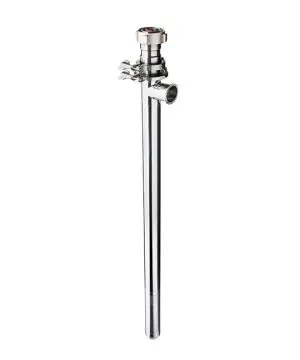
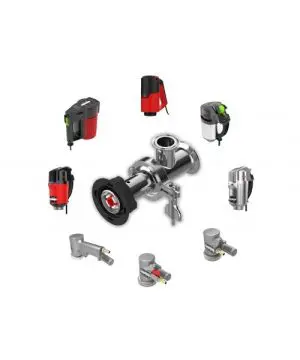
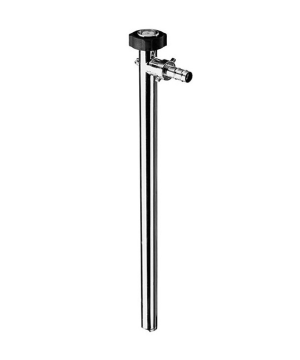
A barrel transfer pump is one of the most commonly used transfer pumps in industrial applications. This type of pump is specifically designed to provide an easy and safe way to transfer or remove nearly all chemicals and liquids from containers such as barrels or drums.
Today, barrel pumps are available in various models, tube lengths, and accessories to meet a wide range of industrial requirements. Some models operate manually using handles, levers, or plungers to simplify the liquid transfer process.
What Is a Barrel Transfer Pump?
A barrel transfer pump is a device used to transfer liquids from a barrel or drum to another container or destination efficiently. Commonly used in the chemical, oil, and pharmaceutical industries, this pump is designed to handle high-viscosity fluids and large volumes with precision.
With its compact design and ability to handle various types of liquids, a barrel transfer pump provides an effective solution for safe and efficient fluid transfer processes.
How a Barrel Transfer Pump Works
Manufacturing and processing facilities often use 100-liter or 200-liter drums to store and transfer chemicals and reagents. However, manually emptying these containers can be difficult and potentially hazardous. This is where barrel pumps provide a safe and efficient solution.
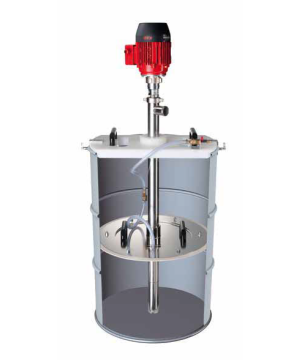
A barrel pump generally consists of a motor section, an immersion tube, and the pump mechanism itself. The motor is mounted at the top of the immersion tube outside the container, while the tube length can vary depending on the depth of the container. The tube material can also be customized based on the type of liquid being pumped.
The pumping mechanism is located at the lower end of the immersion tube. The pump movement is driven by a shaft protected inside a sealed column. The liquid is pumped upward through the sleeve and discharged through the outlet port located at the top of the motor assembly.
For low- to medium-viscosity liquids, centrifugal pumps with single or double impellers are commonly used. The rotating impeller lifts the liquid upward through the tube and out through the discharge port at the top of the immersion tube.
For medium-viscosity fluids, positive displacement pumps are generally more suitable. Meanwhile, for moderate-viscosity applications, PTFE screw-type mechanisms are commonly used. Typical applications include transferring ink, paint, solvents, and food products.
For higher-viscosity liquids, progressive cavity pump designs are more effective. Common applications include transferring oils, resins, solvents, waxes, adhesives, gear lubricants, glycerin, silicone, lotions, polymers, honey, juice concentrates, hair gel, and bath products. FDA-compliant material options are also available for hygienic applications.
Advantages of a Barrel Transfer Pump
One of the main advantages of a barrel transfer pump is its ability to reduce risks associated with manual handling of containers. Risks such as injuries, splashing, chemical leaks, and exposure to toxic fumes can be minimized through the use of these pumps.
Because they are relatively lightweight and portable, barrel transfer pumps simplify and improve the efficiency of transferring liquids between containers.
These pumps are available in various designs to suit different applications. Options include centrifugal pumps with single or double impeller designs for low-viscosity fluids, positive displacement pumps for medium-viscosity liquids and fluids containing small particulates, and progressive cavity designs for handling highly viscous liquids.
Although barrel pumps are generally configured for specific container sizes, the tube length can be adjusted to reach the bottom of the container. Replacement parts are also designed for easy maintenance and quick replacement, making the pumps highly practical for industrial use.
However, it should be noted that these pumps may not be suitable for all types of liquids due to differences in viscosity or chemical properties. Even so, barrel transfer pumps are designed to be compact and lightweight while still providing sufficient throughput capacity and pressure head for most general industrial applications.
In practice, the typical flow rate of these pumps ranges from 20 to 151 liters per minute, with the highest flow rates usually achieved when handling low-viscosity liquids. Electric motors are capable of handling thicker fluids as well, although air-driven systems are often preferred for controlled movement. In these cases, maximum flow rates generally reach around 60 liters per minute.
To provide safer and more efficient drum emptying solutions, Winston Indonesia offers a wide range of specially designed barrel pumps. The company integrates barrel pump solutions from various manufacturers in multiple sizes while also providing customized designs for safer and more efficient liquid transfer applications.