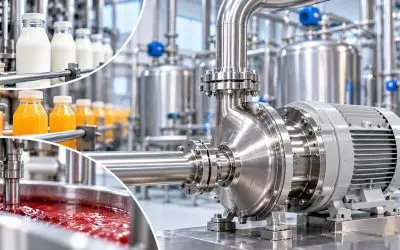
A self-priming pump is an innovation in pump technology designed to solve one of the main challenges in pumping systems: the need for manual priming. Its ability to start operating automatically without human intervention makes this type of pump highly popular, especially in industries that require high efficiency and reliability.
In this article, we will discuss in detail what a self-priming pump is, how it differs from other types of pumps, its advantages and disadvantages, as well as its applications. Let’s explore further.
What Is a Self-Priming Pump?
A self-priming pump is a type of pump that has the ability to remove air from the system and begin operating automatically after being filled with an initial amount of liquid. Unlike conventional pumps that require manual priming, this pump is specifically designed to handle the priming process automatically.
Differences Between Self-Priming Pumps and Other Pump Types
1. Conventional Centrifugal Pump
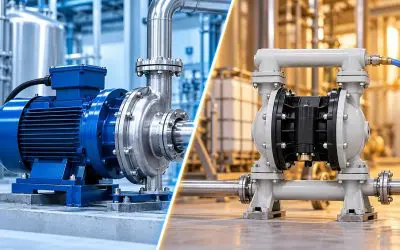
A standard centrifugal pump requires manual priming because it cannot remove air from the suction line by itself. This makes operation more complicated, especially in systems that frequently experience drainage or air entry.
2. Positive Displacement Pump
Positive displacement pumps are generally naturally self-priming because their operating mechanism can generate enough vacuum to draw liquid into the system. However, these pumps have limitations when handling large solid particles.
3. Self-Priming Pump
A self-priming pump combines the advantages of centrifugal pumps and positive displacement pumps. With the ability to handle liquids mixed with air and small particles, this type of pump is highly versatile and suitable for applications requiring high flexibility.
Advantages of Self-Priming Pumps
Easy Installation and Operation
Self-priming pumps do not require manual priming, making installation and daily operation much easier.
Operational Efficiency
These pumps can handle various types of liquids, including sludge, chemical fluids, and water containing suspended particles.
Flexible Design
They are suitable for applications in remote locations or areas with limited access because they do not require additional priming equipment.
Multi-Purpose Capability
Some models are capable of handling corrosive liquids or high-temperature fluids, making them ideal for a wide range of industrial applications.
Minimal Downtime
Their ability to restart automatically after shutdown helps reduce operational downtime.
Disadvantages of Self-Priming Pumps
Initial Liquid Requirement
Although self-priming, these pumps still require an initial amount of liquid to create a vacuum seal. If the initial liquid is lost, the pump will not operate properly.
Lower Efficiency in Certain Conditions
In some cases, their efficiency may be lower compared to standard centrifugal pumps.
Higher Initial Cost
The purchase and installation costs tend to be higher than ordinary pumps due to their more complex design and functionality.
More Complex Maintenance
Some models require special maintenance, especially for components that come into direct contact with corrosive or abrasive fluids.
Applications of Self-Priming Pumps
Chemical Industry
Used for safely transferring corrosive chemicals.
Water Treatment
Widely used in irrigation systems, wastewater treatment, and water distribution systems.
Oil and Gas Industry
Suitable for pumping oily liquids or mixtures of oil and water.
Food Industry
Ideal for transferring food-grade liquids or other liquid materials that require high hygiene standards.
Why Choose Winston Indonesia?
If you are looking for a trusted pump distributor, Winston Indonesia is the right choice. With extensive experience in providing high-quality pumping solutions, Winston Indonesia offers a wide range of pumps tailored to your industrial needs.
Advantages of Winston Indonesia
High-Quality Products
Only supplying pumps from trusted brands that meet international standards.
Excellent Customer Service
Providing reliable technical support and comprehensive after-sales service.
Customized Solutions
Offering consultations to help customers select the most suitable pump for their applications.
Conclusion
A self-priming pump is an intelligent solution for various industrial applications that require high efficiency and reliability. By understanding how it works, along with its advantages and disadvantages, you can choose the right pump for your operational needs.
To get the best products and reliable support, visit Winston Indonesia. With quality products and professional service, Winston Indonesia is ready to help optimize your industrial operations.

Author Bio
Rian

Team PT Winston technically driven member of PT Winston Indonesia with strong practical knowledge of pumps and fluid handling solutions. We work closely with customers to understand their operating requirements, recommend suitable pump solutions, and introduce products that can improve reliability, efficiency, and overall system performance. With a hands-on and solution-oriented approach, We help bridge technical requirements with practical product selection, ensuring customers receive the right pumping solution for their applications.
See all posts by Rian »