(Image showed above are for illustration purpose)
The Problem Wasn’t Just the Noise
When a vacuum pump starts making unusual noise, it can be tempting to treat it as a straightforward mechanical problem.
But what if the noise is actually a warning sign of something happening inside the pump?
In this case, Winston Engineering was called to investigate a vacuum pump that had become noisy and jammed, preventing it from functioning properly. Rather than stopping at the visible symptoms, our technical team investigated the pump both on-site and in our workshop to determine what was happening inside.
What we found pointed to a problem that started outside the pump itself.
The Challenge
The reported symptoms were straightforward:
- The vacuum pump could not function properly.
- The pump was producing abnormal noise.
- The pump had become jammed.
During the initial site inspection, Winston Engineering’s service team confirmed that the pump was noisy and jammed. We recommended bringing the pump back to our workshop for further investigation.
At the same time, our team identified an issue with the service-liquid supply piping: the Y-strainer arrangement was not properly installed.
This raised an important question:
What was causing the internal components to interfere with each other?
Root Cause Analysis
To understand the failure, the pump was dismantled and inspected in our workshop.
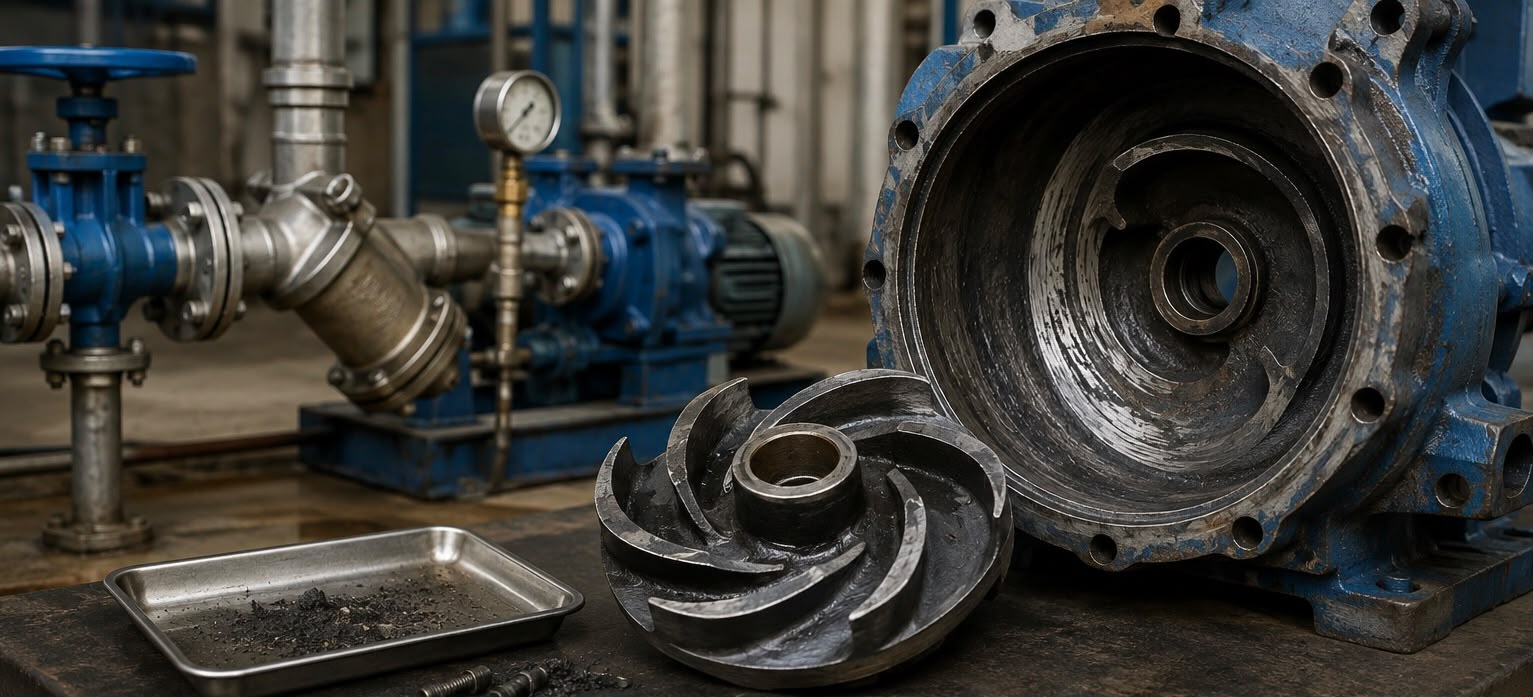
The inspection revealed scratches and damage caused by contact between the impeller and casing. Further technical review indicated that foreign particles had entered the vacuum casing.
As the pump operated, these particles caused the rotating impeller to rub against the casing. Over time, this contact damaged the internal components and eventually caused the pump to become noisy and jammed.
The key finding was therefore not simply “the pump is damaged.”
The bigger issue was how foreign particles had entered the system in the first place.
Winston Engineering’s Solution
Once the likely cause had been identified, our focus shifted from the damaged components to preventing the same situation from happening again.
Winston Engineering recommended several corrective and preventive measures.
1. Check and Clean the Piping
Before restarting the vacuum pump, the connected piping should be properly measured, checked and cleaned to reduce the possibility of foreign particles entering the pump.
2. Check the Service-Liquid System
The quality and condition of the service water should be monitored as part of routine maintenance. The strainer should also be inspected for blockage and maintained properly.
3. Carry Out Pump Testing and Maintenance Checks
We recommended pump testing and commissioning, together with a maintenance audit, to verify the pump and surrounding system conditions before returning to normal operation.
4. Follow Proper Operating Procedures
The user was also advised to follow the manufacturer’s operating manual. Correct operation is an important part of preventing avoidable equipment problems in the future.
The Result
The investigation gave us a clearer understanding of why the vacuum pump had become noisy and jammed.
The problem was traced to foreign particles entering the vacuum casing and causing contact between the impeller and casing, resulting in internal scratching and damage.
More importantly, the recommended actions addressed the system conditions contributing to the problem, rather than focusing solely on the damaged pump components.
This included reviewing piping cleanliness, strainer condition, service-liquid quality, maintenance practices and operating procedures.
The Engineering Lesson
A noisy pump is not always just a noisy pump.
Unusual sounds, jamming or sudden loss of functionality can be early indicators of a deeper issue. In this case, investigating the surrounding system was just as important as inspecting the pump itself.
For Winston Engineering, effective troubleshooting means looking beyond the immediate symptom. By combining on-site inspection, workshop investigation and practical maintenance recommendations, we help customers better understand what is happening with their equipment and how to reduce the risk of similar problems.
The right diagnosis can be the first step towards more reliable pump operation.
Frequently Asked Questions
Abnormal noise can occur when internal components come into unwanted contact. In this case, foreign particles entered the vacuum casing and caused rubbing between the impeller and casing.
A pump may jam when foreign particles or debris interfere with rotating components. In this case, particles inside the casing caused damage to the impeller and housing, resulting in the pump becoming jammed.
A properly installed and maintained strainer helps prevent unwanted particles from entering the pump system. The service report identified improper Y-strainer installation and recommended checking strainer condition and blockage as part of preventive maintenance.
Foreign particles can enter through the connected service-liquid or piping system. Keeping piping clean and ensuring the filtration system is properly installed and maintained can help reduce this risk.
Regular maintenance, clean service liquid, properly maintained strainers, clean piping and following the manufacturer’s operating instructions can help reduce the risk of recurring pump problems.
A vacuum pump should be inspected when abnormal noise, jamming or reduced functionality occurs. Early investigation can help identify internal damage and prevent further deterioration.

Author Bio
Mandy Wong

Mandy is a Marketing Assistant at Winston Engineering and a graduate in Digital Marketing from Taylor's University. Passionate about digital marketing, content creation, and SEO, she creates informative content that makes technical topics easier to understand. With experience in social media and multimedia content, Mandy helps strengthen Winston Engineering's digital presence through clear, engaging, and customer-focused communications.
See all posts by Mandy Wong »