Choosing the right air compressor can feel like a bigger decision than it should be. You know you need compressed air on site, but do you go portable or stationary? The answer depends less on the compressor itself and more on how your worksite actually operates.
Here’s a straightforward breakdown to help you decide.
What’s the Real Difference?
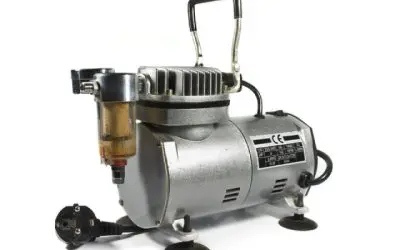
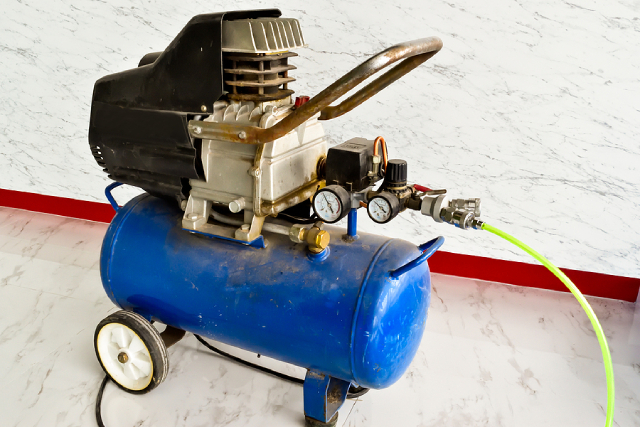
Portable compressors are designed to move. They’re compact, often mounted on wheels or a frame, and can be transported between job sites, floors, or work areas without much hassle. Stationary compressors, on the other hand, are fixed installations, usually bolted to a floor or mounted on a platform, and plumbed into a site’s air distribution system.
The distinction sounds simple, but it has knock-on effects across power output, maintenance requirements, running costs, and how well the compressor actually suits the work you’re doing.
When Portable Makes Sense
Portable compressors shine when your work location changes regularly. Construction crews, field technicians, and contractors who move between sites week to week benefit most from the flexibility a portable unit offers.
They’re also practical when a permanent air supply isn’t feasible. If you’re working on a temporary structure, an outdoor site without fixed infrastructure, or a building mid-renovation, running a hose from a portable compressor is often the most sensible option.
Key advantages of portable compressors:
- Flexibility – Move the unit where you need it, when you need it
- Lower upfront cost – Generally cheaper to purchase than stationary models of equivalent capacity
- Easier setup – No installation, piping, or dedicated space required
- Practical for light-to-moderate air demand – Sufficient for most pneumatic tools, inflation tasks, and spray work
The trade-off is capacity. Portable units typically have smaller tanks and lower CFM (cubic feet per minute) output compared to stationary equivalents. If you’re running multiple pneumatic tools simultaneously or need continuous, high-volume airflow, a portable compressor may struggle to keep up.
When Stationary Is the Better Call
If your worksite is fixed and air demand is consistent, a stationary compressor almost always makes more economic and operational sense over time.
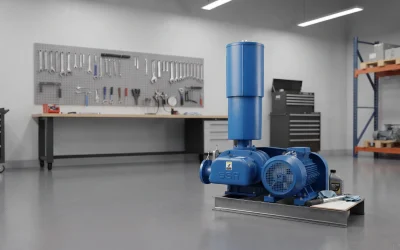
Stationary compressors can be significantly more powerful. They’re built to handle continuous duty cycles, making them suitable for manufacturing environments, workshops, auto repair facilities, and industrial operations where compressed air is needed for hours at a stretch.
They’re also where oil-lubricated compressors tend to feature most prominently. Oil-lubricated compressors use oil to reduce friction between moving components, which keeps operating temperatures lower, extends component life, and makes them better suited to prolonged, heavy-duty use. In a fixed workshop or production setting, this translates to lower maintenance frequency and a longer service life compared to oil-free alternatives.
Stationary compressors also integrate more cleanly into a site’s infrastructure. Properly sized and plumbed, they distribute air through a fixed pipe network, which reduces pressure drop and gives multiple operators access to air simultaneously without running separate units.
Key advantages of stationary compressors:
- Higher output and capacity – Better suited to sustained, heavy-duty demand
- Greater energy efficiency at scale – More cost-effective per unit of compressed air over time
- Compatibility with site air networks – Can supply multiple points of use from a single unit
- Longer service intervals – Particularly with oil-lubricated models designed for continuous operation
The downside is obvious: they don’t move. Installation involves groundwork, pipework, and often electrical supply upgrades. That’s an investment in time and money before you’ve even switched the unit on.
Matching the Compressor to Your Actual Workflow
The most common mistake when selecting a compressor isn’t choosing the wrong brand. It’s choosing the wrong type for the job at hand.
A contractor who buys a large stationary unit for occasional site work will find it awkward, expensive to run, and underutilised. A workshop that buys a portable compressor to handle production-line air demand will find it overworked, underpowered, and constantly cycling on and off, which accelerates wear.
To make the right call, work through a few practical questions:
Where is the work happening? If the answer changes regularly, lean portable. If it’s fixed, lean stationary.
What tools or processes need compressed air? Impact wrenches, spray guns, and pneumatic drills each have different CFM requirements. Add up your total demand and compare it against the compressor’s output.
How long do you need continuous airflow? Short bursts are manageable on most portable units. Continuous operation favours stationary models with larger receivers and higher duty cycles.
What’s your power supply situation? Portable compressors often run on single-phase power or even petrol. Stationary models may require three-phase supply, which not every site has ready to hand.
A Note on Oil-Free vs Oil-Lubricated
You may also encounter oil-free compressors in both portable and stationary form. These use alternative materials or design features to eliminate the need for lubrication oil, which makes them lower-maintenance and better suited to environments where air quality matters, such as food processing, dental practices, or electronics work.
For most industrial and construction applications, though, oil-lubricated models remain the workhouse choice. They handle heat and load more effectively and tend to be more durable under sustained demand.
If you’re unsure which lubrication type suits your setting, the nature of your end use usually gives you the answer.
Cost Considerations
Budget tends to drive a lot of compressor decisions, but upfront price alone is a poor guide.
A portable compressor may cost less to buy, but if it’s running beyond its rated duty cycle to meet your air demand, you’ll face more frequent repairs and a shorter lifespan. A stationary unit costs more to purchase and install, but properly matched to your needs, it can run economically for many years.
Factor in energy costs, maintenance schedules, and downtime risk alongside the purchase price. A compressor that keeps your operation running smoothly is almost always cheaper in the long run than one that keeps breaking down.
Get the Right Compressor for Your Worksite
Portable and stationary compressors each have a clear place. One offers mobility; the other offers power and permanence. The question is which one fits how you actually work, not which one looks like better value on a spec sheet.
If you’re unsure where to start or need help sizing a compressor to your specific requirements, Winston Engineering can help. With extensive experience across industrial and commercial applications, the team can advise on the right unit for your worksite, whether you need something you can move around or a system built to run day in, day out.

Author Bio
Team Winston Engineering

Team Winston Engineering is made up of pump specialists, engineers, and industry experts with over 40 years of hands-on experience in fluid management solutions. Founded in Singapore in 1977, Winston Engineering has grown into Southeast Asia's leading pump specialist, serving industries ranging from oil and gas to water treatment, HVAC, and power generation. With regional offices across Singapore, Malaysia, Indonesia, and China, the team brings deep technical expertise and a customer-first approach to every project, backed by the region's only state-of-the-art pump test bay.
See all posts by Team Winston Engineering »