Vacuum Pump Guide
When Should You Choose an Oil-Lubricated Rotary Vane Vacuum Pump?
A practical guide for buyers in Singapore comparing rotary pump applications, vapour load, vacuum level, and when an oil-lubricated rotary vane vacuum pump makes sense.
Written by: Winston Engineering Marketing Team
Technical review: [Insert real engineer name], [Insert job title], Winston Engineering
How this guide was prepared: This article was prepared using current Winston Engineering product information, manufacturer specifications for oil-lubricated rotary vane vacuum pumps, and practical maintenance considerations commonly reviewed during vacuum pump troubleshooting and service assessments.
If you are searching for a rotary pump in Singapore, the first issue is that the term is often too broad. In many cases, buyers are not looking for just any rotary pump — they are trying to determine whether a rotary vane vacuum pump is the right fit for their process.
That distinction matters because not every vacuum application should use the same pump type. The right choice depends on vacuum level, vapour load, duty cycle, cleanliness requirements, and long-term serviceability.
Looking for a rotary pump in Singapore?
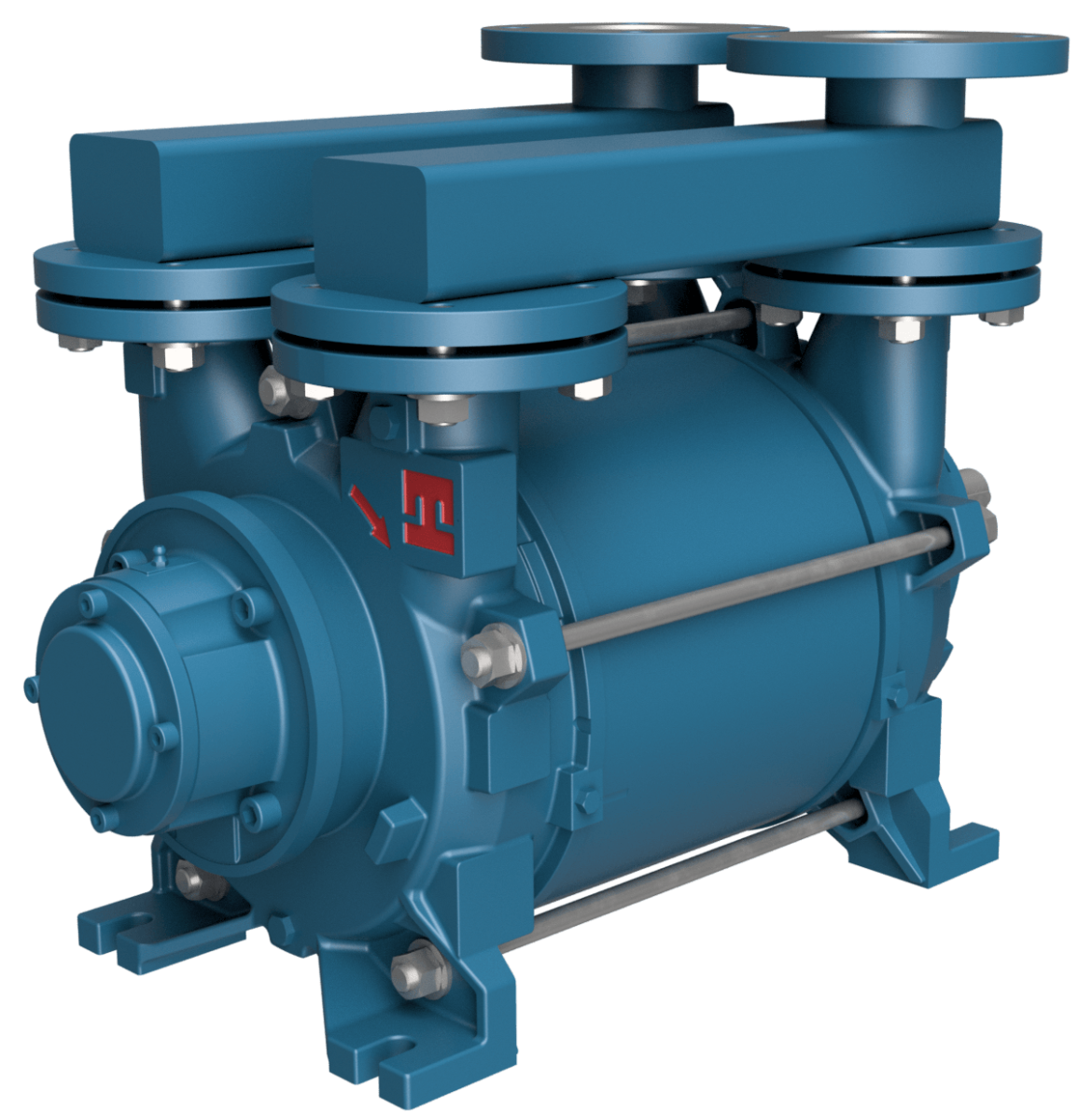
Explore the DVP LC rotary vane vacuum pump range for industrial applications requiring reliable vacuum performance.
View Rotary Pump Product PageWhat is an oil-lubricated rotary vane vacuum pump?
An oil-lubricated rotary vane vacuum pump uses an off-centre rotor and sliding vanes to create expanding and compressing chambers that draw gas into the pump and discharge it through the exhaust.
The oil inside the pump helps perform several functions at once:
- Improves internal sealing
- Reduces leakage
- Supports lower final pressure
- Helps manage friction and heat
This is one reason why oil-lubricated rotary vane technology remains widely used for industrial vacuum duties where stronger vacuum performance is needed.
When is a rotary vane vacuum pump the right choice?
1. When you need better final pressure
If your application requires a finer vacuum or lower final pressure, an oil-lubricated rotary vane vacuum pump is often the better choice compared with dry-running oil-free alternatives.
2. When vapour handling matters
In some industrial processes, the intake flow may contain moisture or vapour. Under the right operating conditions, lubricated rotary vane pumps can be better suited than oil-free designs for these duties.
3. When continuous industrial duty is required
These pumps are commonly selected for demanding day-to-day operation because they are compact, proven, and serviceable in industrial environments.
4. When the application suits the technology
Oil-lubricated rotary vane vacuum pumps are commonly considered for:
- Vacuum packaging
- Food processing
- Dental equipment
- CNC marble and glass machinery
- Precious metal casting
- Printing and paper handling
- Vacuum lifting systems
- Workshop equipment
- Laboratory and filtration duties
When not to choose an oil-lubricated rotary vane pump
Not every vacuum problem should be solved with this technology.
If your process needs clean, low-maintenance, oil-free operation and low-to-medium vacuum is sufficient, an oil-free vane pump may be the better fit.
If the process is genuinely wet, dirty, or chemically aggressive, it is better to compare the broader vacuum pump range than to force-fit a standard rotary vane solution into the wrong application.
Standard LC, WR, or HV?
When comparing models in the DVP LC range, the selection logic should always start with the process.
- Standard LC models are typically the starting point for general industrial vacuum duties.
- WR models should be considered when water vapour load is a real concern.
- HV variants may be reviewed when higher-vacuum requirements apply in larger-capacity systems.
Quick selection rule
Do not choose based on the word “rotary pump” alone. Choose based on vacuum level, gas condition, moisture content, operating hours, and service expectations.
5 questions to answer before choosing a rotary pump
- What vacuum level do you actually need?
- What pumping speed is required?
- Is the gas stream dry, or does it contain vapour or moisture?
- Will the pump run intermittently or continuously?
- What is the repair and maintenance plan if performance declines?
Repair or replace?
If there is already a pump on site, replacement is not always the first answer. In many cases, repair or overhaul may restore performance and extend service life.
If your pump is showing reduced vacuum, slower pump-down, overheating, abnormal noise, vibration, oil leakage, or unstable performance, it may be time to review both the application fit and the service condition of the unit.
Learn more about vacuum pump repair and when servicing may be more economical than replacement.
Final takeaway
“Rotary pump” is too broad to be a useful buying term on its own.
In industrial vacuum applications, the more important question is whether an oil-lubricated rotary vane vacuum pump matches the required vacuum level, vapour load, duty cycle, cleanliness requirement, and service strategy.
If the process needs stronger vacuum performance, some moisture tolerance, and proven industrial-duty operation, this technology is often the right place to start.
Frequently Asked Questions
What is the difference between a rotary pump and a rotary vane vacuum pump?
“Rotary pump” is a broad term. In vacuum applications, the more precise term is usually “rotary vane vacuum pump,” which is a positive-displacement pump used to generate vacuum for industrial and laboratory processes.
When should I choose a WR rotary vane vacuum pump?
A WR model should be considered when the application has meaningful water-vapour load and a standard lubricated model may not handle condensate as effectively.
Is an oil-free or oil-lubricated rotary vane pump better?
Neither is always better. Oil-free pumps are suitable for clean, dry applications, while oil-lubricated pumps are often better when stronger vacuum performance and better sealing are needed.
Can a rotary vane vacuum pump be repaired instead of replaced?
Often, yes. If the condition and economics make sense, repair or overhaul may restore performance and extend service life.
About Winston Engineering
Winston Engineering supplies industrial pump and vacuum solutions in Singapore, supporting customers with product selection, system recommendations, and service support across a range of applications.

Author Bio
Andrew

Andrew is a seasoned marketing professional with over 14 years of experience at Winston Engineering, where he has grown from Marketing Executive to Marketing Manager. With a deep understanding of the industrial and engineering sector, he specialises in brand development, digital transformation, and content strategy. Andrew's expertise spans social media marketing, web content, advertising, and corporate events, making him a key voice in communicating Winston Engineering's solutions to audiences across the region.
See all posts by Andrew »