Wastewater treatment stages are essential processes that must be carried out across various sectors, including general industries as well as the food and beverage industry. Wastewater is generated from various human activities, whether from industrial production processes or everyday activities.
Therefore, wastewater treatment plays a crucial role in preserving environmental sustainability and maintaining human quality of life. In this process, reliable pumps equipped with high-quality features and components are required. Below are the types of pumps commonly used in wastewater treatment processes.
What is Wastewater?
Wastewater is water contaminated by various chemical, physical, or biological substances, making it unsuitable for consumption or other uses without proper treatment. Wastewater can originate from many sources, such as domestic waste, industrial activities, agriculture, and others.
Wastewater often contains contaminants that can harm both the environment and human health. Therefore, proper treatment is necessary before the wastewater is discharged back into the environment.
This is in line with the regulations stated in Environmental Protection and Management Law (PPLH) No. 32 of 2009 regarding wastewater management. As a result of this regulation, every company or large-scale industry is required to install wastewater treatment facilities as part of compliance with government standards.
In addition, the treated wastewater must meet strict quality standards for parameters such as COD, BOD, TSS, pH, oil and grease content, and maximum discharge flow.
Read Also: Tips for Choosing the Best 200-Meter Head Water Pump
Why Does Wastewater Need to Be Treated?
Wastewater treatment is important for several fundamental reasons, especially in relation to industrial operations, public health, and environmental sustainability. Below are some key reasons why wastewater must be properly treated before being discharged into the environment.
1. Environmental Protection
Untreated wastewater typically contains various chemicals, heavy metals, and other hazardous substances. When contaminated wastewater mixes with natural water sources such as rivers, lakes, or oceans, it can severely damage aquatic ecosystems.
Living organisms such as fish, aquatic plants, and other marine life are significantly affected. Proper wastewater treatment removes contaminants and eliminates harmful bacteria and viruses. Therefore, effective wastewater treatment is essential for protecting nature and preserving water-dependent ecosystems.
2. Public Health
Wastewater containing bacteria, toxic chemicals, and other hazardous substances has a high potential to spread disease if not treated properly. When wastewater contaminates clean water sources used for drinking water, the risk of exposure to dangerous substances becomes extremely high.
This can lead to health problems such as diarrhea, respiratory infections, and various other diseases affecting human organs. Effective wastewater treatment is therefore crucial for protecting public health and community well-being.
3. Resource Efficiency
In industrial sectors, proper wastewater treatment and improved water quality standards can provide significant economic benefits. Through efficient treatment processes, waste can be minimized while resources such as water and energy can be utilized more efficiently.
Good wastewater treatment is not only about regulatory compliance but also about creating a sustainable environment and improving business efficiency.
Indicators of Water Pollution
To manage wastewater effectively, the first important step is understanding the relevant pollution indicators. There are three main categories that need attention: chemical, physical, and bacteriological indicators.
Chemical Indicators
Chemical indicators refer to the presence of specific chemical substances, including heavy metals and other hazardous compounds. Although not always visible to the naked eye, chemical contamination can be harmful to human health if left untreated.
Physical Indicators
Physical indicators include the visual and sensory characteristics of wastewater, such as color, temperature, odor, and clarity. Changes in these physical characteristics, such as unusual turbidity or discoloration, may indicate pollution.
Bacteriological Indicators
Bacteriological indicators focus on the presence of microorganisms in wastewater. This includes measuring bacterial levels and identifying specific pathogenic bacteria. Determining whether bacterial levels exceed safety standards is essential in evaluating pollution levels.
Wastewater Treatment Stages
The wastewater treatment process consists of several stages designed to ensure wastewater becomes safe and clean. These stages may vary depending on the type of waste and the final treatment goals, but generally include the following processes.
1. Wastewater Collection
The first stage involves collecting wastewater from its source. Wastewater from various locations is gathered into designated treatment tanks.
Primary settling tanks are commonly used to remove large particles such as sand, paper, and other foreign objects that could interfere with further treatment processes.
2. Primary Sedimentation
Collected wastewater then flows into a primary sedimentation tank. In this tank, heavier solid particles settle at the bottom.
This process reduces the particle load in the wastewater, helping prevent contamination in subsequent treatment stages. Sludge and other solid sediments are removed, making the wastewater clearer and ready for further treatment.
3. Aeration and Biological Treatment
The next stage is aeration and biological treatment. Wastewater that has passed primary sedimentation flows into an aeration tank.
Here, oxygen is introduced into the wastewater using special equipment to support the growth of microorganisms capable of breaking down organic substances in the wastewater.
These microorganisms play an important role in decomposing pollutants such as nitrogen compounds and Dissolved Organic Matter (BOD), making the water cleaner.
4. Secondary Sedimentation
After biological treatment, the wastewater moves into a secondary sedimentation tank.
In this tank, microorganisms used during biological treatment settle at the bottom. This process separates the microorganisms from the treated water.
The resulting water contains lower levels of organic substances and is more suitable for the next treatment stage.
5. Filtration and Purification Process
Even after secondary sedimentation, wastewater may still contain fine particles and suspended substances. Therefore, advanced filtration is required.
This process uses various filters and filtration technologies to remove remaining particles. Some treatment systems also add chemicals such as chlorine to eliminate residual contaminants.
6. Deoxygenation
Some wastewater treatment systems also include a deoxygenation process, especially if the treated wastewater contains excessive dissolved oxygen before being discharged back into the environment.
The purpose of deoxygenation is to reduce dissolved oxygen levels to meet environmental discharge standards before releasing the water into rivers or other bodies of water.
7. Tertiary Treatment
If necessary, tertiary treatment is also applied. At this stage, additional chemicals are used to remove harmful substances that may still remain after previous treatment processes.
This ensures that the discharged wastewater is truly safe and environmentally friendly.
Read Also: 5 Examples of Renewable Energy and Their Definitions
8. Advanced Treatment
The final stage is advanced treatment. Not all wastewater treatment systems require this process.
However, advanced treatment is often used to ensure that the final treated water is safe enough for further processing or even potential human consumption.
Types of Wastewater Treatment Plants (WWTP)
Wastewater management systems can vary depending on the type of Wastewater Treatment Plant (WWTP) used. These systems are generally categorized based on their purpose or wastewater source.
1. Communal WWTP
A communal WWTP is a centralized wastewater treatment system used collectively within residential areas.
In this system, households or public facilities with private sanitation systems are connected to a common wastewater pipeline. This system is commonly used in areas where independent treatment systems are not feasible.
2. Independent WWTP
An independent WWTP is designed specifically for individual buildings, households, or facilities.
Although smaller in scale compared to communal systems, this type is often more effective for localized wastewater treatment. However, the owner is responsible for operating and maintaining the system independently.
3. Industrial WWTP
An industrial WWTP is specifically designed to treat wastewater generated by industrial activities.
Unlike communal or independent systems that mainly process domestic wastewater, industrial WWTPs handle industrial wastewater with highly varied characteristics.
For example, wastewater from coal processing industries has very different characteristics compared to medical sector liquid waste.
Types of Wastewater Pumps
In wastewater treatment processes, pumps play a vital role in transferring wastewater from one stage to another. Different types of pumps are used depending on the treatment requirements and wastewater characteristics.
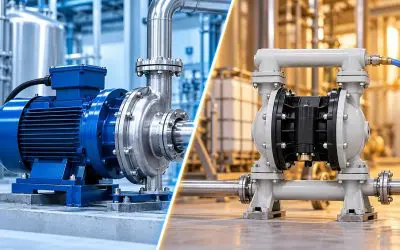
1. Centrifugal Pumps
Centrifugal pumps are among the most commonly used pumps in wastewater treatment systems.
Their operating principle relies on centrifugal force to generate pressure and move wastewater.
These pumps are highly efficient in handling wastewater containing solid particles. Their high-speed rotation allows wastewater to move smoothly between treatment stages.
2. Submersible Pumps
Submersible pumps are specifically designed to operate underwater.
These pumps are commonly used in sedimentation tanks where wastewater must be pumped out for further treatment.
Submersible pumps are also ideal for underground drainage systems. Their main advantage is their ability to operate underwater without significant corrosion or wear risks.
Read Also: How to Choose Submersible Pumps for Mining and Construction Industries
3. Sludge Pumps
Sludge pumps are specially designed to handle wastewater containing sludge and solid particles.
These pumps are highly effective for handling thicker and denser materials. They usually feature wide flow channels that minimize clogging compared to other pump types.
4. Dosing Pumps
Dosing pumps are used to inject chemicals into wastewater during specific treatment processes.
These pumps provide precise control over the amount of chemicals added, making them essential for applications such as pH adjustment or coagulant dosing.
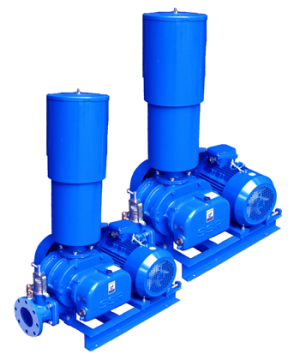
5. Air Blowers
Air blowers generate pressurized air required for the aeration process in wastewater treatment systems.
They supply airflow into treatment tanks to support the growth of microorganisms responsible for decomposing organic pollutants.
This process is essential for pollutant removal and maintaining water quality before discharge.
6. Air Diffusers
Air diffusers are key components in wastewater aeration systems.
They distribute the pressurized air produced by air blowers into fine bubbles evenly throughout the aeration tank.
These bubbles deliver oxygen into the wastewater and create ideal conditions for aerobic microorganisms to break down pollutants.
Breaking air into smaller bubbles improves aeration efficiency and enhances wastewater treatment performance.
To ensure efficient and reliable wastewater treatment operations, you can trust Winston Indonesia for your pump requirements. Winston Indonesia provides high-quality pumps suitable for various wastewater treatment applications, including centrifugal pumps and submersible pumps.
Winston Indonesia also offers after-sales services, including free consultations and on-site technical support whenever needed.
Get the best pumps from Winston Indonesia today to maintain wastewater quality and contribute to environmental sustainability.