Definition of a Submersible Pump and Its History
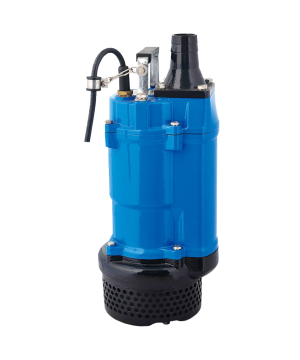
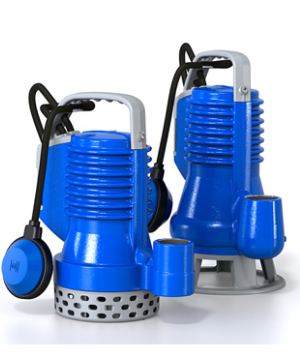
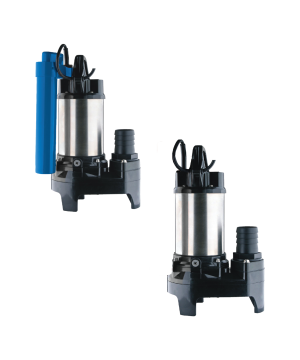
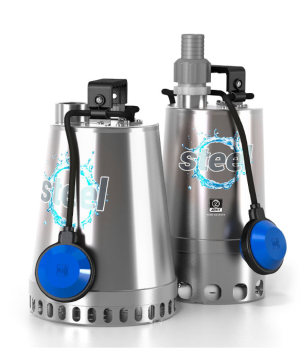
A submersible pump is a type of pump designed to operate while fully submerged in water. This equipment is also commonly known as a submerged water pump.
In everyday applications, conventional water pumps are usually installed outside the water source, with only the suction pipe placed into the water. A common example is a household water pump where the suction pipe extends into a well while the pump unit remains above ground.
This system works differently because both the pump and motor are placed directly inside the liquid being pumped.
Pumps are generally used to transfer water from its source to the desired destination. Since water is an essential part of daily life, pumping systems play a vital role in residential, agricultural, and industrial activities. Water pumps are available in various brands, capacities, and operating types, with submerged models being one of the most widely used options.
Although this type of equipment is generally more expensive than standard pumps, its advantages make it a popular choice across many industries. To better understand how it works, let’s explore its history, operating principle, advantages, and applications.
History of the Submerged Water Pump
This technology was developed by an inventor named Arutunoff. Since the 10th century, scientists had explored the idea of creating a pump that could operate directly inside a water source. However, Armais Arutunoff, a Russian inventor and engineer, is widely recognized as the pioneer who successfully developed the concept.
In 1916, Arutunoff created a simple pump design in Germany. After relocating to California in 1923, he received financial support to continue improving his invention.
Later, in 1928, he moved to Oklahoma and collaborated with Phillips Petroleum Company to adapt the design for oil well applications. After several unsuccessful attempts, he finally succeeded in developing a reliable system for oil extraction.
He then founded a company called REDA Pump, short for “Russian Electrical Dynamo of Arutunoff,” and began commercial production.
What Is a Submerged Pump?
Essentially, this type of pump serves the same purpose as other pumping systems — transferring liquid from one location to another.
Its distinguishing feature is the integrated motor located inside the pump body. As the name suggests, the entire assembly operates underwater or inside the fluid being transferred.
One important characteristic is that the unit must remain submerged during operation. Running it dry for extended periods can cause serious damage.
How It Works
This system operates based on the centrifugal pumping principle, converting kinetic energy into potential energy to move liquid from the source to the surface.
The process is driven by an impeller rotating inside the casing.
Unlike jet pumps that pull water through suction before pushing it upward, this system works by directly pushing water toward the surface.
For proper operation, the pump must remain completely submerged. The motor is tightly sealed, and the internal chamber is typically filled with oil to protect components and prevent liquid from entering the motor area, which could lead to electrical failure.
Because the unit operates directly inside the liquid, it works more efficiently since no additional energy is required to draw water into the system. The surrounding liquid also helps cool the motor naturally, reducing the risk of overheating.
Most systems are powered by high-voltage electrical supplies.
Advantages
Low Power Consumption
One of the main benefits is energy efficiency. These pumps generally consume relatively low electrical power, making them economical for long-term use.
Durable and Long-Lasting
They are designed for continuous operation, even up to 24 hours nonstop. In fact, frequent on-and-off cycles may reduce their lifespan faster than continuous operation.
Because the unit operates underwater, the surrounding liquid helps stabilize the operating temperature and improve durability.
Some models also include additional cooling fluid around the seal area for better thermal protection.
Practical Installation
Installation is simple because no suction pipe is required. Users only need to place the unit into the water source, and it immediately begins pushing water upward.
The waterproof motor housing also minimizes the risk of electrical short circuits.
Its compact design allows installation in limited spaces and various environmental conditions.
Quiet Operation
Because the equipment operates underwater, operational noise is significantly reduced, resulting in quieter performance compared to conventional pumps.
Efficient Performance
The system benefits from positive pressure at the suction side, helping liquid enter the pump more easily.
This reduces the amount of energy needed during operation and improves overall efficiency.
Some modern designs also utilize brushless DC motors, which convert electrical energy into rotational motion more efficiently while reducing friction losses.
Easy Maintenance
These pumps are commonly built using stainless steel and other corrosion-resistant materials, making them highly durable against water exposure and rust.
As a result, maintenance requirements are relatively low.
Because the system operates fully submerged, it is also less susceptible to cavitation problems.
Disadvantages
Despite its many benefits, there are several drawbacks to consider:
- Higher initial cost compared to conventional pumps
- More difficult inspection and maintenance because the unit is installed underwater
- Early detection of internal damage can be challenging
Common Applications
This pumping system is widely used in various industries and environments, including:
- Wastewater treatment
- Drainage systems
- Industrial operations
- Sludge handling
- Irrigation ponds
- Agricultural irrigation systems
Water pumps are available in many types, capacities, and configurations depending on operational needs. Among them, submerged systems remain one of the most preferred options due to their efficiency, durability, and practical advantages.
Understanding how the equipment works is important to ensure proper installation and long-term performance.
For more information about industrial pumping solutions, you can visit the official website of Winston Engineering.