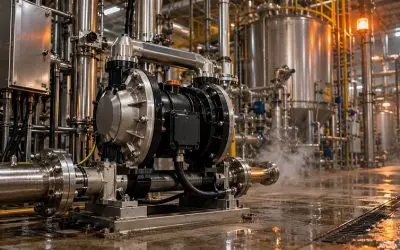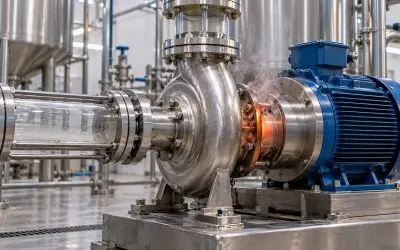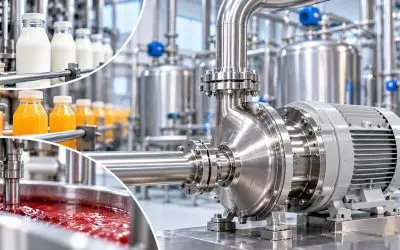
The oil and gas industry is one of the sectors with a high demand for safe, efficient, and reliable fluid transfer systems. From production, storage, and refining processes to final distribution, various types of liquids and chemicals must be transferred continuously to ensure smooth operations.
The fluids handled in this industry include crude oil, fuel, lubricants, condensates, chemicals, and various petrochemical products. To support these processes, industrial pumps are specifically designed to operate under high pressure, extreme temperatures, and demanding environments that require strict safety standards.
The Important Role of Pumps in the Oil & Gas Industry
Industrial pumps are not only used to transfer fluids from one point to another, but also play a critical role in maintaining production stability and operational efficiency.
Some of the main functions of pumps in the oil and gas industry include:
- Crude oil transfer
- Fuel and liquid hydrocarbon distribution
- Cooling water and process water circulation
- Chemical injection into production systems
- Supporting refining processes in oil refineries
- Supporting utility and water treatment systems
- Handling vacuum processes in petrochemical facilities
Since each application has different characteristics, the selection of the appropriate pump type must be based on fluid properties, flow capacity, pressure requirements, and operating conditions.
Common Types of Industrial Pumps Used in Refineries and Petrochemical Plants
1. API Process Pump
API Process Pumps are among the most commonly used pumps in the oil and gas industry. These pumps are designed according to API standards, enabling them to handle high-pressure, high-temperature applications and hydrocarbon fluids that require a high level of reliability.
Common Applications
- Oil refineries
- Crude oil transfer
- Hydrocarbon processing
- Petrochemical plants
- Fuel processing units
2. ANSI Process Pump
ANSI Process Pumps are widely used in process applications involving chemicals and other industrial fluids. These pumps offer flexible designs and are commonly utilized in supporting facilities within the oil and gas industry.
Common Applications
- Chemical processing
- Water treatment
- Utility systems
- Process fluid transfer
- Petrochemical support systems
3. Gear Pump
A gear pump is a type of positive displacement pump that operates using rotating gears to transfer fluid consistently.
Because of its ability to provide stable flow and handle fluids ranging from low to high viscosity, gear pumps are widely used for transferring fuel, oil, lubricants, and various hydrocarbon products.
Common Applications
- Fuel transfer
- Diesel transfer
- Lubrication systems
- Fuel loading and unloading
- Oil and lubricant transfer
4. Positive Displacement Pump
Positive displacement pumps are designed to transfer a fixed volume of fluid during each operating cycle. These pumps are highly suitable for applications requiring high pressure or handling thicker fluids.
Main Advantages
- More stable flow
- Suitable for viscous fluids
- Capable of operating under high pressure
- Excellent flow accuracy
Common Applications
- Heavy oil transfer
- Chemical transfer
- Hydrocarbon processing
- Metering applications
5. Metering Pump and Dosing Pump
In the oil and gas industry, various chemicals are used to maintain system performance and protect equipment from corrosion and scaling.
Metering pumps and dosing pumps are used to inject chemicals with precise and controlled dosing.
Common Applications
- Chemical injection
- Corrosion inhibitor injection
- Antiscalant injection
- pH adjustment
- Water treatment systems
6. Liquid Ring Vacuum Pump
In addition to fluid transfer pumps, many petrochemical plants and refineries require vacuum systems to support specific production processes.
Liquid ring vacuum pumps are used to handle gases and vapors in applications requiring continuous vacuum conditions.
Common Applications
- Vacuum distillation
- Vapor recovery systems
- Degassing processes
- Gas evacuation
- Petrochemical processing
Pump Applications in Refineries and Petrochemical Plants
Industrial pumps are used throughout almost every operational area in refineries and petrochemical plants, from raw material receiving processes to final product distribution.
Some of the most common applications include:
- Crude oil transfer
- Fuel transfer
- Chemical transfer
- Hydrocarbon processing
- Cooling water circulation
- Boiler feed support
- Wastewater treatment
- Chemical dosing
- Product loading and unloading
- Utility systems
- Vacuum process support
Important Factors in Selecting Industrial Pumps
To ensure optimal pump performance and long service life, the following factors should be considered:
- Type and characteristics of the fluid
- Fluid viscosity
- Operating temperature
- System pressure
- Required flow capacity
- Corrosive or abrasive properties of the fluid
- Pump construction materials
- Type of sealing system
- Energy efficiency
- Ease of maintenance
- Availability of spare parts
- Technical support and after-sales service
Conclusion
Industrial pumps play a vital role in supporting operations within the oil, gas, refinery, and petrochemical sectors. Choosing the right pump type can help improve operational efficiency, maintain system reliability, and support production process safety.
To find the most suitable pump solution for your Oil & Gas, refinery, or petrochemical applications, contact the team at Winston Indonesia for professional consultation and technical recommendations tailored to your operational needs.

Author Bio
Rian

Team PT Winston technically driven member of PT Winston Indonesia with strong practical knowledge of pumps and fluid handling solutions. We work closely with customers to understand their operating requirements, recommend suitable pump solutions, and introduce products that can improve reliability, efficiency, and overall system performance. With a hands-on and solution-oriented approach, We help bridge technical requirements with practical product selection, ensuring customers receive the right pumping solution for their applications.
See all posts by Rian »