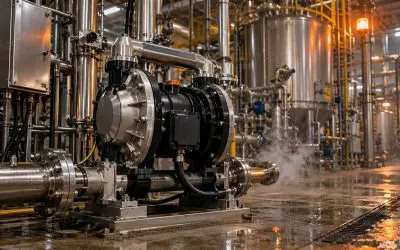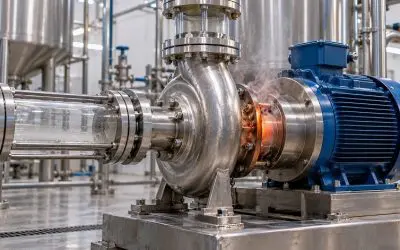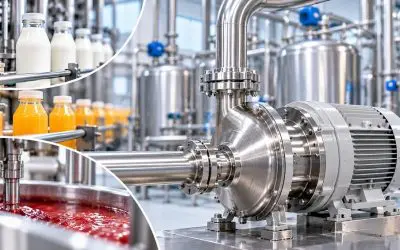
The food and beverage, dairy, pharmaceutical, and other industries with stringent hygiene requirements need production systems that are not only capable of transferring products but are also easy to clean and sanitize.
Product residues left inside pumps, pipes, tanks, or process components can become sources of contamination. Therefore, Cleaning in Place (CIP) and Sterilization in Place (SIP) are important parts of production system management.
Although both processes can be performed without dismantling the entire equipment system, CIP and SIP serve different purposes. Understanding these differences can help companies determine the appropriate cleaning and sterilization procedures for their process requirements.
What Is Cleaning in Place (CIP)?
Cleaning in Place, or CIP, is a method of cleaning the internal surfaces of process equipment without dismantling all its components.
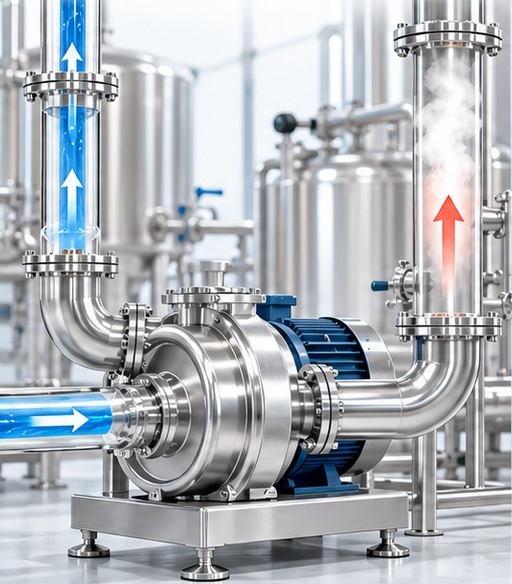
During this process, cleaning media are circulated through a system consisting of various types of equipment, including pumps, pipes, tanks, valves, and other components. The goal is to remove product residues, dirt, and contaminants adhering to the internal surfaces of the system.
CIP procedures may vary from one facility to another. However, the process generally involves several stages, such as:
- Initial rinsing to remove product residues.
- Circulation of cleaning solutions.
- Rinsing to remove any remaining cleaning agents.
- Inspection or verification of cleaning results.
- Preparing the system for the next production cycle.
The effectiveness of CIP depends on several factors, including time, temperature, cleaning agent concentration, and flow rate.
Adequate flow is required to ensure that the cleaning media passes through the entire system and helps clean all product-contact surfaces.
What Is Sterilization in Place (SIP)?
Unlike CIP, Sterilization in Place, or SIP, is a process designed to control or eliminate microorganisms inside a production system without dismantling the equipment.
SIP may use methods such as heat, steam, or other suitable media, depending on the facility’s requirements and established procedures.
During SIP, several parameters must be consistently controlled, particularly temperature, pressure, and exposure time. Heat distribution must also be considered when high-temperature sterilization methods are used.
SIP is generally performed after cleaning has been completed. This is because product residues or dirt remaining on surfaces can interfere with the effectiveness of the sterilization process.
In other words, CIP focuses on cleaning, while SIP focuses on sterilization.
Differences Between CIP and SIP
The simplest difference between CIP and SIP lies in their intended purposes.
CIP:
- Focuses on cleaning.
- Removes product residues and dirt.
- May use water or cleaning solutions.
- Requires control of flow, temperature, cleaning agent concentration, and cleaning time.
SIP:
- Focuses on sterilization.
- Controls or eliminates microorganisms.
- May use heat, steam, or other sterilization methods.
- Requires control of temperature, pressure, and exposure time.
Both processes serve different functions and should not be considered interchangeable.
Why Is CIP Performed Before SIP?
CIP and SIP can form part of an interconnected process sequence.
Before sterilization takes place, the system must first be cleaned. Residues adhering to surfaces can interfere with sterilization and reduce its effectiveness.
For example, product residues adhering to the internal surfaces of pipes or pumps can act as barriers between the sterilizing medium and the surfaces that need to be sterilized.
Therefore, the sequence of operations must be designed according to the facility’s requirements and applicable procedures.
Not every production system requires SIP. The need for sterilization depends on the type of product, contamination risk level, industry standards, and the sanitation procedures in place.
The Role of Pumps in CIP and SIP Systems
Pumps play an important role in sanitary processing systems because they are used to transfer products and circulate cleaning media during cleaning operations.
During CIP, pumps must be capable of maintaining the circulation of cleaning media according to system requirements. Flow rate is an important parameter because insufficient flow can affect cleaning effectiveness.
However, excessively high flow rates should also be avoided if they could cause system pressure or loads to exceed specified limits.
For SIP, attention must also be given to the ability of system components to withstand sterilization conditions. Temperature, pressure, sterilization media, seals, gaskets, and construction materials must all be evaluated against the equipment specifications.
Therefore, selecting a pump for a sanitary system involves more than simply considering product transfer capacity.
How to Select the Right Pump
Pump selection should begin with an assessment of process requirements rather than relying solely on the product name or industry type.
Information such as fluid type, flow rate, pressure, temperature, viscosity, cleaning agent characteristics, and CIP/SIP procedures should be prepared before selecting the equipment.
For facilities operating under sanitary production requirements, the entire system must also be considered. Pumps must work in conjunction with pipes, valves, tanks, heat exchangers, and other components to ensure that both production and cleaning operations meet the required standards.
Pumping Solutions for Industrial Applications
Every facility has different process requirements. Therefore, sanitary pump selection must be tailored to the fluid characteristics and the cleaning or sterilization procedures being used.
Winston Indonesia provides a range of pumping solutions and process equipment for industrial applications. The available product information can serve as an initial reference for companies evaluating pumping solutions based on their specific application requirements.
Before selecting a product, it is advisable to prepare process data such as flow rate, pressure, temperature, fluid type, and CIP or SIP requirements. This information helps ensure a more systematic selection process that aligns with actual operating conditions.
For more information and technical assistance, please contact us to discuss your requirements with our team.

Author Bio
Rian

Team PT Winston technically driven member of PT Winston Indonesia with strong practical knowledge of pumps and fluid handling solutions. We work closely with customers to understand their operating requirements, recommend suitable pump solutions, and introduce products that can improve reliability, efficiency, and overall system performance. With a hands-on and solution-oriented approach, We help bridge technical requirements with practical product selection, ensuring customers receive the right pumping solution for their applications.
See all posts by Rian »