(Images showed above are for illustration purpose)
When a Reliable Pump Keeps Failing
In industrial operations, unexpected pump failures can lead to costly downtime, increased maintenance expenses, and interruptions to production. One customer approached Winston Engineering after experiencing recurring breakdowns with their ALMATEC sludge pump. The pump frequently leaked and stopped operating, even after replacement parts had been installed multiple times.
Rather than replacing components repeatedly, our engineering team conducted a detailed investigation to identify the root cause and develop a long-term solution.
The Challenge
The sludge pump experienced recurring issues, including:
- Frequent leakage during operation
- Unexpected pump shutdowns
- Repeated diaphragm damage
- Multiple component replacements without permanently resolving the problem
These recurring failures suggested that the visible damage was only a symptom, while the actual cause remained hidden.
Root Cause Analysis
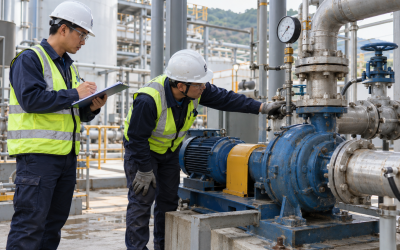
Our service engineers removed the pump from the system and performed a complete inspection.
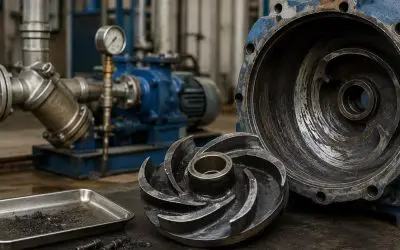
After dismantling the pump, we found that one internal discharge valve retaining component had gradually shifted away from its intended position.
During operation, this loose component repeatedly struck the diaphragm, eventually causing it to rupture and resulting in leakage and pump failure.
Further investigation indicated that abrasive particles present in the sludge being pumped had gradually worn down critical internal components over time. This wear allowed the retaining component to loosen and rotate during normal operation, leading to repeated damage.
Instead of treating only the damaged parts, we focused on understanding why the failure continued to occur.
Winston Engineering’s Solution
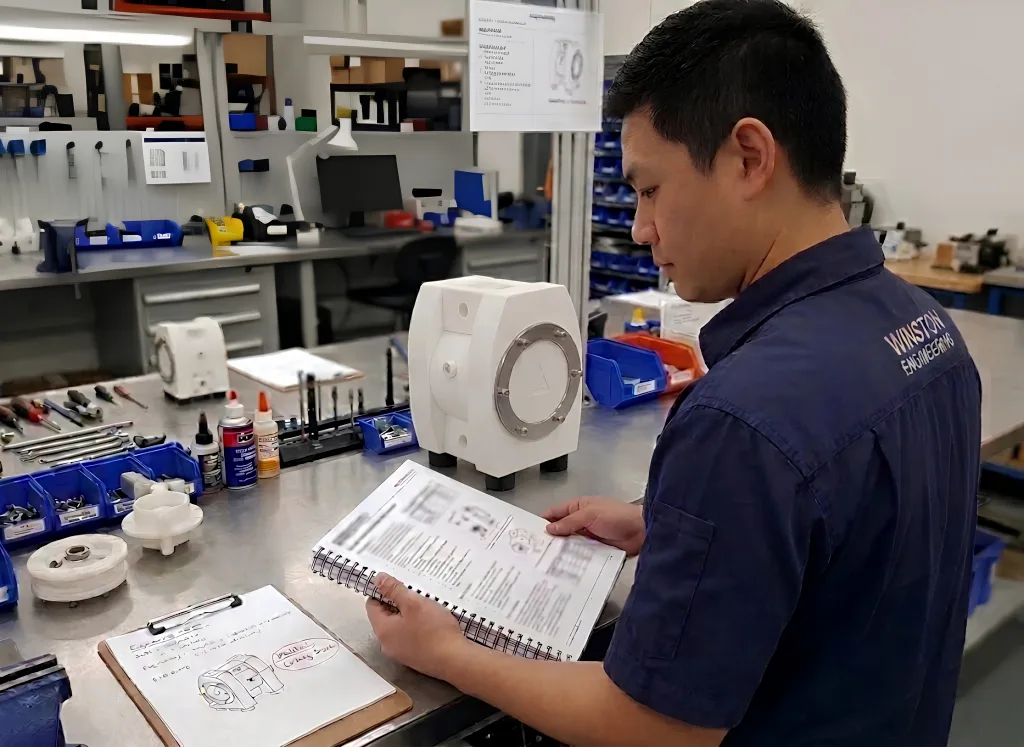
After reviewing the findings together with the customer, our engineering team proposed a modification instead of continuing with repeated part replacements.
The solution involved:
- Modifying the liquid chamber
- Securing the discharge valve retaining component with a locking screw
- Preventing internal movement during pump operation
This engineering modification ensured the component remained securely positioned, eliminating contact with the diaphragm while the pump was running.
The Result
During the next scheduled maintenance several months later, our engineers inspected the modified pump.
The results confirmed that:
- The retaining component remained securely in its original position.
- No further contact occurred between the component and the diaphragm.
- The recurring failure had been successfully eliminated.
- The pump continued operating more reliably without the previous issue recurring.
By identifying the underlying cause instead of repeatedly replacing damaged parts, Winston Engineering delivered a more reliable and sustainable solution.
Why Root Cause Analysis Matters
Replacing damaged components may restore equipment temporarily, but it does not always solve the underlying problem.
At Winston Engineering, we believe effective maintenance goes beyond repairs. Our approach combines technical expertise, detailed inspections, and practical engineering improvements to reduce repeat failures and improve equipment reliability.
This case demonstrates how understanding the source of a problem can lead to longer-lasting solutions and lower maintenance costs over time.
Frequently Asked Questions
The leakage was caused by repeated diaphragm damage. An internal retaining component had loosened over time and struck the diaphragm during operation, eventually causing it to rupture.
Replacing the diaphragm addressed the immediate damage but not the underlying cause. Because the internal component continued to loosen during operation, the same failure occurred repeatedly.
Inspection suggested that abrasive particles within the sludge gradually wore down certain internal components. This wear allowed the retaining component to rotate and move out of position over time.
Our engineers modified the pump by securing the internal retaining component with a locking screw. This prevented movement during operation and eliminated contact with the diaphragm.
Root cause analysis helps identify why equipment fails instead of simply repairing the visible damage. This approach can improve reliability, reduce recurring maintenance, minimize downtime, and extend equipment life.
If a pump experiences repeated leakage, frequent component replacement, unexpected shutdowns, or recurring maintenance issues, a comprehensive inspection should be carried out to identify any underlying mechanical or operational causes.

Author Bio
Mandy Wong

Mandy is a Marketing Assistant at Winston Engineering and a graduate in Digital Marketing from Taylor's University. Passionate about digital marketing, content creation, and SEO, she creates informative content that makes technical topics easier to understand. With experience in social media and multimedia content, Mandy helps strengthen Winston Engineering's digital presence through clear, engaging, and customer-focused communications.
See all posts by Mandy Wong »