The Challenge
A customer operating two EUROFLO EU80/20 MBC pumps with 22 kW motors experienced mechanical seal leakage. The pumps were used in an air-conditioning system and both pumps showed signs of leakage during inspection.
The customer required a reliable solution to identify the cause of the repeated leakage and restore the pumps to proper operating condition.
Our Investigation
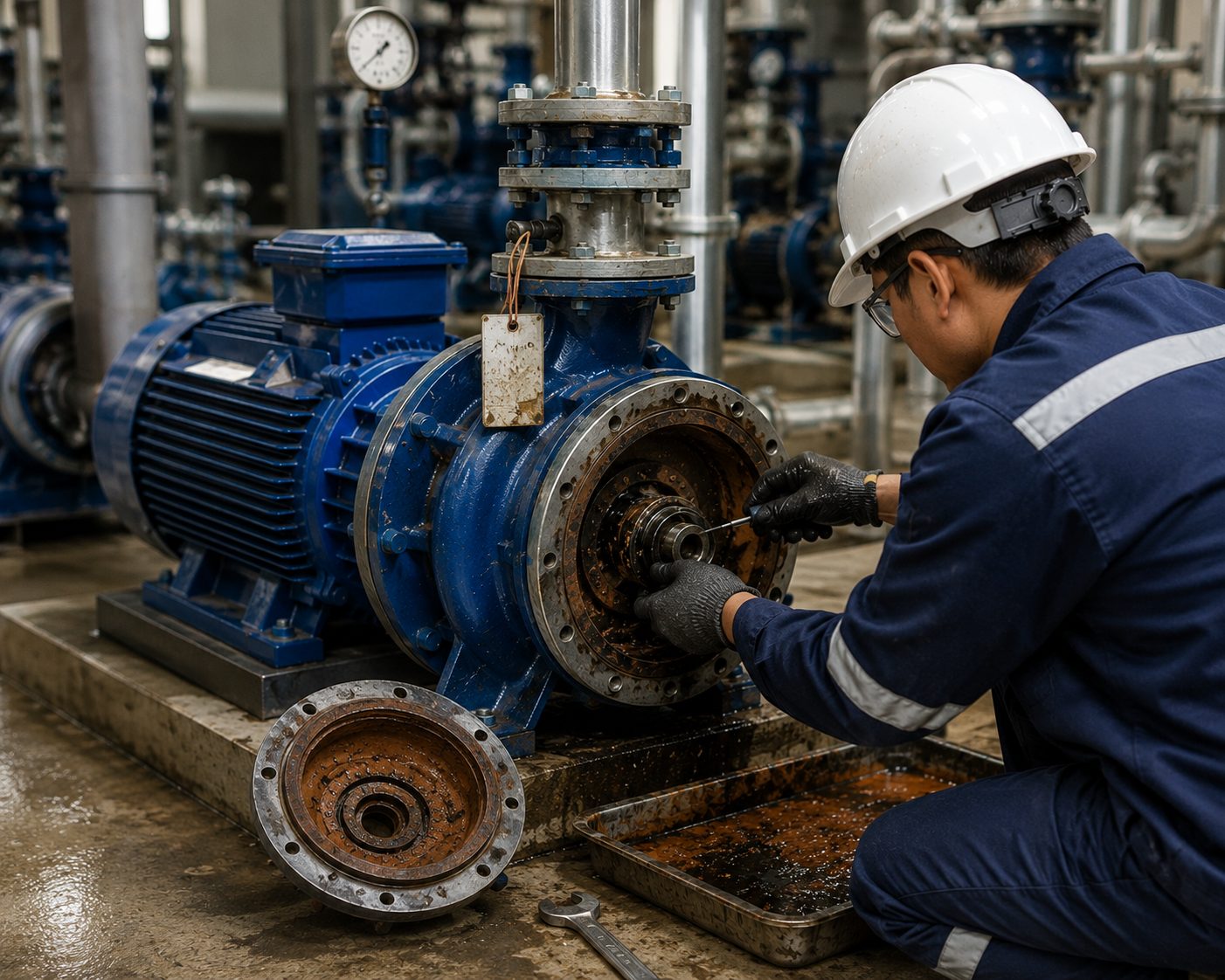
Our company conducted an on-site inspection and dismantled the pumps for further investigation.
During the inspection, our service team discovered:
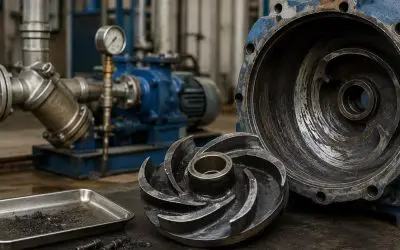
- Dirty and rusty liquid inside the pump
- Rust and abrasive particles around the mechanical seal area
- Scratches on the mechanical seal surfaces
- Continued minor leakage after cleaning, as the damaged mechanical seals had not yet been replaced
The investigation found that the abrasive rust particles had entered the mechanical seal area and damaged the sealing surfaces, resulting in leakage. The lack of proper pipe flushing before the initial pump start-up was identified as a contributing factor.
The Solution
Our company recommended a complete corrective action:
- Dismantle and inspect the affected pumps.
- Clean the pump and remove the dirty and rusty residue.
- Polish and clean the pump shaft where required.
- Replace the damaged mechanical seals.
- Carry out proper piping flushing to remove rust, dirt, and abrasive particles from the system.
- Follow the recommended pump start-up procedures before returning the pumps to operation.
Our service team completed the mechanical seal replacement and piping flushing process. After the corrective work was completed, both pumps were returned to operation and were running in good condition.
The Result
By identifying the actual cause of the failure rather than simply replacing the leaking seal, Winston Engineering helped address the root cause of the problem.
The customer benefited from:
- Reduced risk of repeated mechanical seal leakage
- Removal of rust and abrasive contaminants from the piping system
- Proper pump inspection and maintenance
- Improved pump reliability after recommissioning
How Winston Engineering Can Help
Pump leakage can be caused by more than just a defective mechanical seal. Contaminated liquid, rust, abrasive particles, improper installation, and inadequate system preparation can all contribute to premature pump failure.
With our pump service and technical expertise, Winston Engineering can help customers:
- Investigate pump leakage and performance issues
- Identify the root cause of pump failure
- Inspect and replace mechanical seals
- Carry out pump cleaning and maintenance
- Recommend proper piping flushing procedures
- Support pump start-up and commissioning
- Provide technical advice for improving pump reliability
Experiencing recurring pump leakage or mechanical seal failure? Contact Winston Engineering for professional pump inspection and technical support.
Frequently Asked Questions
1. What causes a pump mechanical seal to leak?
A mechanical seal can leak due to scratched sealing surfaces, abrasive particles, rust, dirty liquid, shaft damage, improper installation, or normal wear and tear.
2. Can rust and dirt damage a pump mechanical seal?
Yes. Rust and abrasive particles in the pump liquid can enter the mechanical seal area and scratch the sealing surfaces, eventually causing leakage.
3. How can pipe flushing prevent pump seal failure?
Proper pipe flushing removes rust, dirt, welding debris, and other abrasive particles from the piping system before the pump starts operating, reducing the risk of mechanical seal damage.
4. What should be done when a pump mechanical seal is leaking?
The pump should be inspected to identify the root cause. Depending on the condition, the solution may include cleaning, shaft inspection, mechanical seal replacement, and piping system flushing.
5. How can recurring mechanical seal leakage be prevented?
Regular pump inspection, proper piping flushing before initial start-up, using clean pump liquid, and following the manufacturer’s installation and start-up procedures can help prevent recurring mechanical seal leakage.

Author Bio
Chun Wei

Chun Wei is a marketing professional with a Bachelor of Arts in Marketing from UCSI University. With hands-on experience spanning social media management, data analysis, and sales marketing, he brings a fresh and analytical perspective to content and digital strategy. His background across various industries has sharpened his ability to translate insights into effective marketing initiatives. At Winston Engineering, Chun Wei contributes to the team's mission of putting solutions in action through clear, engaging, and informative content.
See all posts by Chun Wei »