Water on a construction site is never just an inconvenience. It slows down excavation, delays concrete pours, and can turn a stable trench into a genuine safety hazard within hours. Anyone who has managed a site through a rainy season knows how quickly standing water can throw a schedule off course, which is why choosing the right dewatering equipment is one of those decisions that quietly shapes how smoothly a project runs.
Two options tend to come up again and again when site managers plan their dewatering setup: a diesel pump or an electric pump. Both get water off site, but they do it in different ways, with different costs, and different practical trade-offs. If you are trying to decide which suits your next project, here is a straightforward look at how the two compare.
Why Dewatering Needs the Right Equipment From the Start
Before comparing the two pump types, it helps to understand what dewatering actually demands on a working site. Groundwater seepage, rainfall runoff, and water trapped in excavations all need to be removed continuously, sometimes for weeks at a stretch. The equipment handling that job has to run reliably, cope with debris and sediment in the water, and keep pace with whatever volume the site throws at it. Working with a reliable water pump supplier from the planning stage makes it far easier to match equipment to the actual conditions on the ground, rather than guessing and hoping it holds up.
The Case for a Diesel Pump
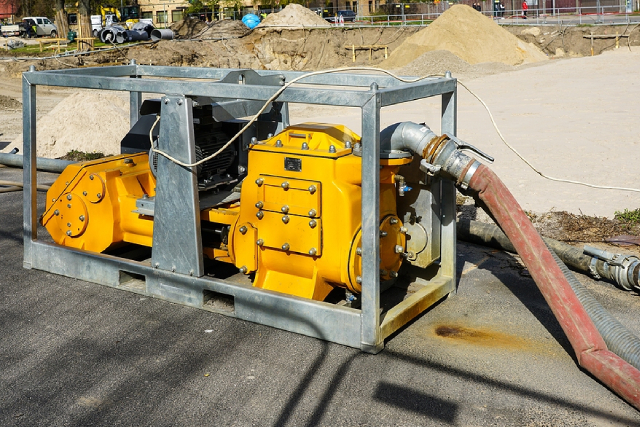
A diesel pump remains a familiar sight on construction sites across Singapore, and for good reason. It does not need a power connection, which makes it a natural fit for remote sites, early-stage excavations, or locations where the electrical supply has not been set up yet. You can position a diesel pump almost anywhere on site and get it running within minutes.
Diesel pumps also tend to handle high-volume dewatering jobs with ease. Larger models can shift substantial amounts of water quickly, which is a big advantage when a site has flooded overnight or when a monsoon downpour has left a deep excavation half full. Fuel is easy to source and refuel on site, so downtime between fills is usually short, and most site teams already know how to keep a diesel engine running smoothly through a long shift.
There are trade-offs, though. Diesel pumps are noisier than electric alternatives, which can be an issue on sites close to residential areas or during restricted working hours. They also produce emissions and need regular fuel top-ups, servicing, and monitoring to keep running efficiently. For sites with strict environmental requirements or noise restrictions, this can become a real limitation rather than a minor annoyance.
The Case for Electric Dewatering
Electric pumps offer a quieter, cleaner alternative, and they have become increasingly popular as sites look to cut emissions and comply with tighter environmental standards. Once connected to a power source, an electric pump runs smoothly with far less noise than diesel equipment, which makes it a better fit for sites near schools, hospitals, or residential blocks where noise complaints can hold up work.
Electric dewatering systems also tend to need less hands-on maintenance day to day. There is no fuel to manage, no exhaust to worry about, and fewer moving parts exposed to wear from constant refuelling and servicing. For long-term or fixed dewatering setups, this can translate into steadier running costs over time.
The catch is that electric pumps depend entirely on a stable power supply. If a site does not yet have electricity connected, or if power cuts are a possibility, this becomes a real constraint. Extension cables and generators can bridge the gap, but that adds complexity and, in some cases, defeats the purpose of choosing electric in the first place.
Comparing the Two Side by Side
When weighing up which option fits your site, a few practical questions usually settle the decision:
- Power availability: Is there a stable electrical connection on site, or would an electric pump need a generator anyway?
- Noise restrictions: Are there working hour limits or nearby residents sensitive to noise?
- Water volume: Does the site need to move large volumes quickly, or is it a steady, lower-volume job?
- Site accessibility: Can equipment be positioned easily, or does the pump need to be portable and self-sufficient?
- Duration of use: Is this a short-term excavation task or a dewatering setup that will run for weeks or months?
Sites in the early stages of development, with no power connection and unpredictable water volumes, tend to lean towards a diesel pump for its flexibility. Sites further along, with power already in place and a need to keep noise and emissions down, often find electric dewatering the more practical fit.
A Hybrid Approach Is Often the Answer
Many contractors do not settle on one system exclusively. It is common to see diesel pumps used during the early excavation phase, when power is not yet available, followed by a switch to electric dewatering once the site is connected and settled. This staged approach lets teams take advantage of the strengths of each system at the point in the project where they count for the most, and it avoids paying for capability the site does not yet need.
Cost is another factor worth weighing up honestly. Diesel equipment usually has a lower upfront hire cost but higher running costs once fuel and servicing are added up over a long project. Electric systems can cost more to set up initially, particularly if power infrastructure needs to be extended to the pump location, but running costs tend to settle down once everything is connected. Looking at the full duration of the project, rather than just the first few weeks, gives a clearer picture of which option actually saves money.
Renting or purchasing equipment from a supplier who understands both options also helps. A good supplier will ask about your site conditions, expected water volumes, and project timeline before recommending equipment, rather than pushing whatever happens to be available. That kind of guidance saves money and prevents the common mistake of undersizing or oversizing a dewatering setup.
Getting the Decision Right for Your Site
There is no single correct answer between the two dewatering options. The right choice depends on your site’s power situation, noise restrictions, water volume, and how long the job needs to run. Taking the time to assess these factors before committing to equipment can save considerable time and cost once the project is underway.
If you are planning dewatering for an upcoming project and want equipment suited to your specific site conditions, get in touch with the team at Winston Engineering. Our experience across pumps, compressors, and related equipment can help you settle on a setup that keeps your site dry and your schedule on track.

Author Bio
Team Winston Engineering

Team Winston Engineering is made up of pump specialists, engineers, and industry experts with over 40 years of hands-on experience in fluid management solutions. Founded in Singapore in 1977, Winston Engineering has grown into Southeast Asia's leading pump specialist, serving industries ranging from oil and gas to water treatment, HVAC, and power generation. With regional offices across Singapore, Malaysia, Indonesia, and China, the team brings deep technical expertise and a customer-first approach to every project, backed by the region's only state-of-the-art pump test bay.
See all posts by Team Winston Engineering »