Every pump engineer and facilities manager has been there: a centrifugal pump that looks perfectly fine on paper starts making strange noises, loses performance, or fails far sooner than expected. More often than not, the culprit is something invisible: a condition called cavitation, driven by a concept known as Net Positive Suction Head, or NPSH.
If you have never heard of NPSH before, do not worry. It sounds more intimidating than it actually is. Once you understand what it means and why it matters, you will be in a much stronger position to keep your pumps running reliably and avoid costly repairs.
So, What Exactly Is NPSH?
NPSH refers to the pressure available at the suction side of a pump to prevent the liquid being pumped from turning into vapour. When pressure drops too low at the pump inlet, the liquid can vaporise locally, forming tiny bubbles. Those bubbles then collapse violently as they move into higher-pressure zones inside the pump, and that collapse is what we call cavitation.
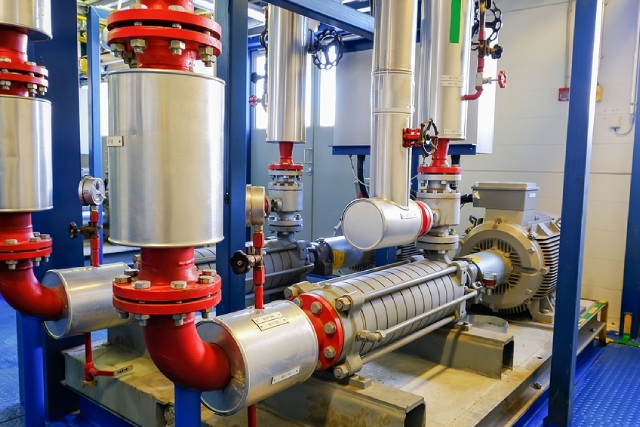
Cavitation is not just a noise problem. Over time, it erodes impellers, damages seals, and dramatically shortens the working life of your equipment. For a water pump motor driving a centrifugal pump in an industrial or commercial setting, cavitation is one of the most damaging conditions it can be subjected to.
NPSH is broken into two values that you always need to consider together:
- NPSHa (Available) — the actual pressure available at the pump suction, determined by your system: pipe layout, fluid temperature, elevation, and inlet conditions.
- NPSHr (Required) — the minimum pressure the pump needs to operate without cavitating, as specified by the pump manufacturer.
The golden rule is simple: NPSHa must always be greater than NPSHr. How much greater? A safety margin of at least 0.5 to 1 metre is generally recommended, though for critical applications, engineers often aim for more.
Why Does NPSHa Drop?
This is where practical system knowledge really pays off. Several common factors reduce the pressure available at your pump inlet:
High fluid temperature. Warmer liquids have a higher vapour pressure, which eats into your available NPSH margin. Hot water systems and process fluids need particularly careful attention.
Long or undersized suction piping. The longer and narrower the suction pipe, the more friction losses accumulate, and every bit of friction loss reduces NPSHa.
High pump elevation relative to the fluid source. If your pump is positioned well above the sump or tank it is drawing from, gravity is working against you.
Clogged strainers or valves that are partially closed. These create additional resistance at the suction side, sometimes dramatically. This is also a common reason water pressure is low before the pump even starts doing its job.
Altitude. At higher elevations, atmospheric pressure is lower, which reduces the baseline pressure in open systems.
How to Calculate NPSHa
You do not need to be a hydraulics specialist to do a basic NPSH check. The standard formula is:
NPSHa = (Atmospheric pressure + Static head – Vapour pressure – Friction losses) / (ρg)
In practice, your pump supplier or a qualified engineer can help you work through the numbers for your specific system. What matters is that you actually do this calculation before commissioning a pump, not after problems start appearing.
It is also worth noting that manufacturers publish NPSH curves for their pumps. These show how NPSHr changes across different flow rates. Pumps are often more vulnerable to cavitation at higher flows, so if your system demand varies significantly, you need to check the full operating range, not just the design point.
Practical Tips for Maintaining a Healthy NPSH Margin
Getting the numbers right at installation is one thing. Keeping your system in good shape over time is another. A few habits that make a real difference:
- Keep suction piping as short and as large in diameter as practically possible.
- Install pumps as close to, and as low as possible relative to, the fluid source.
- Inspect and clean suction strainers regularly.
- Monitor fluid temperatures in systems where they can vary.
- When replacing or upgrading pumps, always re-verify NPSHa for the new unit — different pumps have different NPSHr values.
It is also worth reviewing your system whenever operating conditions change. An expansion in plant capacity, a change in fluid temperature, or modifications to pipework can all shift your NPSHa without anyone realising it – until the pump starts complaining.
When Things Go Wrong: Recognising Cavitation
Even with good planning, cavitation can occur. Knowing the signs early means you can act before serious damage sets in.
Listen for a rattling or crackling sound from the pump, often described as sounding like gravel passing through. You may also notice erratic flow, vibration, or a drop in pump performance that does not correspond to any obvious blockage. These are all signals worth investigating promptly.
A quick check of suction conditions, strainer cleanliness, and fluid temperature will often point you in the right direction. If the issue is structural: for example, suction piping that is too long or a pump installed at the wrong elevation, you may need an engineering review to redesign that section of the system.
NPSH Is Not Just a Commissioning Checkbox
One of the most common mistakes in pump management is treating NPSH as a one-time consideration during installation. In reality, it is a live parameter that changes with your system. Fluid temperatures shift, pipes age and accumulate scale, strainers get neglected, and operating demands evolve. Keeping an eye on NPSH as part of routine pump maintenance is simply good engineering practice.
For facilities running multiple centrifugal pumps, particularly in water supply, HVAC, or industrial process applications, a periodic NPSH audit can prevent a great deal of unplanned downtime and equipment replacement cost.
Ready to Get Your Pump System Properly Assessed?
Understanding NPSH is the first step. Applying it correctly to your specific system is where expert support makes all the difference.
Winston Engineering provides professional pump selection, installation, and maintenance services across Singapore. From commissioning a new system to troubleshooting an existing one, or simply gaining peace of mind that your centrifugal pumps are operating within safe parameters, the Winston Engineering team is here to help. Get in touch with Winston Engineering today to speak with a specialist.

Author Bio
Team Winston Engineering

Team Winston Engineering is made up of pump specialists, engineers, and industry experts with over 40 years of hands-on experience in fluid management solutions. Founded in Singapore in 1977, Winston Engineering has grown into Southeast Asia's leading pump specialist, serving industries ranging from oil and gas to water treatment, HVAC, and power generation. With regional offices across Singapore, Malaysia, Indonesia, and China, the team brings deep technical expertise and a customer-first approach to every project, backed by the region's only state-of-the-art pump test bay.
See all posts by Team Winston Engineering »