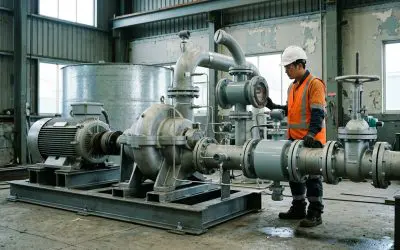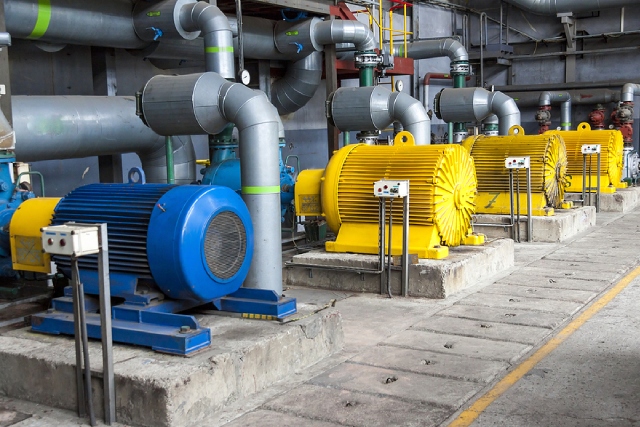
Factories do not fail because of dramatic explosions. They fail quietly through vibration, heat, seal wear and rising electricity bills. At the centre of many of these issues sits something deceptively simple: pump alignment.
For decades, dial gauges were the trusted method for aligning rotating equipment. Skilled technicians relied on experience, patience and a steady eye. That era shaped the industry. But 2026 demands more.
Today, laser alignment is no longer a premium add-on. It is the standard.
Let’s look at why.
The Battle of Precision: 0.01mm vs. 0.001mm
Dial gauges once represented precision engineering. The method uses physical contact and measures “needle swing” as shafts rotate. A trained technician records readings, performs manual calculations and adjusts accordingly.
Under ideal conditions, dial gauges can achieve around 0.01mm accuracy.
That sounds impressive, until you compare it to laser systems.
Modern dual-laser alignment tools measure misalignment down to 0.001mm. That is microscopic precision. More importantly, they do it consistently. No needle reading. No manual trigonometry. No “bar sag” caused by gravity bending the setup.
Dial gauges rely heavily on human interpretation. Laser systems remove the guesswork.
In high-stakes environments such as Tuas petrochemical plants or Jurong shipyards, guesswork is not acceptable.
Why Alignment Matters More Than Ever
Energy costs are not getting cheaper. Efficiency targets are tightening. ESG reporting is now a boardroom discussion, not just an engineering one.
A misaligned pump does not just wear bearings faster. It draws more power. It vibrates excessively. It generates heat. Over time, that translates into thousands of dollars in unnecessary operating costs.
When properly aligned, a pump runs closer to the pump’s best efficiency point. That means smoother operation, lower vibration and less wasted energy.
For facilities investing in an energy saving pump, precision alignment is critical. You can install the most efficient pump on the market, but if it is misaligned by fractions of a millimetre, you are throwing away the very savings you paid for.
This is where laser alignment becomes more than a maintenance tool. It becomes an efficiency strategy.
Speed Is the New Return on Investment
In 2026, every hour of shutdown in an industrial plant can cost thousands, sometimes tens of thousands, of dollars. Alignment methods that require lengthy setups and full 360-degree shaft rotations simply do not fit modern operational demands.
Dial gauges often need a full rotation to calculate alignment accurately. In cramped pump skids or tight plant rooms, that can be nearly impossible.
Laser systems changed that.
Modern tools can determine precise alignment with as little as a 40-degree shaft rotation. That means:
- Faster setup
- Faster readings
- Faster corrections
- Faster restart
Speed does not mean compromise. It means smart engineering.
And the benefits do not stop at mechanical accuracy.
Laser alignment tools automatically generate detailed “Before & After” reports. These digital PDF records are vital for ISO 9001 documentation and compliance reporting. They also support grant applications such as Singapore’s Energy Efficiency Grant (EEG), proving that systems are operating at peak performance.
Dial gauges cannot provide automated documentation. Lasers can.
Eliminating Human Error
Dial gauge alignment depends heavily on technician skill. Experience plays a large role. That experience is valuable, but it also introduces variability.
Reading needle movement. Accounting for sag. Performing calculations manually. Recording values accurately.
Every step presents an opportunity for small errors.
Laser systems reduce those risks. The software accounts for geometry and distance automatically. The interface guides technicians step by step. Real-time feedback shows exactly how much to shim or move.
Instead of interpreting abstract readings, technicians respond to clear numerical targets.
The result is consistency.
Consistency means repeatability. Repeatability means reliability.
Hidden Killers: Thermal Growth and Soft Foot
Misalignment is not always obvious. Some of the most damaging issues only appear after startup.
Thermal Growth
Many pumps operate at elevated temperatures, especially in boiler feed or high-process environments. As metal heats, it expands. A pump aligned perfectly at room temperature may become misaligned once running.
Dial gauges struggle to address this proactively.
Laser systems allow technicians to input cold offsets. That means the pump is intentionally set slightly “out” when cold, so it becomes perfectly aligned at operating temperature.
This level of foresight prevents premature coupling wear, bearing stress and vibration spikes during operation.
Soft Foot
Soft foot occurs when a pump’s base does not sit evenly on its foundation. One bolt may create frame distortion when tightened. This stresses the casing and ruins alignment.
Detecting soft foot with dial gauges can take hours.
Laser alignment systems include built-in soft foot checks. Within seconds, they identify which bolt is causing distortion and how much correction is required.
What once required trial-and-error now takes moments.
The Bigger Picture: Long-Term Pump Health
Alignment is not just about hitting a number on a screen. It is about overall machine health.
Poor alignment contributes to:
- Seal failure
- Bearing damage
- Excessive vibration
- Shaft fatigue
- Coupling breakdown
- Increased energy consumption
Laser alignment ensures the mechanical centreline is correct. But sustainable reliability requires more than that.
Forward-thinking maintenance teams integrate laser alignment with vibration analysis. Alignment corrects geometry. Vibration monitoring ensures the fix holds over time.
Together, they create a proactive maintenance strategy instead of reactive repairs.
That approach defines modern industrial standards.
The 2026 Standard Is Clear
Dial gauges built the foundation of alignment practices. Laser systems define the future. If your facility is still relying on traditional alignment methods, it may be time to reassess what “good enough” really means.
Partner with Winston Engineering to ensure your pumps are aligned to the highest 2026 standard; accurately, efficiently and with long-term reliability in mind.
Visit Winston Engineering today to learn how our WE Service team can support your plant’s performance and energy goals.

Author Bio
Team Winston Engineering

Team Winston Engineering is made up of pump specialists, engineers, and industry experts with over 40 years of hands-on experience in fluid management solutions. Founded in Singapore in 1977, Winston Engineering has grown into Southeast Asia's leading pump specialist, serving industries ranging from oil and gas to water treatment, HVAC, and power generation. With regional offices across Singapore, Malaysia, Indonesia, and China, the team brings deep technical expertise and a customer-first approach to every project, backed by the region's only state-of-the-art pump test bay.
See all posts by Team Winston Engineering »