When people search for “vane pump,” they are often looking at very different pump families. Some pages refer to hydraulic or liquid-transfer vane pumps, while others refer to rotary vane vacuum pumps used for packaging, medical systems, printing, and industrial vacuum duties. If your application is about creating vacuum rather than moving liquid, the vacuum version is the one that matters.
In industrial vacuum applications, a vane pump is usually a positive-displacement pump with sliding vanes mounted in a rotor. As the rotor turns eccentrically inside the housing, the chambers expand to draw in gas and contract to discharge it. This operating principle is widely used because it is compact, dependable, and suitable for a broad range of vacuum duties.
Why the term “vane pump” can be confusing
One reason buyers get confused is that “vane pump” is a broad mechanical term, not a single product category. Generic engineering articles use it for fluid-transfer systems, while vacuum suppliers use it for vacuum generation. That is why a search for “vane pump” can return everything from liquid-transfer products to rotary vane vacuum pumps. If your plant needs clean vacuum for packaging, medical, printing, holding, lifting, or OEM equipment, you are usually looking for a rotary vane vacuum pump, not a liquid-transfer vane pump.
How an oil-free rotary vane vacuum pump works
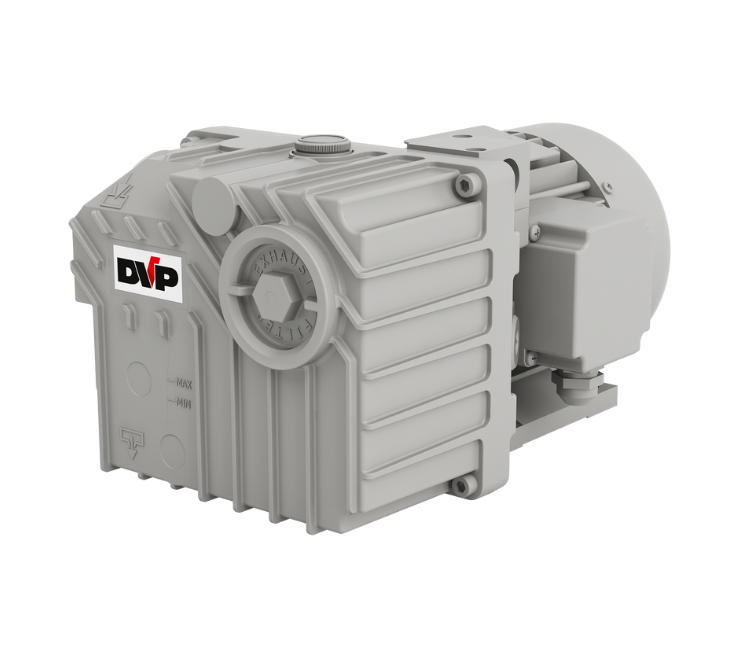
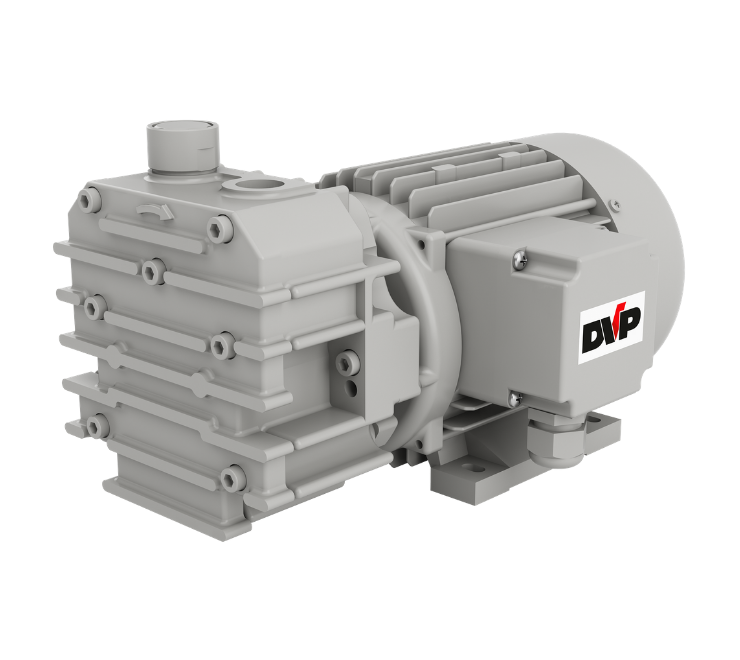
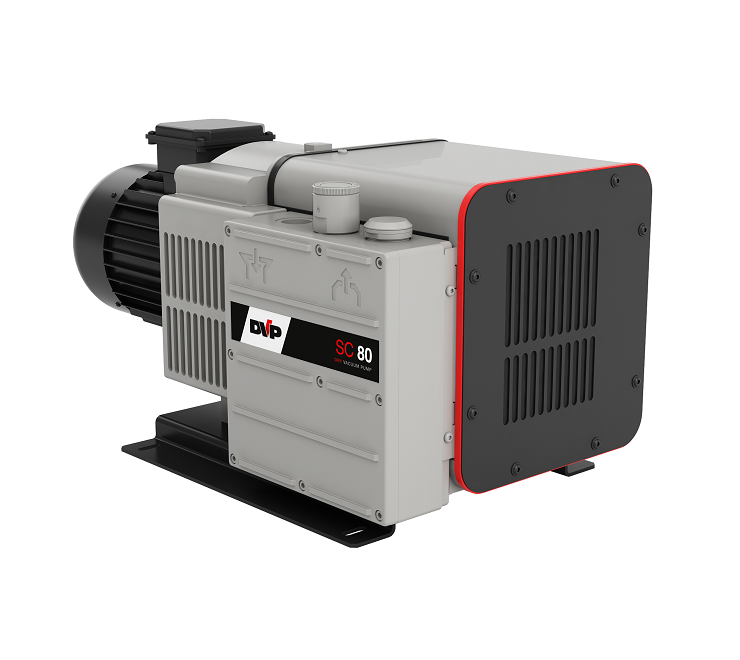
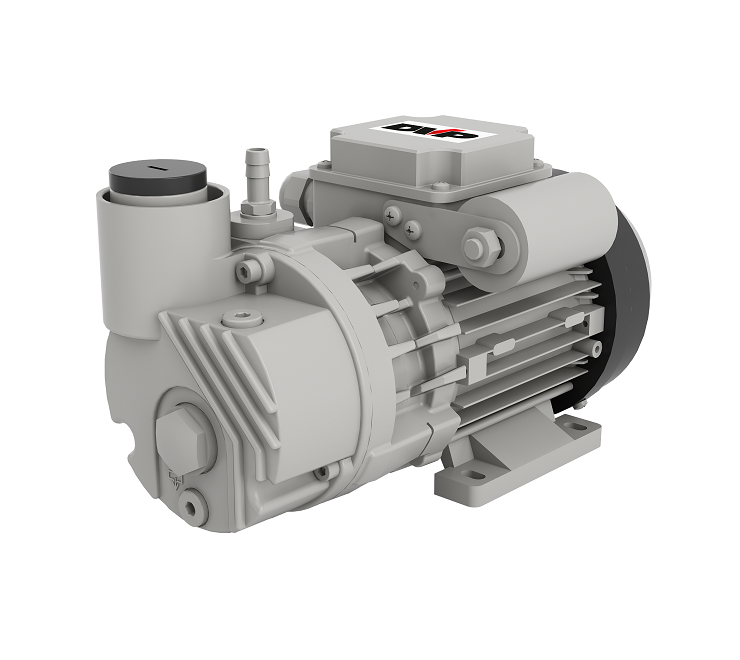
An oil-free rotary vane vacuum pump uses an eccentrically mounted rotor with vanes that slide outward during rotation to form working chambers. In oil-free designs, the vanes are typically self-lubricating graphite, so no oil enters the pumping chamber. That makes the discharge clean and helps reduce contamination risk in processes where product cleanliness matters. DVP’s oil-free rotary vane range also shows why this technology is popular: it is designed for continuous operation, can also be used as a compressor, and covers applications from compact OEM duty to larger industrial systems.
This is exactly where an oil-free vane pump becomes attractive. If the process needs clean, dry vacuum without oil in the pumping chamber, an oil-free rotary vane design is often the right place to start. Winston’s current DVP SC page already positions the range for clean-process applications such as food, medical, packaging, and OEM systems, with capacities up to 150 m³/h.
Oil-free vane pump vs oil-lubricated rotary pump
The simplest way to compare them is by application fit.
An oil-free vane pump is usually the better choice when your priority is clean operation, low contamination risk, and straightforward dry-running service. Industry suppliers consistently position oil-free rotary vane technology for clean environments, continuous operation, and applications such as packaging, medical systems, pick-and-place, printing, holding, lifting, and woodworking.
A lubricated rotary pump is often the better choice when you need deeper vacuum, broader rough-to-medium vacuum performance, or a technology better suited to more demanding vacuum duties. Oil-lubricated rotary vane pumps are commonly positioned for higher pumping performance, reliable operation in rough and medium vacuum, and a wide span of industrial and laboratory uses.
There is one more important selection rule: DVP states that oil-free rotary vane vacuum pumps should not be used when the aspirated air contains moisture, oil, or other traces of liquid. So if your process gas is wet or vapour-laden, you should compare the broader vacuum pump range or move toward a more suitable lubricated or alternative technology instead of forcing an oil-free vane solution into the wrong duty.
Where oil-free vane pumps are commonly used
Oil-free rotary vane vacuum pumps are widely used where clean discharge and compact design matter. DVP lists applications across medical, printing and paper, food and beverages, packaging, plastic, rubber and resin, glass, stone and wood, and pneumatic conveying. Other manufacturers also position dry rotary vane pumps for packaging, medical systems, pick-and-place, CNC clamping, holding and lifting, and laboratory vacuum.
That makes the technology especially relevant for businesses in Singapore that need dependable vacuum in clean-process or OEM settings. If your duty is light-to-medium industrial vacuum and you want a compact, quiet, oil-free solution, a rotary vane design is often one of the most practical starting points.
How to choose the right vane pump for your process
Before selecting a vane pump, answer five questions clearly.
First, what vacuum level do you actually need? Second, does the process require oil-free operation? Third, is the gas stream dry, or does it contain moisture or condensable vapour? Fourth, will the pump run continuously or intermittently? Fifth, how important are local spare parts, service access, and repair turnaround?
If the answer points to clean, dry, continuous-duty vacuum, start with an oil-free vane pump. If the duty calls for deeper vacuum or a different operating profile, compare a rotary pump or the wider vacuum pump range before making the final choice.
Final takeaway
A vane pump is not always the same thing in every search result. For vacuum buyers, the key distinction is whether you need a rotary vane vacuum pump and, if so, whether the application should be oil-free or oil-lubricated.
If your process needs clean, dry vacuum for packaging, medical, printing, holding, lifting, or OEM equipment, an oil-free vane pump is usually the best first step. If you need deeper vacuum or a different duty profile, compare a rotary pump instead. That approach helps the reader understand the topic at an informational level while naturally leading them to the correct Winston product page for the next step.
FAQ
A vane pump is a positive-displacement pump that uses sliding vanes mounted in a rotor to move gas or fluid through expanding and contracting chambers. In vacuum applications, it is used to evacuate gas from a system.
“Vane pump” is a broad term. A rotary vane vacuum pump is the vacuum-specific version used to generate vacuum for industrial or laboratory applications. Search results often mix it with hydraulic or liquid-transfer vane pumps.
Choose an oil-free vane pump when the process requires clean, dry operation and low contamination risk, especially in packaging, medical, printing, and similar clean-process environments.
A lubricated rotary pump is often better when deeper vacuum or a more demanding vacuum duty is required. It is also worth considering when the application goes beyond the best-fit range of dry oil-free vane technology.

Author Bio
Andrew

Andrew is a seasoned marketing professional with over 14 years of experience at Winston Engineering, where he has grown from Marketing Executive to Marketing Manager. With a deep understanding of the industrial and engineering sector, he specialises in brand development, digital transformation, and content strategy. Andrew's expertise spans social media marketing, web content, advertising, and corporate events, making him a key voice in communicating Winston Engineering's solutions to audiences across the region.
See all posts by Andrew »