
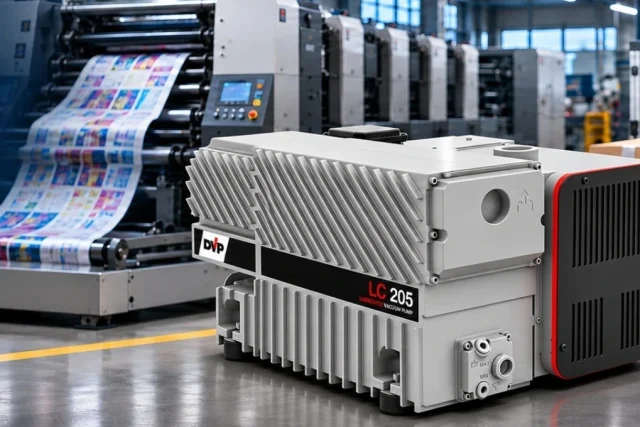
If you run a printing press or packaging line in Bangladesh, you already know vacuum pumps are not optional. When the vacuum drops, sheets double-feed, packages don’t seal properly, and machines stop. In a country where humidity is high and electricity bills keep rising, a reliable vacuum system quietly decides how smooth your day runs.
Real Jobs Vacuum Does on the Floor
On sheet-fed presses the pump separates the top sheet from the pile so the machine doesn’t grab two at once. It holds the paper flat while printing and helps move it through folders, collators, stitchers and binding lines. Die-cutting and laminating machines also depend on it. Paper dust and powder are constant problems here, so pumps that can handle dirty air last longer.
In packaging the work is different. Vacuum packaging machines pull air out of pouches for food and medicine. Thermoforming lines use strong vacuum to shape plastic into trays and blisters. Robotic arms and pick-and-place systems lift products with suction cups. Carton erectors and tray formers need vacuum just to open and shape the boxes. Many of these lines run long shifts, so the pump has to keep working without drama.
What Actually Works in Local Conditions?
Most factories still use dry-running rotary vane pumps. They are simple, easy to find, and do the job on feeders and finishing equipment. Combined pressure-and-vacuum models are useful because one unit both sucks and blows air for sheet separation.
Claw pumps are showing up more in bigger plants. They run without oil in the chamber and need less frequent attention. They also handle paper dust better than older vane pumps when the filters stay clean. Side-channel blowers work well when you need a lot of airflow at lower vacuum. Larger factories are starting to look at variable-speed screw pumps because they can cut power use when demand changes during the day.
Oil-free pumps make sense for food and pharmaceutical packaging. Heat, humidity and dust are normal here, so good filtration and cooling are not extras — they are necessary.
Why the Choice Matters?
A pump that holds steady vacuum means fewer jams and less wasted material. Newer claw or variable-speed units often use less electricity than the old fixed-speed ones many factories still run. Moving pumps out of the main hall into a central system also cuts noise and heat on the production floor.
Spare parts and service matter a lot in Bangladesh. Brands with proper local distributors make life easier when something fails. Waiting weeks for a part from abroad is not realistic when a press is down.
Practical Advice
Match the pump to what your machines actually need at full speed. Oversizing wastes money. Undersizing causes headaches later. Ask the supplier for a proper calculation instead of guessing.
Keep the inlet filters clean. Paper dust kills rotary vane pumps faster than almost anything else. Watch the vacuum gauge — a slow drop usually means the filter is clogging. In hot factories give the pumps enough air to breathe. Keep a few common wear parts in stock so a small problem does not become days of downtime.
Bigger plants with several machines often do better with a central vacuum system. It is quieter, easier to maintain, and usually more efficient than many small pumps running all the time.
Local Reality
A few companies supply vacuum pumps and related systems for the Bangladesh market. One option is Winston Engineering — you can check their Bangladesh page here and see their range of vacuum pumps here. It’s worth contacting them (or other local distributors) to compare options, service support, and lead times before deciding.
Bottom Line
Vacuum pumps are not glamorous, but they keep the line moving. Choose one that fits your actual production, keep it maintained, and work with a supplier who can support you locally. In a competitive market those small decisions add up to fewer stoppages, less waste, and lower running costs.
Frequently Asked Questions (FAQ)
What type of vacuum pump is most common in Bangladesh printing factories?
Most sheet-fed presses and finishing machines still use dry-running rotary vane pumps. They are simple, widely available, and do the job well for sheet feeding and paper handling. Combined pressure-and-vacuum models are especially popular.
Are oil-free vacuum pumps better for packaging?
Yes, especially for food and pharmaceutical packaging. Oil-free pumps (like claw or certain rotary vane models) reduce the risk of contamination. They also need less frequent oil changes, which is practical in busy factories.
How important is local service support?
Very important. When a pump fails, waiting weeks for a part from overseas can stop production. It’s better to work with suppliers who have presence or partners in Bangladesh so you can get filters, vanes, and technical help faster.
Where can I find vacuum pumps for the Bangladesh market?
You can check Winston Engineering’s Bangladesh page here and their vacuum pump range here. It’s worth comparing a few suppliers on price, lead time, and after-sales support before deciding.
Should I go for individual pumps or a central vacuum system?
Smaller factories usually do fine with individual pumps on each machine. Larger plants with several presses or packaging lines often save money and reduce noise by installing a central system. It depends on how many machines you run and how long they operate each day.
How often do vacuum pumps need maintenance in local conditions?
In Bangladesh’s dusty and humid environment, filters should be checked regularly — sometimes every few weeks if paper dust is heavy. Vane pumps need vane and oil checks according to the manufacturer’s schedule. Ignoring filters is the fastest way to shorten a pump’s life.

Author Bio
Javier

Javier is a Marketing Executive at Winston Engineering with a strong foundation in digital marketing, content creation, and SEO. Holding a Bachelor's degree in Marketing from UTAR, he brings a blend of creative and analytical skills to the team, managing everything from social media and Google Ads to video production and website content. Javier's expertise spans Adobe Illustrator, Adobe Premiere Pro, Google Analytics, and CMS platforms, making him a versatile contributor to Winston Engineering's growing digital presence across the region.
See all posts by Javier »