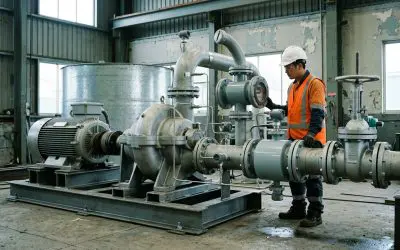
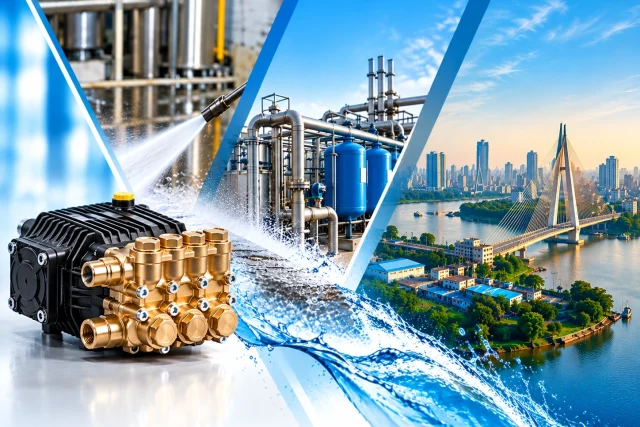
Bangladesh’s industries are expanding fast — textiles, chemicals, pharmaceuticals, water treatment plants, and manufacturing facilities all need reliable ways to move fluids under pressure. When the job calls for high pressure and controlled flow, plunger pumps often become the practical choice.
This guide covers what these pumps actually do, where they fit in local applications, and a straightforward way to pick the right one without overcomplicating the decision.
What a Plunger Pump Really Is?
A plunger pump is a positive-displacement machine. A smooth cylindrical plunger moves back and forth inside a chamber. On the outward stroke it draws fluid in through an inlet valve; on the inward stroke it pushes the fluid out under pressure through the discharge valve.
The key design point is that the high-pressure seal stays fixed in place while the plunger slides through it. This is different from a piston pump, where the seal travels with the piston. That stationary seal is one reason plunger pumps handle higher pressures more comfortably.
You’ll commonly see them as triplex units (three plungers) because the overlapping strokes smooth out the flow. They can be driven by electric motors, diesel engines, or other power sources depending on what’s available on site.
Where Plunger Pumps Are Used in Bangladesh?
Local demand is growing in a few clear areas:
- Water and wastewater treatment
Many plants use them for high-pressure feed into reverse-osmosis systems or for accurate dosing of coagulants, polymers, and pH chemicals. Industrial effluent treatment plants (ETPs) also rely on them for cleaning and chemical injection. - Chemical processing and pharmaceuticals
Precise metering of acids, alkalis, catalysts, or inhibitors is common. Material of construction becomes critical here — stainless steel or specialised alloys are often needed to resist corrosion. - Industrial cleaning
Textile factories, food plants, and general manufacturing sites use high-pressure water jetting to clean tanks, heat exchangers, and production equipment. Plunger pumps deliver the steady pressure these systems need. - Agriculture and fertigation
Some larger farms and commercial growers use them for chemical injection into irrigation lines. - Other industrial duties
Hydrostatic testing, boiler chemical dosing, paper-mill chemical feed, and certain process transfers also show up regularly.
These applications match the sectors that are expanding in Bangladesh right now. The right pump reduces downtime and keeps processes stable.
How to Select the Right Pump?
Start with the actual duty, not the catalogue.
- Pressure
Note the maximum pressure the system will see, then add a sensible safety margin (usually 10–20 %). Plunger pumps come into their own once pressures climb above the comfortable range of many centrifugal pumps. - Flow rate
Calculate what the process really needs in litres per minute or cubic metres per hour. For metering jobs, accuracy and turndown range matter more than raw capacity. Oversizing wastes money and can create control problems. - Fluid properties
Viscosity, temperature, corrosiveness, and any solids content decide the materials. Ceramic plungers and quality packing last longer in many duties, but they still prefer relatively clean fluids. Heavily abrasive slurries may need a different style of pump. - Duty cycle and site conditions
Continuous 24-hour operation needs a heavier power end and better cooling than intermittent use. Bangladesh’s heat and humidity also affect motor and lubrication choices. Power availability (stable electricity versus diesel) influences the drive. - System design details
Reciprocating pumps pulse. A triplex design helps, but most installations still benefit from a pulsation dampener, a properly sized relief valve, and short, large-diameter suction piping. Flooded suction is always preferable. - Power and practicalities
Work out the required horsepower or kilowatts with a service factor, then check that local service and spare parts are realistic. A pump that is hard to maintain in Dhaka or Chittagong will cost more in the long run.
Write these points down clearly. A good supplier can then match a model to the real conditions instead of guessing.
Practical Points for Bangladesh Conditions
- Choose industrial-grade construction. The cheapest option often ends up more expensive once packing and valves start wearing.
- Match materials to the water or chemicals you actually use. Textile dyeing chemicals and ETP streams can be aggressive.
- Confirm continuous-duty ratings if the pump will run long hours in a hot plant.
- Look for local or regional technical support. Spare packing, valves, and plungers should be obtainable without long delays.
- For metering applications, check stroke adjustment accuracy and whether automatic control (4–20 mA) is available.
Winston Engineering supplies high-pressure plunger pumps and related industrial equipment, with application support for the kinds of duties common in Bangladesh. Contact them to size your right plunger pump.
Installation and Upkeep Notes
Provide proper suction conditions — starved suction is a common cause of early failure. Keep strainers clean. Follow the lubrication schedule and check packing regularly. Unusual noise, rising temperature, or loss of pressure usually points to worn valves or packing.
Keeping a small stock of common wear parts on site saves time when something needs changing. Operators who understand basic startup and shutdown procedures also help the pump last longer.
Quick Answers to Common Questions
Plunger versus piston?
The seal is fixed on a plunger pump and moves with the piston on a piston pump. Plunger designs generally manage higher pressures more easily with cleaner fluids.
Can they handle abrasive liquids?
They prefer relatively clean fluids. Highly abrasive media usually need special materials or a different pump type.
How important is local support?
It matters a lot. Quick access to advice and genuine parts keeps production running.
Are they good for chemical metering?
Yes, many metering duties use plunger pumps when accuracy and pressure capability are both required.
Final Thoughts
Plunger pumps earn their place when high pressure and controlled flow are needed. The selection process is straightforward once you define pressure, flow, fluid, and duty clearly. Good materials, proper system design, and realistic maintenance expectations make the difference between a pump that works for years and one that becomes a headache.
If you have a specific duty — pressure, flow, fluid type, and hours of operation — a supplier with application experience can narrow the options quickly. Winston Engineering’s team works with these kinds of industrial requirements across the region. More details on their Bangladesh offerings are available at https://winstonengineering.com/bangladesh/.
Getting the selection right the first time saves money, reduces downtime, and keeps processes stable.

Author Bio
Javier

Javier is a Marketing Executive at Winston Engineering with a strong foundation in digital marketing, content creation, and SEO. Holding a Bachelor's degree in Marketing from UTAR, he brings a blend of creative and analytical skills to the team, managing everything from social media and Google Ads to video production and website content. Javier's expertise spans Adobe Illustrator, Adobe Premiere Pro, Google Analytics, and CMS platforms, making him a versatile contributor to Winston Engineering's growing digital presence across the region.
See all posts by Javier »