In modern industrial systems, the need for low to medium pressure air is essential to support various production processes. From wastewater treatment facilities and food and beverage industries to manufacturing sectors, the use of a root blower provides a reliable and stable solution. It is therefore not surprising that many companies are currently looking for trusted and high-quality root blower suppliers.
What Is a Root Blower?
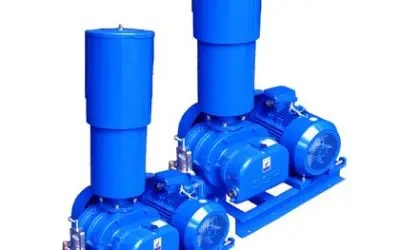
A root blower is a type of positive displacement blower that operates using two or three lobe rotors that rotate synchronously inside a casing. As the rotors rotate, air is trapped between the lobes and the casing and then transferred from the inlet side to the outlet side.
Unlike centrifugal blowers, this system does not compress air within the rotor chamber. Instead, it transfers a constant volume of air. Pressure is generated due to resistance on the discharge side of the system.
Working Principle of a Root Blower
To understand why many industries consider purchasing a root blower, it is important to know how this system works technically. A root blower belongs to the positive displacement blower category, meaning that air is moved in a fixed volume with each rotor rotation.
Below is a more detailed explanation of its working principle.
1. Air Intake Process (Suction Phase)
Air first enters through the inlet side when the rotor begins to rotate. Inside the casing, two or three lobe rotors rotate in opposite directions with precise synchronization through timing gears. When the gap between the rotors opens toward the inlet, a cavity is created and air immediately fills the space.
At this stage, no pressure increase occurs. The air is simply trapped in the space between the lobes and the casing wall.
2. Air Transfer Process (Transfer Phase)
As the rotors continue to rotate, the trapped air is carried along with the rotor movement toward the discharge side. This process is purely a volume transfer, not internal compression.
This is what differentiates a root blower from a compressor. There is no volume reduction inside the rotor chamber. Air is simply transferred from one side to the other with a relatively constant amount per rotation.
Because of this characteristic, the flow capacity remains very stable and predictable based on the rotational speed (RPM).
3. Air Release Process (Discharge Phase)
When the chamber carrying the air reaches the outlet side, the air is released into the system. This is where pressure increases—not because of internal compression, but due to resistance from the downstream system (such as pipes, diffusers, or aeration tanks).
Discharge pressure forms because the incoming air must overcome the existing system pressure. The greater the resistance, the higher the pressure measured at the outlet side.
4. Positive Displacement Characteristics
Because it operates using a positive displacement principle, several key characteristics appear:
-
The air volume per rotation remains relatively constant
-
The flow rate is not significantly affected by pressure changes as long as it remains within the design limit
-
Capacity can be adjusted by changing the motor speed
-
Ideal for systems requiring consistent airflow
Unlike centrifugal blowers whose performance depends heavily on pressure curves and speed, root blowers tend to deliver a more consistent output.
Types of Root Blowers
In general, root blowers are classified based on rotor design and application type.
Based on Rotor Design
1. Two-Lobe Blower
This blower uses two rotors shaped like the number eight. The design is relatively simple, easy to maintain, and typically requires lower investment costs.
2. Three-Lobe Blower
This design uses three lobes on the rotor. It produces a more stable airflow with lower vibration and noise levels compared to the two-lobe type.
Based on Application Type
1. Wet & Dry Type
Some models are specifically designed for wet applications, such as aeration systems in wastewater treatment plants. Other models are used to supply dry air for various industrial processes.
In many modern industrial applications, three-lobe blowers have become more popular because they offer smoother performance, greater stability, and improved operational efficiency.
Taiko SSR Root Blower
Advantages of the Taiko SSR Root Blower
-
Supplies clean air because the SSR type is an oil-free blower
-
Supports continuous operation thanks to its high durability
-
Compact, lightweight, and easy to install
-
The helical port structure significantly reduces noise levels
-
More cost-efficient due to lower power consumption
-
Available in various airflow capacities through different rotational speeds
-
Maintains stable performance under various pressure conditions
-
Multiple base frame options are available, making it easier to replace other blower types
-
Easy maintenance
High-Quality Root Blower Solutions for Your Industry
If you are looking for a reliable root blower, choosing a proven and trusted brand is an important step. The Taiko SSR Root Blower offers a combination of stable performance, high durability, and operational efficiency for various industrial applications.
With proven usage across many industries, the Taiko SSR Root Blower is a safe and reliable choice for aeration systems and other air supply applications.
For product information and technical consultation, you can contact Winston Indonesia, who are ready to help provide the most suitable root blower solution for your industrial needs.