



ROTO – Progressive Cavity Pump
Description
Specification
Downloads
Progressive Cavity Pumping Principle
The pumping element consists of a precision-engineered external single-helical metal rotor and an internal double-helical elastomer stator. Due to the special profile of the rotor and stator assembly, sealing lines are formed along the rotor axis, which are maintained under both static and dynamic conditions.
As the rotor rotates inside the stator, cavities are formed and continuously move from the suction end to the discharge end of the pump while carrying the fluid. This continuous cavity movement allows the fluid to be transferred smoothly and consistently through the pump.
Advantages of Progressive Cavity Pumps
1. Positive Displacement
This pump delivers a consistent and measurable flow rate. The flow capacity is directly proportional to the rotational speed, while the generated head remains relatively independent of the pump speed.
Benefits for Users:
- More stable flow rate
- Suitable for dosing and precise fluid transfer
- Ideal for industrial processes requiring continuous flow
2. Self-Priming
Progressive Cavity Pumps have self-priming capabilities, allowing them to operate under suction lift conditions without always requiring a foot valve.
Benefits:
- Easier installation and operation
- Suitable for transferring fluids from tanks, drums, pits, or below-ground areas
- Makes start-up processes more practical
3. Non-Clogging
This pump can handle fluids containing suspended solids or media with a high solids content.
Benefits:
- Suitable for sludge, slurry, wastewater, pulp, paste, and viscous fluids
- Reduces the risk of clogging
- Supports industrial processes involving non-homogeneous fluids
4. Low NPSH Requirement
The catalog specifies suction lift capability of up to approximately 9.5 meters water column (mwc) while remaining effective under high vacuum conditions.
Benefits:
- Suitable for applications with challenging suction conditions
- Supports fluid transfer from low-level positions
- Reduces the risk of suction problems when the system is properly designed
5. Low Internal Velocity
Progressive Cavity Pumps operate with low internal velocity, minimizing degradation of shear-sensitive media.
Benefits:
- Suitable for sensitive fluids
- Ideal for food products, specialty chemicals, polymers, emulsions, and viscous fluids
- Reduces damage to fluid structure during pumping
6. Reversible Operation
This pump can operate in both flow directions due to its reversible rotation capability.
Benefits:
- Flexible for transfer applications
- Useful for fluid emptying or return processes
- Simplifies certain system designs
7. Silent Running
The rotor rotates inside an elastomer stator, resulting in smooth and relatively quiet operation.
Benefits:
- More comfortable working environment
- Reduces noise levels in production areas
- Suitable for facilities requiring stable and quiet operation
8. Separate Bearing Housing
The catalog also highlights the separate bearing housing design, allowing fluids to be pumped without contamination.
Benefits:
- Maintains fluid quality
- Reduces contamination risk from the bearing system
- Suitable for applications requiring hygienic or clean processing
Industrial Applications
Progressive Cavity Pumps are suitable for a wide range of industrial applications, including:
- Wastewater treatment
- Sludge transfer
- Chemical processing
- Oil & gas
- Food & beverage
- Pulp & paper
- Mining slurry
- Paint, coating, and resin transfer
- Polymer dosing
- Sewage and effluent handling
- Viscous liquid transfer
- Transfer of media with high solid content
| Housing | |
|---|---|
| Self-Priming | Inherently self-priming, the pumps can work on snore & do not require a foot valve. |
| Non-Clogging | Can handle solids in suspension or medias containing a high percentage of solids. |
| Low NPSH Requirement | Suction lift capabilities of up to 9.5 mwc & effective even in high vacuum conditions. |
| Low Internal Velocity | |
| Reversible | |
| Silent Running | Rotors turn inside a resilient stator & thus generate little noise. |
Download Links
Our Product
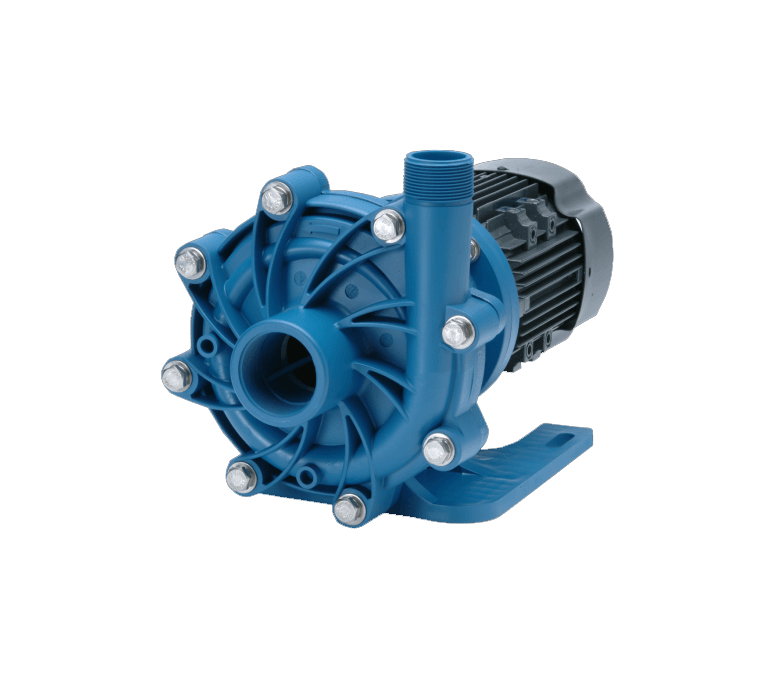
Magnetic Drive Sealles Pumps
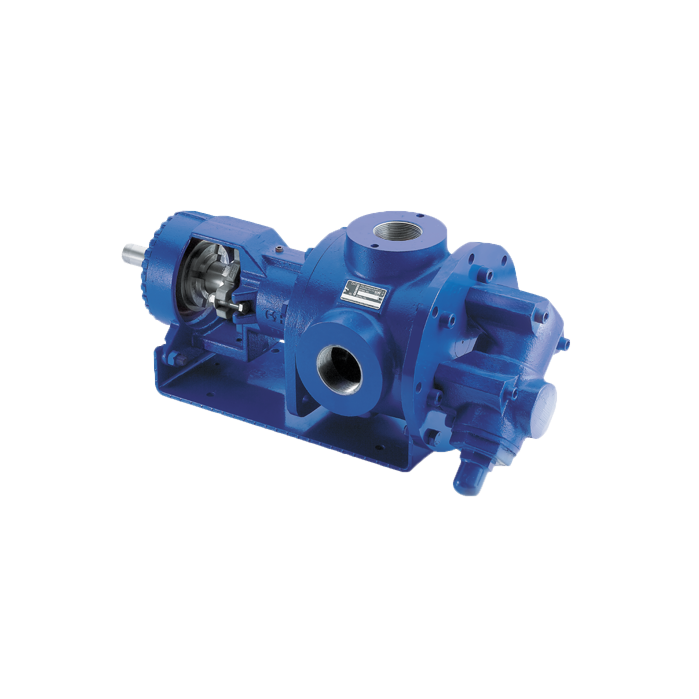
G Series Rotary Gear Pumps
No results found.