


Gear Pump
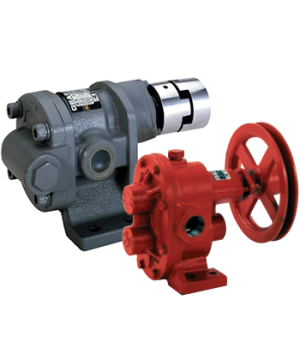
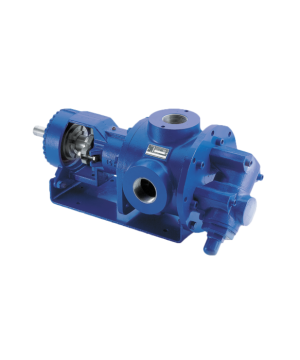

Gear Pump
Internal Gear Pumps for Industrial Applications
Gear pumps are among the most important types of industrial pumps. They are divided into two categories: external gear pumps and internal gear pumps. Both are widely used in fluid handling applications across various industries.
These gear-driven pumps are commonly used to transfer low-viscosity fluids such as alcohol, solvents, liquefied gases, and certain chemical liquids.
Before using this type of pump, it is important to understand its specifications and functions.
Understanding Internal and External Gear Pumps
Gear pumps belong to the positive displacement pump category because they operate by trapping a fixed volume of fluid and discharging it at a constant flow rate.
Before discussing further, let us first review the types of gear pumps commonly used in industrial applications.
Types of Gear Pumps in Industrial Applications
Gear Metering Pumps
The first type is the gear metering pump, which is designed for highly precise volumetric measurement. This type of gear pump can be used in various industrial applications that require accurate fluid dosing and transfer.
Hydraulic Pumps
The second type is the hydraulic pump, which converts mechanical energy into hydraulic energy. This equipment is capable of lifting heavy loads through force transfer using liquid fluid as the transmission medium.
This mechanism enables the system to generate significant power from the initial discharge stage. The principle involved is known as displacement. When the piston is pulled, a chamber is created inside the pump.
As the chamber expands, pressure inside the chamber decreases. Since the surrounding air pressure is higher than the pressure inside the pump chamber, fluid enters the chamber through the check valve.
When the piston is pushed back, the fluid is compressed and discharged automatically due to the generated pressure.
Industrial Pumps
Another type is the industrial pump, which is typically used for heavy-duty tasks such as transferring water, petroleum, wastewater, and sludge. Internal gear pumps are commonly utilized for these industrial purposes.
Internal Gear Pump
An internal gear pump consists of two gears that function to move fluid within the pump casing. One gear acts as the driving gear, while the other serves as the driven gear. The inner driving gear plays a major role in ensuring proper fluid movement within the pump.
How Internal Gear Pumps Work
Basically, internal gear pumps operate using an internal gear connected to the drive mechanism, while the outer gear acts as an idler gear.
Initially, fluid enters through the suction port and flows into the space between the gears. A crescent-shaped partition separates the fluid and acts as a seal between the suction and discharge ports.
The fluid then fills the discharge area and is continuously pushed forward, allowing a smooth and consistent flow.
The internal gear pump moves fluid toward the outlet side due to the force generated by the outer gear. The inner gear then meshes with the outer gear, pushing the working fluid out through the pump outlet.
Features of Internal Gear Pumps
- Capable of handling small flow applications
- Compact footprint design
- High Net Positive Suction Head (NPSH) capability
External Gear Pump
In addition to internal gear pumps, there are also external gear pumps, which operate by transferring fluid through the spaces between the gear teeth and the casing walls.
The working principle of an external gear pump is as follows:
As the gear pair begins rotating, the suction side expands, causing pressure to decrease and allowing fluid to enter the pump. The fluid becomes trapped between the gear teeth as the gears continue rotating.
The fluid is carried through the space between the gears and the casing.
The rotating gears then push the fluid toward the discharge side under pressure. The gears are supported by bearings on both sides, allowing the pump to operate smoothly with minimal noise, even under high pressure conditions, while preventing shaft deflection.
Unlike internal gear pumps, external gear pumps discharge fluid through the outlet because the gear pair always maintains a contact point. Even while rotating, the gears remain in constant contact with one another.
This mechanism prevents fluid from passing through the gear contact points and ensures proper fluid transfer within the pump.
Features of External Gear Pumps
Some key features of external gear pumps include:
- Solid pump construction with a simple and attractive design
- High-capacity distribution due to large outlet size
- Suitable for low, medium, and high-pressure applications
- Strong shaft support and tight tolerances between gear surfaces
Advantages of Using Gear Pumps
There are several benefits to using both internal and external gear pumps, including:
- Easy and cost-effective maintenance
- Capable of handling various fluid viscosities
- Flexible and easy flow control
- Simple reconstruction and repair process
- Less sensitive to cavitation
Disadvantages of Gear Pumps
Despite their advantages, gear pumps also have some limitations:
- They require fluids free from abrasive particles
- They can produce noticeable noise due to gear meshing during operation
Main Components of a Gear Pump
Internal gear pumps consist of several main components, including:
- Driver Gear – Connected to the main drive system and rotates using power from the motor or engine
- Driven Gear – Rotates together with the driver gear during operation
- Casing – Houses both the driving and driven gears within the pump assembly
- Suction Side – The section where low-pressure fluid enters the pump through the inlet port
- Discharge Side – The section where high-pressure fluid exits the pump through the outlet port
- Prime Mover – Supplies power to the shaft where the gears are mounted, such as an electric motor, internal combustion engine, or manual drive system
- Safety Valve or Relief Valve – Installed on the discharge side to release excess pressure and prevent pump damage
Gear Pump Prices
Gear pumps are available at relatively affordable prices, making them a cost-effective solution for industrial applications. Special promotional offers are also frequently available for gear pump purchases.
Get high-quality internal gear pumps at competitive prices to support your industrial needs. Make sure to purchase from a trusted supplier that provides genuine products.
Winston Engineering is ready to provide reliable and original gear pump solutions for your business. Choose wisely and ensure the best performance for your industrial operations.
Gear Pump
Best pump for transferring oil type of liquid
Gear pumps are compact and simple with a limited number of moving parts. They are unable to match the pressure generated by reciprocating pumps or the flow rates of centrifugal pumps but offer higher pressures and throughputs than vane or lobe pumps. Gear pumps are commonly used for pumping high viscosity fluids such as oil, paints, resins or foodstuffs.
Gear pumps are self-priming and can dry-lift although their priming characteristics improve if the gears are wetted. The gears need to be lubricated by the pumped fluid and should not be run dry for prolonged periods. Some gear pump designs can be run in either direction so the same pump can be used to load and unload a vessel, for example.