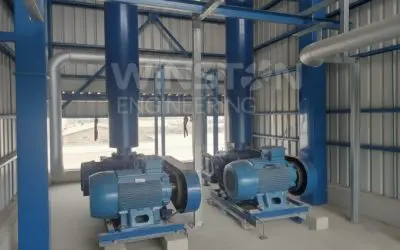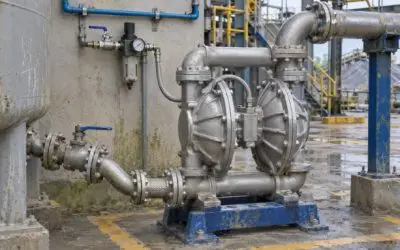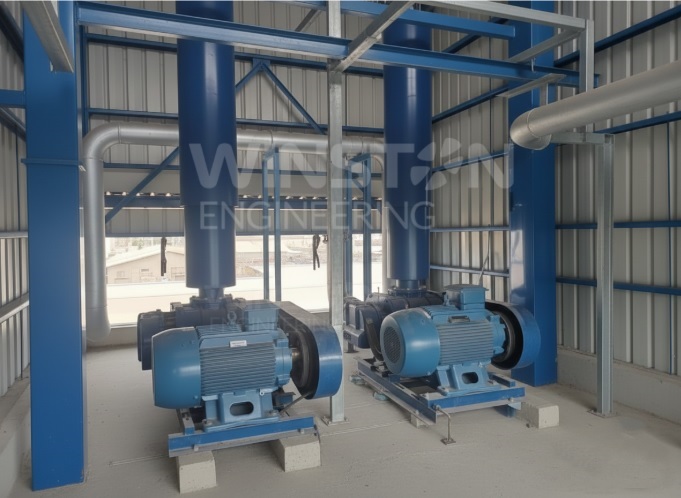
Vacuum blowers are used in various industrial processes that require stable air or gas transfer. These units can be found in wastewater treatment systems, pneumatic conveying, backwashing, vacuum packaging, and aeration processes. However, vacuum blowers are often considered the same as vacuum pumps, even though they have different operating characteristics and capabilities.
Selecting a vacuum blower involves more than considering connection sizes or motor power. Airflow capacity, vacuum level, differential pressure, temperature, gas characteristics, and operating conditions must all be analyzed to ensure the blower performs according to process requirements.
How Does a Vacuum Blower Work?
A Roots-type vacuum blower operates based on the positive displacement principle. Inside the casing, there are two lobe-shaped rotors that rotate in opposite directions. This rotation creates chambers that carry air or gas from the inlet side to the outlet side.
The two rotors are synchronized by timing gears, allowing them to rotate without making contact with each other. This mechanism enables the blower to continuously transfer air with a relatively consistent capacity.
In vacuum applications, the blower inlet is connected to a system where pressure needs to be reduced. Air is then discharged through the outlet, allowing the pressure inside the system to drop below atmospheric pressure.
The achievable vacuum level depends on the blower capacity, rotational speed, installation conditions, system leakage, and operating differential pressure. Therefore, blower capacity and system conditions must be evaluated together.
Industrial Applications of Vacuum Blowers
Vacuum blowers can be considered for various air transfer requirements in industrial processes. Some common applications include:
- Wastewater Treatment: Supplying air for aeration processes in wastewater treatment facilities.
- Pneumatic Conveying: Supporting the transfer of materials through piping systems.
- Backwashing: Providing airflow to assist in cleaning filter media.
- Fish Care and Aquaculture: Supplying air for aeration in ponds and fish farming facilities.
- Vacuum Packaging: Used in packaging systems that require pressure reduction.
- Combustion Air: Supplying air for combustion processes.
- Vacuum Holding and Material Handling: Supporting material handling processes that require vacuum systems.
Each application has different capacity and pressure requirements. For example, aeration systems require a stable air supply throughout the process, while pneumatic conveying requires consideration of the material type, conveying distance, and piping configuration.
Therefore, rotary blowers should be selected based on actual operating conditions rather than simply the type of industry in which they will be used.
How to Choose the Right Vacuum Blower
Several technical parameters should be prepared before selecting a blower:
- Airflow Capacity: Determine the actual air requirements in m³/min based on the process.
- Target Vacuum Level: Identify the required inlet pressure that must be achieved and maintained.
- Discharge Pressure: Account for resistance from piping, silencers, filters, and downstream equipment.
- Gas Characteristics: Identify temperature, humidity, corrosive properties, and particle content.
- Operating Conditions: Distinguish between intermittent and continuous-duty requirements.
- Motor Power: Select the motor based on the required duty point rather than maximum capacity alone.
- Noise Level: Consider using silencers and enclosures when the blower is installed near working areas.
- Installation Conditions: Provide a stable foundation, adequate ventilation, maintenance clearance, and appropriate piping arrangements.
A blower with insufficient capacity may struggle to meet process requirements. Conversely, selecting an oversized unit without proper calculations can increase energy consumption and create the need for additional flow control.
Taiko 2-Lobe and 3-Lobe Vacuum Blowers
Vacuum blowers play an important role in various industrial processes that require air transfer at specific capacities and pressure levels. To achieve the desired performance, blower selection must consider airflow, target vacuum level, differential pressure, gas characteristics, temperature, and operating conditions.
Taiko Roots Type Rotary Blowers are available in 2-Lobe and 3-Lobe configurations to accommodate various industrial applications. The Taiko 2-Lobe configuration can be considered for different air transfer requirements, while the 3-Lobe configuration offers smoother airflow with lower pulsation.
PT Winston Indonesia provides Taiko rotary blower solutions for industrial applications. To receive recommendations on the appropriate model, capacity, motor power, and configuration based on your process conditions, please contact the Winston Indonesia team.
Taiko offers both 2-Lobe Roots Type Blowers/Vacuum Pumps and 3-Lobe Roots Type Blowers/Vacuum Pumps for pressure and vacuum applications.
Taiko 2-Lobe Roots Type Blower/Vacuum Pump
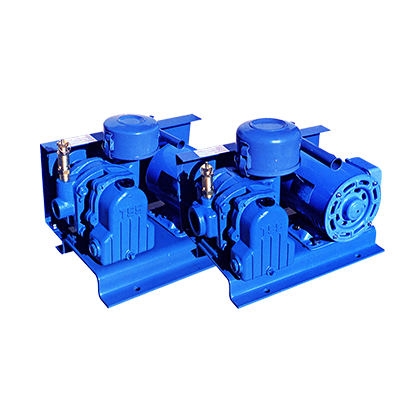
The Taiko 2-Lobe Roots Type Blower/Vacuum Pump uses a two-lobe rotor configuration to transfer air from the inlet to the outlet. This type can be considered for various applications, including wastewater aeration, fish care, backwashing, combustion air, and vacuum packaging.
Taiko 3-Lobe Roots Type Blower/Vacuum Pump

Meanwhile, the Taiko 3-Lobe Roots Type Blower/Vacuum Pump uses rotors with three lobes. This configuration is designed to produce smoother airflow with lower pulsation compared to the two-lobe design. These characteristics can help reduce vibration and noise during operation.
However, the number of lobes is not the only factor determining blower performance. Capacity, rotational speed, differential pressure, motor power, cooling systems, and installation conditions must also be taken into consideration.
Therefore, the choice between Taiko 2-Lobe and 3-Lobe configurations should be based on process requirements, performance targets, and actual operating conditions in the field.
Conclusion
Vacuum blowers play an important role in various industrial processes that require air transfer at specific capacities and pressure levels. To achieve the desired performance, blower selection must consider airflow, target vacuum level, differential pressure, gas characteristics, temperature, and operating conditions.
Taiko Roots Type Rotary Blowers are available in 2-Lobe and 3-Lobe configurations to accommodate various industrial applications. The Taiko 2-Lobe configuration can be considered for different air transfer requirements, while the 3-Lobe configuration offers smoother airflow with lower pulsation.
PT Winston Indonesia provides Taiko rotary blower solutions for industrial applications. To receive recommendations on the appropriate model, capacity, motor power, and configuration based on your process conditions, please contact the Winston Indonesia team.

Author Bio
Rian

Team PT Winston technically driven member of PT Winston Indonesia with strong practical knowledge of pumps and fluid handling solutions. We work closely with customers to understand their operating requirements, recommend suitable pump solutions, and introduce products that can improve reliability, efficiency, and overall system performance. With a hands-on and solution-oriented approach, We help bridge technical requirements with practical product selection, ensuring customers receive the right pumping solution for their applications.
See all posts by Rian »