Abrasive fluids contain particles that can erode pump components and piping systems. Examples include slurry, sludge, sand, drilling mud, paper coating, and process fluids containing crystals or minerals.
Wear cannot be completely eliminated when pumping abrasive fluids. However, the risk can be controlled through proper pump selection, wetted part materials, operating speed, piping design, and preventive maintenance.
Therefore, selecting a pump involves more than simply considering flow capacity. Particle characteristics and operating conditions must also be taken into account to ensure the pump operates efficiently without accelerating wear.
Understand the Characteristics of Particles in the Fluid
The level of abrasion is not determined solely by the amount of solids in the fluid. Particle shape, size, and hardness also affect the rate of wear on pump components.
Before selecting a pump, consider the following parameters:
- Maximum particle size and particle size distribution.
- Solids concentration by weight or volume.
- Particle hardness and shape.
- Particle settling tendency.
- Slurry viscosity and specific gravity.
- Chemical properties of the carrier fluid.
- Operating temperature.
- Required flow rate and pressure.
Sharp and hard particles can cause faster wear than rounded particles. High solids concentrations also increase the frequency of particle impacts against pump surfaces. However, even small particles can damage components if they move at high velocities or enter narrow clearances.
Therefore, selecting a pump involves more than simply considering flow capacity. Particle characteristics and operating conditions must also be taken into account to ensure the pump operates efficiently without accelerating wear.
Control Flow Velocity
Flow velocity is often one of the most significant factors contributing to abrasive wear. The higher the particle velocity, the greater the impact energy against the casing, impeller, valves, and pipe surfaces, particularly at bends or changes in flow direction.
Reducing pump speed can help extend component life. However, flow must not be reduced excessively, as particles may settle in the suction line, elbows, or the bottom of the pump casing. Such deposits can lead to blockages and disrupt pump performance.
To reduce these risks, the piping system should be designed with an appropriate diameter and a flow path that minimizes sharp bends. The use of long-radius elbows can also help reduce particle impacts at changes in flow direction.
The goal is to maintain sufficient flow velocity to transport solids without allowing it to become excessive and accelerate erosion.
Select the Right Wetted Part Materials
Pump component materials must be capable of withstanding abrasion while remaining compatible with the fluid’s chemical properties. Materials with high wear resistance are not necessarily suitable for every application, particularly when the fluid is also corrosive.
Several pump components that require consideration include:
- Casing and impeller.
- Diaphragm, ball, and valve seat.
- Rotor and stator.
- Wear plate.
- Mechanical seal and elastomers.
- Gaskets and piping materials.
Material selection must take both fluid and particle characteristics into account. Certain elastomers may help absorb particle impacts, while stainless steel or alloys may be considered for applications requiring specific mechanical and chemical resistance.
It is important to note that the combination of abrasion and corrosion can accelerate component damage. Therefore, materials should not be selected solely based on friction or wear resistance but must also be compatible with the fluid being pumped.
Avoid Operating Outside the Pump’s Design Conditions
Pumps should be operated within their recommended capacity and operating conditions. Operating outside the appropriate operating range can increase the risk of damage and accelerate component wear.
Centrifugal pumps should not be operated continuously at excessively low flow rates or far from their suitable operating point. Such conditions can increase recirculation, vibration, temperature, and uneven wear.
Meanwhile, positive displacement pumps must be equipped with appropriate discharge pressure protection, such as a pressure relief valve. This is important because pressure can rise rapidly if the discharge line is blocked or closed.
For progressive cavity pumps, dry running must be avoided because the fluid helps lubricate the contact between the rotor and stator. Operating without a fluid supply can lead to temperature increases and stator damage.
The suction line should also be inspected to ensure an adequate fluid supply. Air leaks, flow restrictions, or insufficient NPSH can cause cavitation. Cavitation damage may sometimes resemble abrasive wear, so the root cause should be identified before determining the appropriate corrective action.
Choose the Right Pump Technology for Abrasive Fluids
Each pump type has different characteristics and application limitations. Pump selection should consider particle size and concentration, viscosity, flow requirements, pressure, and operating conditions.
Several pump products that may be considered for abrasive fluid applications include:
Wilden AODD Pump

The Wilden AODD Pump may be considered for applications requiring self-priming capability, dry-running capability, and the handling of fluids containing solids.
To control wear, diaphragm, ball, and seat materials should be selected according to the level of abrasion and the fluid’s chemical compatibility. With the appropriate material configuration, components in direct contact with the fluid can be adapted to the application’s operating conditions.
Gorman-Rupp Self-Priming Pump
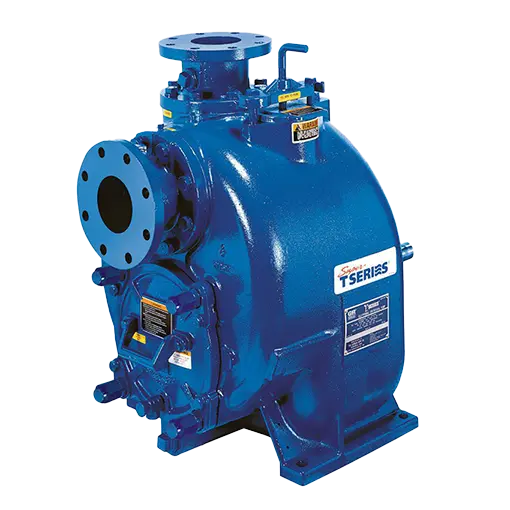
The Gorman-Rupp Super T Series is designed for a wide range of fluid transfer applications, including wastewater, sludge, and fluids containing solids, within the limitations of the specific pump model.
The back pull-out design provides easier access to internal components for inspection and maintenance. In addition, the adjustable wear plate allows clearance adjustments to help maintain pump performance as components wear over time.
Graco QUANTM EODD Pump
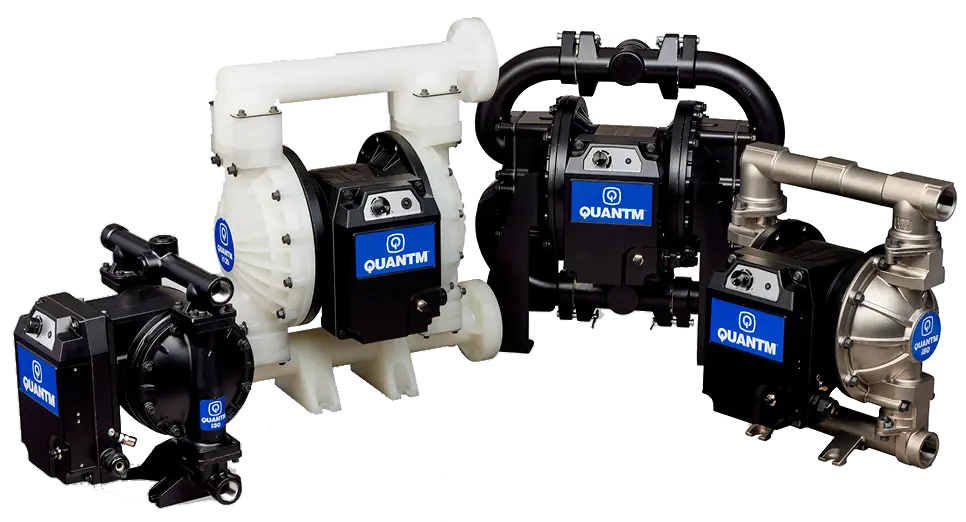
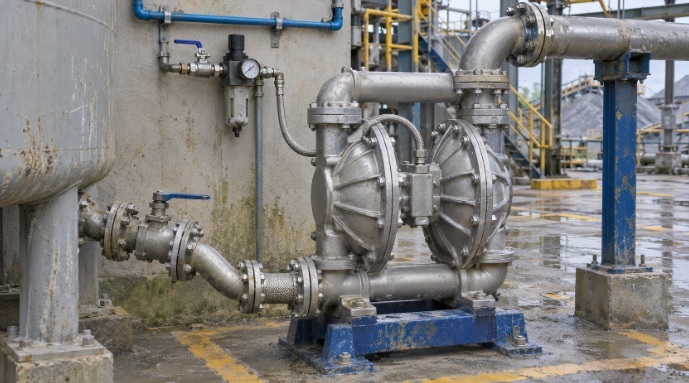
The Graco QUANTM EODD Pump is an electric-operated double diaphragm pump that may be considered for transferring fluids containing abrasive materials or solids, depending on the selected model and configuration.
Its electric drive allows operational control and provides an alternative to diaphragm pump systems powered by compressed air. Diaphragm, ball, and seat materials must still be selected according to the fluid characteristics to help control component wear.
Sydex Progressive Cavity Pump
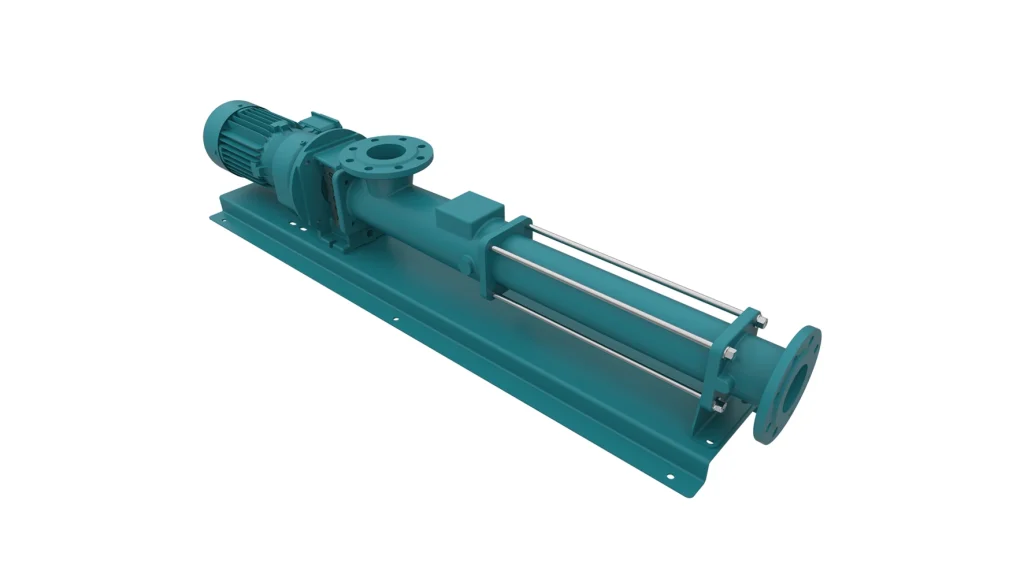
The Sydex Progressive Cavity Pump may be considered for pumping high-viscosity fluids or fluids containing solids, depending on the pump’s characteristics and application limitations.
In this technology, the rotor and stator are critical components that require particular attention. Proper material selection, speed control, and prevention of dry running are essential factors in extending component service life.
These four products are not direct substitutes for one another. Particle type and concentration, viscosity, flow requirements, pressure, and operating conditions should remain the primary factors in pump selection.
Implement Preventive Maintenance
Do not wait until flow drops significantly before conducting an inspection. Monitor and record flow rate, pressure, power or air consumption, vibration, noise, temperature, and leak frequency.
Conduct regular inspections of diaphragms, balls and seats, impellers, wear plates, mechanical seals, rotors, stators, and clearances. Minor performance changes can indicate early signs of wear. Maintaining an inventory of critical wear parts can also help reduce downtime.
Inspection records can help identify wear patterns and determine when components should be replaced. Keeping critical wear parts in stock can also minimize downtime when maintenance is required.
Conclusion
Pumping abrasive fluids without accelerating wear requires proper pump selection and operation. Particle characteristics, solids concentration, flow velocity, wetted part materials, piping design, and operating conditions must all be considered from the outset.
PT Winston Indonesia provides a range of pump solutions for abrasive fluid applications. Contact us to receive pump recommendations tailored to your industrial application requirements.

Author Bio
Rian

Team PT Winston technically driven member of PT Winston Indonesia with strong practical knowledge of pumps and fluid handling solutions. We work closely with customers to understand their operating requirements, recommend suitable pump solutions, and introduce products that can improve reliability, efficiency, and overall system performance. With a hands-on and solution-oriented approach, We help bridge technical requirements with practical product selection, ensuring customers receive the right pumping solution for their applications.
See all posts by Rian »