Oil transfer in industrial processes requires pumps that can operate reliably according to the characteristics of the fluid being handled. Different types of oil have varying viscosity levels and operating temperatures. Low-viscosity oil flows more easily, while lubricants, grease, waste oil, and heat-transfer oil require special considerations when selecting a pump.
One type of pump commonly used for these applications is the gear pump. As a positive displacement pump, a gear pump transfers a fixed volume of fluid with each rotation. This operating principle makes it suitable for a wide range of oil transfer applications, including handling high-viscosity fluids.
However, selecting a gear pump involves more than simply determining the required flow capacity. Viscosity, flow requirements, operating temperature, and pressure must all be taken into account to ensure the pump operates according to the system’s requirements.
Identify the Type of Oil to Be Transferred
The first step is to identify the fluid’s characteristics rather than immediately determining the pump capacity. Several key parameters should be considered, including:
-
Oil type and composition.
-
Viscosity at operating temperature.
-
Minimum and maximum operating temperatures.
-
Solids or abrasive particle content.
-
Fluid corrosivity.
-
Required flow rate and system pressure.
-
Intermittent or continuous operating conditions.
For example, lubricating oil and fuel oil generally have different characteristics from waste oil. Waste oil may contain contaminants or particles that can accelerate component wear. Meanwhile, grease and high-viscosity oil require additional consideration regarding suction performance and pump rotational speed.
By understanding the fluid characteristics from the outset, the appropriate gear pump type and configuration can be selected more accurately.
Viscosity Determines Pumping Performance
Viscosity refers to a fluid’s resistance to flow. The higher the viscosity, the greater the resistance as the fluid moves through the suction line and pump chambers. An undersized gear pump or one operating at excessive rotational speed may experience insufficient fluid supply at the inlet.
Viscosity should be evaluated at the actual operating temperature. Viscosity data measured at room temperature may not accurately reflect the oil’s condition during pumping. As temperature increases, oil generally becomes thinner. Conversely, when temperature decreases, oil becomes more viscous and more difficult to draw into the pump.
For highly viscous oil, the system may require preheating, a larger suction pipe, lower pump rotational speed, or a heating jacket to maintain the desired temperature. The suction line should also be kept as short as possible, with minimal elbows, to reduce excessive pressure loss.
Determine the Required Flow Rate
The flow rate should be determined based on process requirements rather than simply selecting the pump’s maximum capacity. Factors to consider include tank volume, target transfer time, operating conditions, piping length, and the requirements of downstream processes.
A gear pump produces a flow rate that is generally proportional to its rotational speed. However, the actual flow rate may still be affected by viscosity, differential pressure, internal clearance, and internal slip. Therefore, pump sizing should not be based solely on the rated flow rate in liters per minute.
Operating a pump at excessive speed to achieve the desired flow may increase the risk of cavitation, noise, temperature rise, and wear. Conversely, an oversized pump may deliver excessive flow and require additional speed control.
Consider Operating Temperature and Pump Materials
Temperature directly affects oil viscosity and the condition of pump components. As temperature increases, oil generally becomes thinner. Conversely, lower temperatures can make oil more viscous, requiring greater effort to transfer.
In addition to affecting flow, temperature must also be considered when selecting seals, bushings, elastomers, and pump construction materials. These components must be compatible with the fluid and operating temperature.
For hot oil applications or fluids that need to be maintained at a specific temperature, a jacketed head or backhead configuration may be considered to help maintain the temperature around the pump.
It is important to note that the pump’s temperature limits are not determined by the pump body alone. The seal type, internal materials, and overall configuration must also be evaluated based on the specifications of the selected model.
Match the Pump to Pressure and Operating Conditions
In addition to viscosity, flow rate, and temperature, operating pressure and duty cycle also play an important role in gear pump selection.
A gear pump is a positive displacement pump that continues to transfer fluid as long as its shaft rotates. If the discharge line is closed or blocked, pressure can rise rapidly.
Therefore, the system must be equipped with an appropriate pressure relief valve or pressure protection mechanism to prevent the pump and piping system from operating beyond their design limits.
The operating pattern should also be considered. A pump used for occasional oil transfer may require a different configuration from one operating continuously throughout a production process. For continuous-duty applications, the condition and specifications of the bearings, shaft, seals, and clearances must be suitable for the load and operating duration.
Gorman-Rupp G Series for Oil Applications
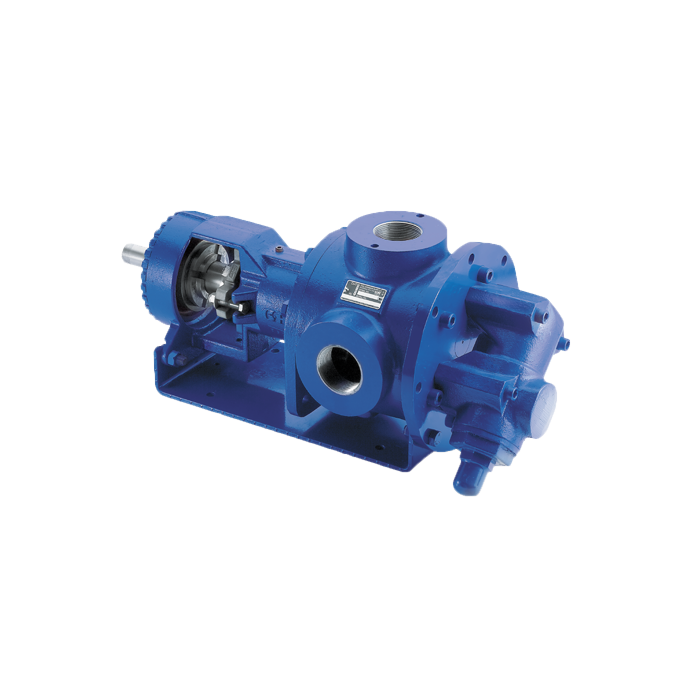
Gear Pump
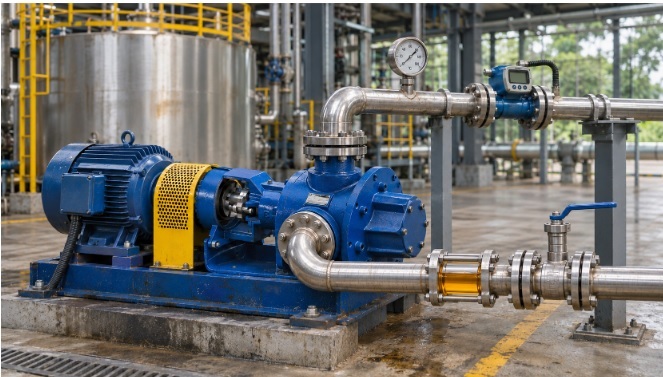
The Gorman-Rupp G Series is a rotary gear pump range available in medium-duty, heavy-duty, and extreme-duty configurations. These pumps can handle a variety of fluids, including fuel, oil, grease, asphalt, heat-transfer liquids, vegetable oil, and waste oil.
For applications involving high-viscosity oil or continuous-duty operation, the GHS Heavy-Duty variant may be one of the options worth considering.
Several features that support its use in industrial applications include:
-
Deep End Feed: Helps supply fluid to the pumping area, particularly in high-viscosity applications or challenging inlet conditions.
-
Externally Adjustable Clearance: Allows clearance adjustments without requiring the entire pump to be disassembled, helping maintain performance as component conditions change.
-
Back Pull-Out Design: Simplifies inspection and maintenance of internal components without requiring the pump housing to be disconnected from the piping system.
-
Construction Options: Available in medium-duty, heavy-duty, and extreme-duty configurations to accommodate different application requirements and operating conditions.
For waste oil applications that may contain particles or abrasive materials, an extreme-duty configuration may be considered, depending on the fluid characteristics and the limitations of the specific pump model.
With its range of construction options and configurations, the Gorman-Rupp G Series can serve as a solution for oil transfer applications across various industrial sectors.
Product Catalog: HERE
Conclusion
Selecting a gear pump for oil applications requires a thorough understanding of the fluid characteristics and operating conditions. Viscosity must be evaluated at the operating temperature, flow rate must match process requirements, and pump materials and configurations must be suitable for the operating temperature and pressure.
PT Winston Indonesia provides industrial pumping solutions, including the Gorman-Rupp G Series, for a wide range of oil transfer applications. Contact the Winston Indonesia team to discuss your application requirements and receive recommendations for a gear pump that best suits your operating conditions.

Author Bio
Rian

Team PT Winston technically driven member of PT Winston Indonesia with strong practical knowledge of pumps and fluid handling solutions. We work closely with customers to understand their operating requirements, recommend suitable pump solutions, and introduce products that can improve reliability, efficiency, and overall system performance. With a hands-on and solution-oriented approach, We help bridge technical requirements with practical product selection, ensuring customers receive the right pumping solution for their applications.
See all posts by Rian »