Selecting an industrial pump involves more than simply considering pipe size or product price. The pump must be capable of meeting the required flow rate, overcoming system pressure and resistance, operating reliably at the required temperature, and handling the characteristics of the fluid being transferred.
Choosing the wrong pump can result in insufficient flow, excessive energy consumption, leakage, cavitation, and premature component failure. Therefore, the following five parameters should be carefully evaluated before determining the appropriate pump type and model.
1. Determine the Required Flow Rate
Flow rate indicates the volume of fluid that needs to be transferred over a specific period, typically expressed in liters per minute (L/min) or cubic meters per hour (m³/h). The required flow rate should be determined based on production capacity, transfer time, and the operating pattern of the system.
Flow Rate Calculation Example:

Suppose a factory needs to fill a storage tank with a capacity of 30 m³ within 2 hours.
This means the system requires a pump with a minimum flow capacity of 15 m³/h, such as centrifugal pump solutions from Gorman-Rupp, Euroflo, or Griswold 811.
2. Calculate the Total System Head
Head represents the pump’s ability to lift or move fluid through a system while accounting for elevation differences, pipe length, fittings, valves, and friction losses.
A high flow rate does not necessarily mean that the pump also requires a high head. Therefore, both parameters must be evaluated using the pump curve. Ideally, the operating point should be located close to the Best Efficiency Point (BEP) to help ensure efficient operation and minimize excessive vibration.
Head Calculation Example:
- Vertical elevation from the source to the destination tank = 10 meters
- Pipe and fitting friction loss = 5 meters
- Required Total Head = 10 m + 5 m = 15 meters
- Tip: Select a pump, such as the Griswold 811 or FTI Magnetic Sealless Pump, whose operating point is as close as possible to the Best Efficiency Point (BEP) on the pump curve. This can help improve energy efficiency and pump reliability.
3. Understand the Difference Between Head and Pressure
Head is related to the energy required to move a fluid through a system, while pressure is affected by fluid density and the resistance of the piping network. Although head and pressure are related, they are not interchangeable parameters.
Example:
For chemical injection or high-pressure transfer of viscous fluids, such as applications requiring pressures of up to 21–25 bar, a standard centrifugal pump may not be suitable. A specialized high-pressure gear pump, such as a Liquiflo pump, may be required.
Always make sure that the pump’s rated working pressure is above the system’s operating pressure and that an appropriate safety margin is provided.
4. Check the Fluid Temperature
Temperature directly affects the suitability and service life of the pump casing, elastomers, mechanical seals, bearings, and other internal components. A material that is suitable at room temperature may not be appropriate for high-temperature applications.
Example:
If you need to transfer a hot fluid at 200°C, do not assume that a pump equipped with standard elastomers will be suitable. Depending on the application, you may consider options such as the Griswold 811 or Liquiflo Sealed & Mag-Drive Gear Pumps, which can accommodate a wide range of operating temperatures, with certain configurations rated for temperatures of up to approximately 260°C.
The actual temperature capability must always be confirmed based on the specific pump configuration, as the selected elastomer and internal components can affect the maximum allowable operating temperature.
5. Match the Pump to the Fluid Viscosity
Viscosity describes how resistant a fluid is to flow. As viscosity increases, flow resistance generally increases, which can also increase the power required to transfer the fluid.
Examples:
- Low-viscosity fluids such as water: Generally suitable for a centrifugal pump.
- Oil, resin, or other viscous chemicals: A gear pump, such as a Liquiflo pump, may be more suitable.
- Highly viscous fluids, with viscosities of up to 500,000 mPa·s, such as pastes or cosmetic products: Consider a Drum Emptying System from Flux or a progressive cavity pump such as Sydex.
Conclusion
Industrial pump selection should start with the process requirements, rather than simply focusing on the brand or connection size. Flow rate determines the required pumping capacity, head represents the energy required to overcome system resistance, pressure determines the required pressure rating of the equipment, temperature affects material selection, and viscosity helps determine the most appropriate pump technology.
Winston Indonesia offers a wide range of centrifugal, diaphragm, gear, progressive cavity, magnetic-drive, and other process pumps.
Consult your fluid properties and installation conditions with the Winston Indonesia team to identify a pump solution that is safe, efficient, and suitable for your operational requirements.
Products Related
Gorman-Rupp Super T Series®

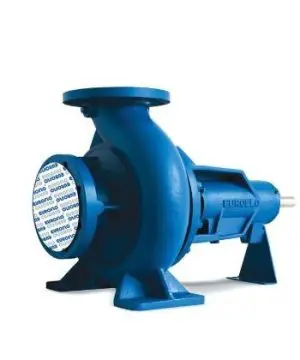
Euroflo



Author Bio
Rian

Team PT Winston technically driven member of PT Winston Indonesia with strong practical knowledge of pumps and fluid handling solutions. We work closely with customers to understand their operating requirements, recommend suitable pump solutions, and introduce products that can improve reliability, efficiency, and overall system performance. With a hands-on and solution-oriented approach, We help bridge technical requirements with practical product selection, ensuring customers receive the right pumping solution for their applications.
See all posts by Rian »