Source Image : Freepik
In industrial environments, heat is unavoidable. Production machines, compressors, boilers, and heat exchangers generate heat during their operational processes. If this heat is not properly managed, machine performance can decline, energy consumption may increase, and equipment damage may occur.
To maintain stable temperatures, many industries rely on a cooling water system. This system works by circulating water to absorb heat from machinery or production processes, then releasing that heat before the water is reused in the cooling cycle.
For this process to operate optimally, the system requires a stable and consistent water flow, which largely depends on the performance of the pump used.
How a Cooling Water System Works
In general, a cooling water system operates in a closed circulation cycle. The process typically works as follows:
1. Cold water is directed to machines or heat exchangers.
2. The water absorbs heat from the production process.
3. The heated water is returned to the cooling tower.
4. The heat is released into the air through the cooling process.
5. The cooled water is circulated back into the system.
This cycle continues continuously throughout the production process. Therefore, the system requires a pump capable of maintaining stable flow rate and water pressure.
The Role of Centrifugal Pumps in Cooling Water Systems
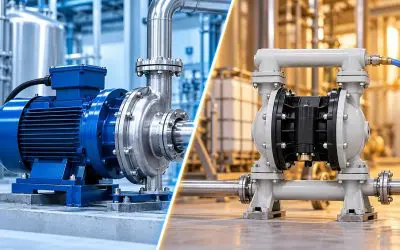
Most industrial cooling systems use centrifugal pumps as the main driver for water circulation. These pumps operate by utilizing centrifugal force generated by the impeller to move liquid continuously.
In cooling water systems, centrifugal pumps serve several key functions:
-
Circulating water from the cooling tower to machines or heat exchangers
-
Returning heated water to the cooling tower for cooling
-
Maintaining a stable water flow rate
-
Supporting continuous system operation
Due to their efficiency in transferring liquids such as water, centrifugal pumps are the most commonly used solution in industrial cooling systems.
The Importance of Stable Water Flow
The performance of a cooling system depends heavily on the balance between flow rate and water pressure.
If the flow rate is too low:
-
Cooling performance becomes inefficient
-
Machines risk overheating
-
Production efficiency decreases
On the other hand, if the flow rate is too high:
-
Energy consumption increases
-
Excessive pressure can occur in the system
-
Components may wear out more quickly
The right pump helps maintain the system at its optimal operating point, ensuring stable cooling performance while maintaining energy efficiency.
Recommended Centrifugal Pumps for Cooling Water Systems
Selecting the right pump is crucial to ensure that the cooling water system operates efficiently and reliably over the long term. Pumps with a reliable design, high efficiency, and continuous operation capability help maintain stable water circulation throughout the system.
For these requirements, centrifugal pumps from Euroflo are widely used in various industrial applications. This brand is known for its strong construction quality, stable performance, and design that supports cooling systems requiring consistent water circulation.
By choosing the right Euroflo centrifugal pump, cooling water systems can operate more efficiently, reliably, and sustainably to support industrial operations.
For further consultation, contact Winston Indonesia to find the most suitable pump solution for your cooling system needs.

Author Bio
Rian

Team PT Winston technically driven member of PT Winston Indonesia with strong practical knowledge of pumps and fluid handling solutions. We work closely with customers to understand their operating requirements, recommend suitable pump solutions, and introduce products that can improve reliability, efficiency, and overall system performance. With a hands-on and solution-oriented approach, We help bridge technical requirements with practical product selection, ensuring customers receive the right pumping solution for their applications.
See all posts by Rian »