In both industrial and commercial sectors, the need for high-quality engineered pumps is essential. One important concept in pumping systems is pump head, which plays a significant role in making fluid transfer easier and more efficient.
When selecting a pump, it is important to understand the required flow rate and head needed to move the intended fluid. To transfer a certain amount of liquid according to system requirements, energy per unit weight is required. Therefore, it is highly recommended to gain a deeper understanding of pumps, especially since many technical terms in the pumping industry may be unfamiliar to beginners.
Understanding Pump Head
The concept of head is one of the physical characteristics of a pump that is often misunderstood. It is closely related to pressure, but what exactly does it mean?
We will explain it clearly because pump head is one of the fundamental terms that everyone should understand. Pump head is closely associated with pressure. In simple terms, pump head is the maximum height a pump can achieve when pumping fluid against pressure or gravity.
Intuitively, if a pump can generate greater pressure, it will be capable of pumping fluid to a higher elevation. As a result, the pump will produce a higher head.
It is important to understand that the higher the fluid needs to be lifted, the greater the pump head required. This means the pump must have sufficient capability to move water into a vertical discharge pipe while overcoming the head created by the liquid in the suction tank.
Head can vary at different sections of the system, although energy losses will always occur in real applications. There are several types of head, including static discharge head and static suction head.
Static discharge head refers to the vertical height of the fluid measured from the centerline of the pump to the highest point where the fluid is discharged. Meanwhile, static suction head is the vertical distance caused by gravity from the fluid source down to the pump inlet.
Head measurement provides useful information regarding the difference in fluid levels between the suction tank and the vertical discharge pipe. This value is commonly known as the total head produced by the pump.
Total Pump Head
After understanding pump head, it is also important to understand how changes in the liquid level inside the suction tank affect the system. An increase in the liquid level within the suction tank will increase the head, while a decrease in the liquid level will reduce the head.
Most pump suppliers do not specify the exact head generated by the pump because they cannot predict the fluid level inside the suction tank during operation.
Instead, suppliers generally provide information regarding the total pump head. This refers to the height difference between the fluid level in the suction tank and the maximum water column that the pump can achieve. Total pump head does not depend on the liquid level inside the suction tank.
It is also important to understand the equation that applies to both positive suction head (where the fluid level is above the pump) and negative suction head (where the fluid level is below the pump). The equation is:
Total Head (Ht) = Discharge Head (Hd) – Suction Head (Hs)
Understanding total pump head is extremely useful when working with pumping systems because it helps determine system requirements and select the most suitable pump.
In addition, total head is an important factor in determining energy consumption. When performing calculations, it is essential to use the correct units to ensure accurate results. The most commonly used units involve relative density, also known as specific gravity, along with conversion constants.
Several formulas can also be used to convert pressure into appropriate measurement units. Another important factor is conducting rigorous pump testing with third-party accreditation upon request. This is highly beneficial for verifying pump performance.
Pump suppliers should ideally have advanced facilities capable of performing up-to-date standard pump performance testing. This ensures quality assurance and operational excellence.
Related Products from Winston Indonesia
Wilden
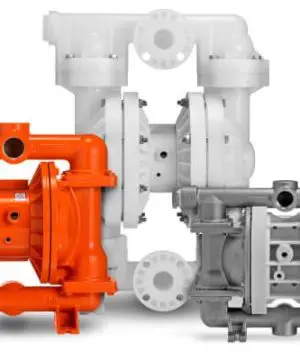


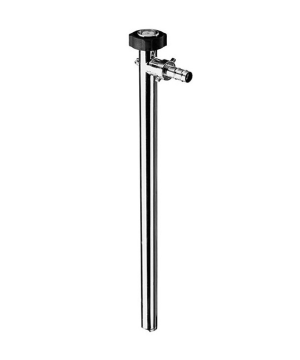
Flux Electric Drum Pump
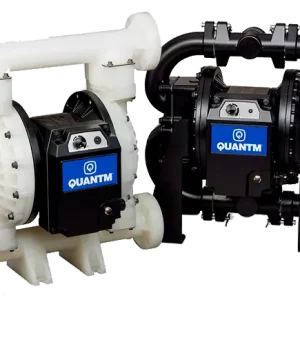
QUANTM – Electric Double Diaphragm Pump (EODD)
How to Determine the Right Pump Selection
To choose the right pump, you must consider both the total head and the flow rate, as these two parameters are closely related.
The maximum pump head, also known as shut-off head, occurs when the flow rate is zero. As the flow rate increases, friction within the system also increases as the liquid flows through the pipes from the suction tank to the pump and then to the discharge pipe.
This friction reduces the total head generated by the pump. In fact, as the flow increases and friction becomes greater, the total head decreases. The amount of head lost due to friction is known as friction head or friction loss.
The total pump head is the difference between the discharge head and suction head, plus the friction head. This total value will always be lower than the shut-off head.
A graph plotting head versus flow rate is called a pump performance curve. Every centrifugal pump has a performance curve that shows the relationship between head and flow rate. The required flow rate and total head will intersect at a specific operating point on the pump curve.
By comparing pump performance with its performance curve, you can determine whether the pump is suitable for your application.
Pump Head Capability
Pump head is commonly used when pumping water to higher elevations, such as storage tanks located on top of hills. The required pump head is typically measured in meters.
By understanding pump head capability, you can determine whether a pump is suitable for a particular application. Another reason head is commonly used is because many pumped fluids have viscosities similar to water, making head measurements applicable across various liquids.
This allows pressure to be used to determine pump characteristics. Although some pump suppliers use pressure ratings to characterize their products, most pumps are still classified based on the total head they produce.
The best pumps are capable of handling corrosive and abrasive substances because they are specially engineered to operate at higher capacities according to customer requirements. Integrated pumping solutions with various pumping capacities provide greater flexibility and durability.
Pump head refers to energy per unit weight, making it an important concept in piping systems. In industries such as marine, oil, and gas, pumps must be designed and manufactured using materials suitable for demanding applications.
Therefore, it is essential to choose a trusted pump supplier supported by experienced professionals. Visit the official website of Winston Indonesia today to find the ideal products for your industrial needs.