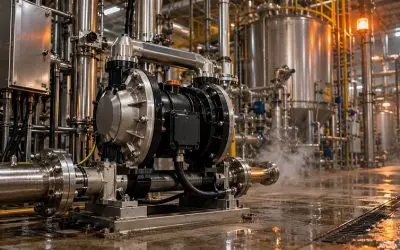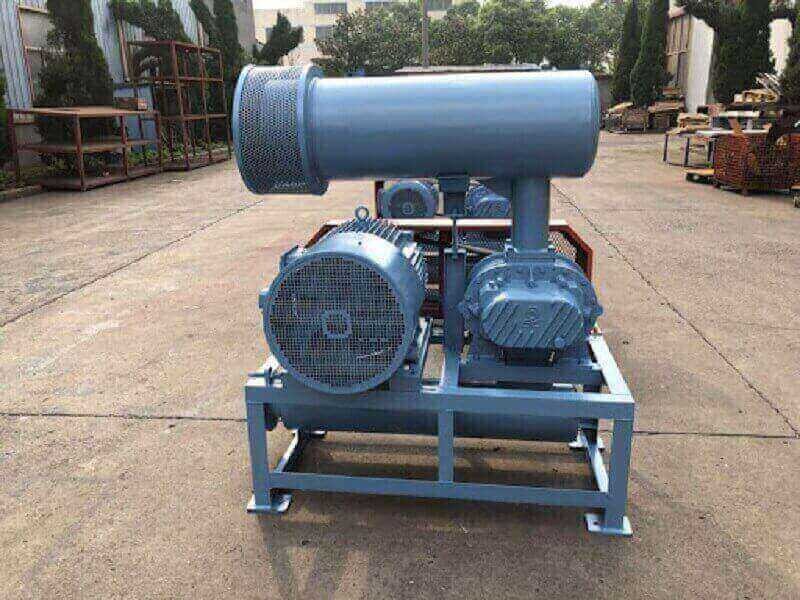
What is meant by a blower? For many people, the term “blower” may still sound unfamiliar. Therefore, this article will explain the definition of a blower in detail, including its meaning, types, functions, and how to use it. If you want a clearer and more detailed explanation, simply read through this article.
Definition of a Blower
A blower is a device or machine that functions to increase and enhance the pressure of air or gas flowing into a particular space, as well as for vacuuming air or gas. However, when used for special purposes, a blower is often referred to as an exhauster, which is commonly used for handling gas from coke ovens. Meanwhile, in the chemical industry, blowers play an important role in circulating gas or air during chemical processing stages and are often known as boosters or circulators.
A compressor also functions as a mechanical device used to compress fluids such as air or gas. In addition, a compressor can also be defined as a machine for compressing air and gas. Generally, compressors draw in atmospheric air mixed with carbon dioxide, nitrogen, water vapor, oil, and other substances. Compressors are used to operate pneumatic equipment such as drills, lifting devices, control instruments, spraying equipment, and pumps in industrial and mechanical engineering applications.
When the compressor’s working pressure is low, it can only be used for air ventilation and fans. Blowers are generally not water-cooled because cooling systems would increase operational costs. If the suction-side pressure is above atmospheric pressure, blowers are often used in chemical industries where high pressure is required to circulate gas through various processes. For non-cooled blowers, the pressure increase is based on adiabatic utilization. However, when cooling is applied, they are commonly used for isothermal process applications.
Related Products Taiko
Types of Blowers
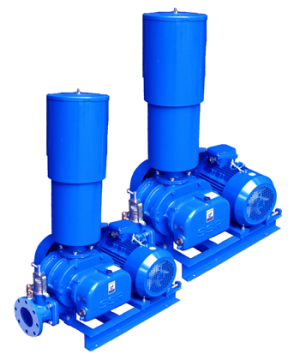
Blowers are commonly used in industrial environments and are often referred to as industrial blowers. Industrial blowers are made from durable materials such as plastic and metal. Some blowers are manufactured using a combination of both materials to create unique and efficient designs. Besides serving as industrial equipment, blowers are frequently used for circulating specific gases during chemical processing stages.
Blowers also function as vacuum devices, cooling systems, and ventilation tools. Over time, blowers have evolved into several types with different functions. There are many types of blowers used in industry based on their design and operation. Generally, blowers are divided into two main categories: centrifugal and axial blowers, each having different shapes and working principles. Below are several types of blowers along with their functions.
1. Straight Blades
Straight blade blowers have straight-shaped blades. Their primary function is to transfer heavy materials such as powder and dust particles.
2. Axial or Axial Fan
The second type is the axial fan, which produces airflow parallel to the shaft direction. In terms of mechanism, axial fans are simpler than centrifugal blowers. Axial fans are commonly used for CPU cooling systems and room ventilation.
3. Forward Curved
Forward curved blowers are designed to handle abrasive gas fluids and large capacities, which makes them unique compared to other blower types.
4. Centrifugal Blower
A centrifugal blower works using centrifugal force, as indicated by its name. Gas fluid enters through an inlet located at the center of rotation, while the air inside the blower exits through a high-pressure outlet.
5. Backward Curved Blades
Backward curved blade blowers have blades curved opposite to the direction of rotation. This rotational force creates strong pressure and high-speed airflow. The main function of this blower type is to extract fluids such as smoke and air.
How to Use a Blower
Using a blower is relatively simple and easy, allowing almost anyone to operate it. In soldering applications, the way to hold a blower is similar to holding a standard soldering tool. One of the main advantages of a blower is its ability to melt solder using the hot air it produces.
Standard blowers generally have two main settings. The first is the heat setting, which controls the temperature generated through the blower nozzle. The second is the airflow or air pressure setting, which controls the strength of the air output. These two settings work independently. The higher the temperature, the stronger the airflow can feel if the air pressure is also increased.
Below are several steps for using a blower:
- Plug the blower cable into a power outlet and press the power button to turn it on.
- After connecting it to electricity, adjust both the heat setting and the airflow pressure setting. Set the temperature to a moderate level, around 200°C. At lower airflow pressure levels, the heat may not be strongly felt at the soldering point.
- For digital blowers, adjust the temperature using the up and down buttons. For manual blowers, airflow pressure is adjusted by turning the control knob.
- Adjust the airflow pressure according to your needs. The standard setting is usually at levels 1, 2, or 3. Air heated to 200°C can produce noticeable heat. The use of the blower depends on the type of device being soldered, as heat and airflow settings must be matched to the equipment.
Functions of a Blower
A hot air soldering blower functions to install, shape, remove, and resolder components such as IC SMDs, BGAs, and other small electronic components. During heating, the blower is also used to repair IC pins that are not properly attached to the PCB and to fix damaged ICs.
The temperature and air pressure produced by the blower are very important because excessive heat or pressure may damage the PCB. Therefore, using a blower requires precision, patience, accuracy, and careful handling. The soldering tool should be held firmly and positioned vertically toward the IC component during operation.
Conclusion
Those are some explanations regarding blowers, including their definitions, types, functions, methods of use, and operational principles. For those looking to purchase a blower, you can visit Winston Engineering or directly access the Winston Indonesia website. The products offered are available at affordable prices with excellent quality.