
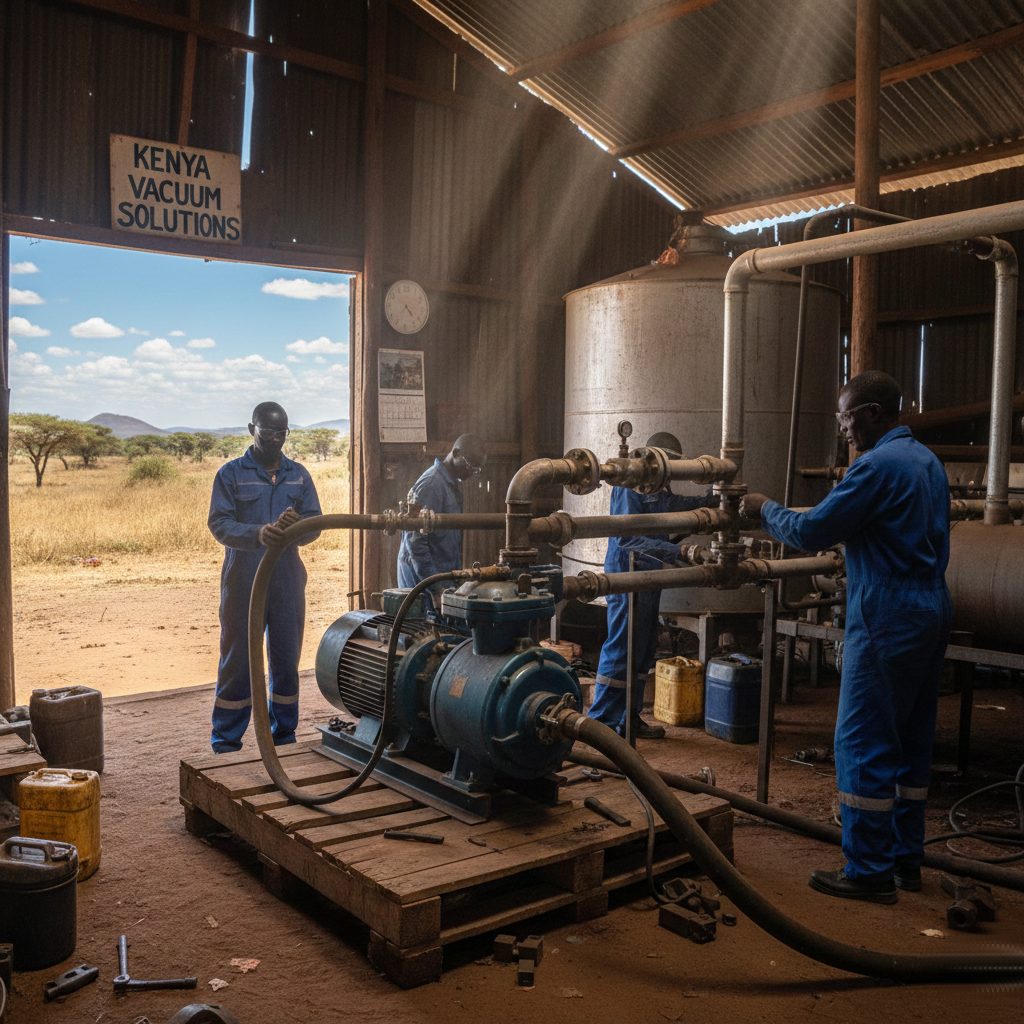
In Kenya, a vacuum pump is a “workhorse” for dairy farmers, AC technicians, and factory owners. However, our unique climate—ranging from the red dust of the Rift Valley to the humid heat of the Coast—can be a silent killer for your machinery.
If you don’t maintain your pump correctly, you face “short-cycling,” burnt motors, and expensive downtime. Here are 5 expert tips to keep your pump running for years.
1. The “Dust Defense”: Clean Your Intake Filters
Kenya is dusty, and dust is the #1 enemy of vacuum suction.
- The Problem: Fine dust particles enter the pump, mixing with the oil to create a “sludge” that acts like sandpaper on internal vanes.
- The Fix: Check your air intake filter weekly. If you are in a high-dust area like a construction site or a grain mill, blow it out with compressed air every few days. If the filter looks dark or “clogged,” replace it immediately.
2. Manage the Heat: Ventilation is Key
Whether you are in Mombasa’s heat or a stuffy workshop in Nairobi CBD, overheating will thin your oil and ruin your seals.
- The Rule: Never operate a vacuum pump in a closed box or a tight corner.
- The Fix: Ensure there is at least 30cm of clear space around the pump’s cooling fan. If the ambient temperature is very high, use a small external fan to help dissipate the heat.
3. Monitor Oil Quality (The “Chai” Test)
Vacuum pump oil should be clear, like water or light cooking oil.
- The Problem: In Kenya’s humidity, moisture can enter the pump and turn the oil “milky.”
- The Fix: Use the sight glass on the side of your pump. If the oil looks like “Chai” (milky/brown) or is very dark, change it immediately. For heavy-duty users, we recommend an oil change every 500 hours of operation.
4. Check for Leaks (The “Soap Bubble” Trick)
A small leak makes your pump work twice as hard, leading to a shorter lifespan.
- The Fix: Periodically apply a bit of soapy water to the hose connections while the pump is running. If you see bubbles growing, you have a leak. Tighten your clamps or replace worn-out rubber gaskets to save your motor from overworking.
5. Proper Storage After Use
Many pumps in Kenya fail because they are left sitting in damp or dusty sheds when not in use.
The Fix: Before storing, run the pump for 10 minutes with the inlet closed to purge any internal moisture. Always plug the inlet and outlet ports with plastic caps to keep insects and dust from crawling inside the precision machinery.
Winston Engineering
Stop worrying about pump failure and heat damage. Search Winston Engineering to see why top industries choose our liquid ring vacuum pumps and high-pressure systems for their most demanding tasks.