

Reliable water pressure and consistent flow are essential for commercial buildings, industrial facilities, water treatment systems, irrigation networks and other applications across Malaysia.
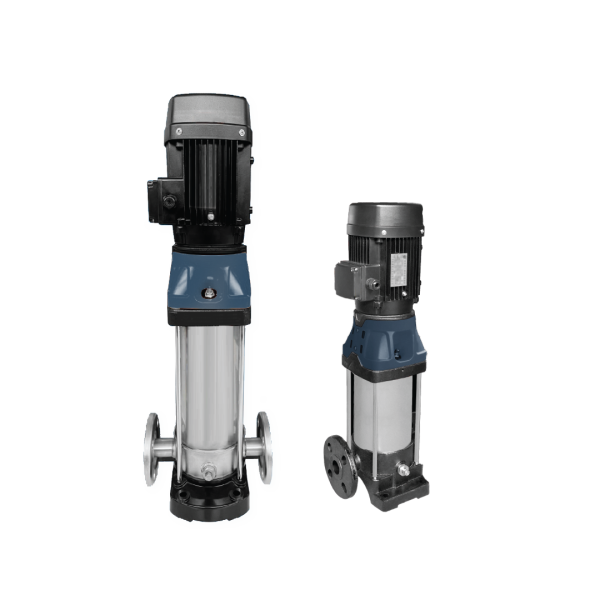
A vertical multistage pump is designed for applications where higher pressure or head is required while maintaining a relatively compact installation footprint. Its vertical configuration and multiple impeller stages allow pressure to be developed progressively as water passes through the unit.
For Malaysian projects, choosing the right equipment involves more than looking at flow rate and motor power. Total head, operating pressure, water quality, temperature, installation space, energy efficiency and maintenance requirements should all be considered before selecting a suitable solution.
What Is a Vertical Multistage Pump?
A vertical multistage pump is a centrifugal pumping unit with several impellers arranged vertically within the same assembly.
Each stage contributes additional pressure to the fluid. As water moves through the successive stages, the overall head increases, allowing the equipment to handle applications where a higher discharge pressure is required.
The vertical arrangement also helps minimise the floor area required for installation. This can be particularly useful in plant rooms, commercial buildings, booster stations and industrial facilities where available space is limited.
Winston Engineering provides vertical multistage and vertical in-line solutions for applications including water supply, irrigation, air-conditioning, firefighting and cooling towers.
How Does It Work?
The operating principle is based on centrifugal force.
Water enters the unit and is directed towards the first impeller. The rotating impeller increases the velocity of the fluid, which is then converted into pressure.
The fluid subsequently passes through the next stage, where additional pressure is generated. This process continues through the remaining stages until the required operating head is achieved.
In simple terms:
Multiple stages → progressive pressure generation → higher total head
The number of stages required depends on the actual system duty. It should therefore be determined according to the required flow and head rather than simply selecting the largest available configuration.
Why Use This Type of Vertical Configuration in Malaysia?
Malaysia’s commercial, industrial and infrastructure sectors have a wide range of applications where reliable water delivery is important.
A vertical configuration can be considered when the system requires higher pressure, continuous operation or a space-efficient installation.
1. Compact Installation
The vertical design can reduce the floor area required compared with certain horizontal arrangements.
This can be useful for:
- Commercial building plant rooms
- High-rise developments
- Water booster systems
- Industrial facilities
- HVAC installations
- Utility rooms
- Water treatment plants
Where plant-room space is limited, equipment footprint can be an important consideration during project planning.
2. High-Pressure Water Transfer
Multiple hydraulic stages allow the equipment to generate greater pressure progressively.
This makes the configuration suitable for applications involving higher head requirements, including water boosting, distribution and selected industrial transfer duties.
3. Consistent Water Delivery
A correctly selected unit can help maintain the pressure and flow required by a water distribution system.
Potential applications include:
- Building water supply
- Filtration systems
- Irrigation
- Water distribution
- Industrial utilities
Actual performance depends on correct sizing and system conditions.
4. Stainless Steel Construction
Depending on the selected series and configuration, stainless steel construction can provide useful corrosion resistance for clean-water applications.
Winston Engineering’s EMV/S/K range, for example, features stainless steel construction.
Material selection should always be based on the actual fluid, temperature and operating environment.
Common Applications
This type of equipment can be applied across various sectors in Malaysia.
Building Water Supply and Booster Systems
Commercial buildings, residential developments and high-rise facilities may require booster systems to maintain adequate pressure at different levels.
The required head needs to account for building height, pipe friction, fittings, valves and the desired pressure at the point of use.
Industrial Water Systems
Manufacturing facilities may require water for production processes, utilities, cooling and general plant operations.
The appropriate configuration depends on the required flow, pressure, fluid characteristics and operating schedule.
HVAC and Cooling Systems
Water circulation is an important part of many air-conditioning and cooling systems.
Vertical equipment can be considered where space, pressure and flow requirements make this arrangement suitable.
Irrigation
Agricultural and landscaping systems may require sufficient pressure across long piping networks and different elevation levels.
A properly selected unit can support reliable water distribution throughout the system.
Water Treatment
Water treatment facilities can involve filtration, distribution and various water-transfer processes.
Equipment selection should take into account water characteristics, required flow, operating pressure and the specific treatment process.
Vertical Multistage Pump vs Single-Stage Pump
The primary difference is the number of hydraulic stages used to develop pressure.
| Factor | Vertical Multistage | Single-Stage |
|---|---|---|
| Number of impellers | Multiple | One |
| High-head applications | Generally suitable | Depends on design |
| Installation footprint | Compact vertical arrangement | Varies by configuration |
| Pressure generation | Developed progressively | Generated by one impeller |
| Typical applications | Boosting, water supply, high-head transfer | General transfer and circulation |
| Selection basis | Flow, head and required stages | Flow and head |
The appropriate configuration depends on the actual duty requirements. Neither arrangement should be selected solely based on motor size or pipe diameter.
How to Select the Right Equipment
Selecting a unit based only on pipe size or horsepower can result in poor system performance.
Several parameters should be evaluated before making a final selection.
1. Flow Rate
Flow rate describes how much liquid needs to be moved within a specific period.
Common units include:
- m³/h
- L/min
- L/s
The required capacity should be based on actual system demand rather than simply selecting the largest available unit.
2. Total Head
Head represents the energy required to move water through the system.
It may need to account for:
- Static elevation
- Pipe friction
- Valves and fittings
- Equipment pressure losses
- Required discharge pressure
Insufficient head may prevent the system from achieving the required pressure, while excessive head can result in unnecessary energy consumption and operating issues.
3. Fluid Characteristics
The pumped liquid must be considered during equipment selection.
Important factors include:
- Fluid temperature
- Clean or contaminated water
- Chemical properties
- Corrosiveness
- Presence of solids
- Viscosity
Materials and mechanical seal configurations should be compatible with the actual operating conditions.
4. Motor Requirements
Motor selection affects both performance and operating costs.
Depending on the selected series, different IEC motor efficiency classes and NEMA frame options may be available.
For equipment operating for extended periods, motor efficiency can have a significant impact on lifecycle energy consumption.
5. Installation Conditions
The physical installation should also be evaluated.
Consider:
- Available floor space
- Suction and discharge arrangement
- Electrical supply
- Ambient temperature
- Accessibility for maintenance
- Foundation and mounting requirements
A unit that meets the hydraulic requirements but cannot be properly installed or maintained may create unnecessary problems during operation.
Why Proper Sizing Matters
Oversizing and undersizing are common concerns when selecting pumping equipment.
An undersized unit may fail to deliver the required flow or pressure.
An oversized unit may operate away from its intended duty point, potentially increasing energy consumption and mechanical stress.
For this reason, selection should begin with the system duty point rather than simply choosing equipment based on motor horsepower.
A pump specialist can evaluate the required flow, head, operating conditions and system configuration before recommending an appropriate solution.
Maintenance Considerations
Regular inspection and maintenance can help maintain performance and reduce unexpected downtime.
Depending on the application, maintenance activities may include:
- Checking for abnormal vibration
- Inspecting mechanical seals
- Monitoring bearings
- Checking motor condition
- Inspecting pipe connections
- Monitoring operating pressure and flow
- Checking for unusual noise
- Reviewing overall performance
Certain vertical designs incorporate cartridge mechanical seals to simplify maintenance.
For example, Winston Engineering’s EMV range uses cartridge mechanical seals on EMV32 and above, allowing seal replacement without removing the motor, adapter or connected piping.
Maintenance requirements will vary according to the model, operating conditions and application.
The Importance of Pump Testing
Pump performance should not be evaluated solely from catalogue specifications.
Testing can help verify whether equipment performs according to the required duty before delivery or installation at site.
Winston Engineering operates an in-house pump testing facility in Malaysia. Its test bay can generate performance data and performance curves, with centrifugal, submersible and split-case pumps tested according to ISO 9906:2012 Grade 2.
Testing can be particularly valuable for critical projects where equipment performance and reliability are important considerations.
Choosing a Pump Specialist in Malaysia
For Malaysian projects, purchasing pumping equipment should involve more than selecting a product from a catalogue.
A complete solution may involve:
Selection → Engineering Assessment → System Integration → Testing → Installation → Commissioning → Maintenance
Working with an experienced pump specialist can help ensure that the selected equipment matches the actual requirements of the system.
Winston Engineering has more than four decades of pump engineering experience and provides solutions for industries including water treatment, agriculture and irrigation, HVAC, oil and gas, and power generation.
The company also provides engineering integration, pump testing and technical support in Malaysia.
Vertical Multistage Pump for Malaysian Applications
From high-rise buildings and industrial facilities to water treatment and irrigation systems, different applications require different hydraulic conditions.
Before selecting equipment, consider:
- Required flow rate
- Total head
- Operating pressure
- Fluid characteristics
- Pump material
- Motor efficiency
- Installation space
- Maintenance requirements
- Expected operating hours
- System integration requirements
A properly selected system can help deliver the required hydraulic performance while supporting reliable and efficient operation.
Frequently Asked Questions
What is a vertical multistage pump?
It is a centrifugal pumping unit containing several impellers arranged vertically. Each hydraulic stage contributes to the overall pressure generated by the equipment.
What is this type of equipment used for?
Common applications include water boosting, building water supply, irrigation, HVAC, cooling systems, water treatment and selected industrial water-transfer applications.
Can it be used for high-rise buildings?
Yes, this configuration can be suitable for high-rise water supply and booster applications where sufficient head is required to overcome elevation and system losses.
Final selection should be based on the building’s actual flow and pressure requirements.
Is this type of system energy efficient?
Overall efficiency depends on factors such as pump selection, motor efficiency, duty point and system design.
Operating close to the intended duty point is important for efficient performance.
How do I select the right model?
Start by determining the required flow rate and total head. Then evaluate fluid characteristics, temperature, materials, motor requirements, installation conditions and maintenance requirements.
A pump specialist can assist in evaluating these parameters before final selection.
Talk to a Pump Specialist in Malaysia
The right pumping solution starts with understanding the application.
Whether you are developing a commercial building, industrial facility, water treatment plant, irrigation system or another water-transfer application, Winston Engineering can assist with equipment selection, engineering requirements, testing and integrated pumping solutions.
With more than 40 years of pump engineering experience and in-house testing capabilities in Malaysia, Winston Engineering supports customers from initial selection through to complete pumping solutions.
Looking for a vertical multistage pump in Malaysia? Contact Winston Engineering to discuss your required flow, head and application.

Author Bio
Irfan

Team Winston Engineering Malaysia brings together pump specialists, engineers, and industry professionals with extensive experience in pumping and fluid management solutions. Serving customers across Malaysia, the team provides practical technical advice, reliable product recommendations, and responsive support for applications in water treatment, manufacturing, building services, oil and gas, power generation, and general industry. Backed by the regional expertise of Winston Engineering Group, the Malaysia team combines strong local market knowledge with proven engineering capabilities to help customers achieve reliable, efficient, and cost-effective pumping solutions.
See all posts by Irfan »