In today’s modern industrial landscape ranging from mining and power generation to heavy manufacturing—operational efficiency does not rely solely on large, visible machinery. It also depends on critical hidden components that ensure continuous, uninterrupted processes.
One such essential component is the slurry pump a robust machine that serves as the “driving force” behind the transportation of solid-liquid mixtures that conventional pumps simply cannot handle.
Although slurry pumps may not always stand out, without them many industries would suffer from reduced productivity, increased downtime, and escalating maintenance costs. This article provides a comprehensive overview of slurry pumps, covering their function, working principles, types, and their significant contribution to maintaining efficiency in heavy industries.
What Is a Slurry Pump?
Simply put, a slurry pump is a type of pump specifically designed to transport mixtures of liquids and solids (slurry), such as mud, sand, mining tailings, coal ash, or other abrasive materials.
Unlike standard water pumps, slurry pumps feature much stronger internal structures and wear-resistant materials, as the transported media is often dense, heavy, and highly abrasive.
Slurry pumps are widely used across multiple industries:
-
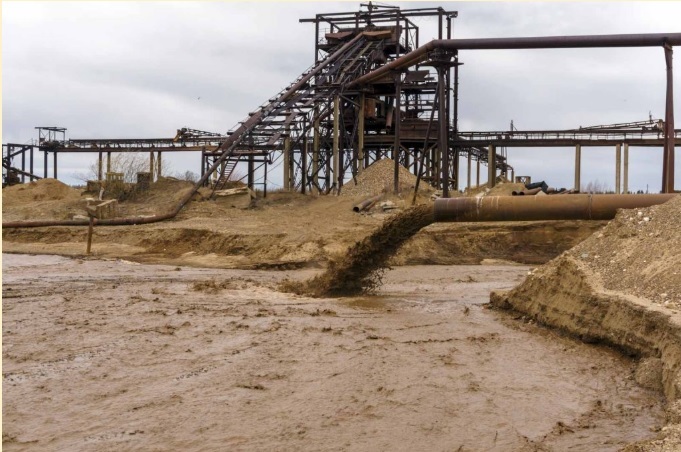
Mining, for transporting extracted materials and tailings
-
Power generation, for handling coal combustion ash
-
Chemical and manufacturing industries, for transferring viscous fluids, chemical slurries, or ceramic sludge
Thanks to their ability to continuously move solid-liquid mixtures, slurry pumps play a vital role in maintaining smooth and efficient heavy industrial production chains.
Why Are Slurry Pumps Critical in Heavy Industry?
Almost every industrial process generates liquid materials mixed with solids that must be transported or reprocessed. In this context, material handling efficiency becomes a key factor in overall production performance.
Slurry pumps provide a solution for transporting high-viscosity fluids with high solid content without causing excessive wear to pump components.
Key reasons why slurry pumps act as the “engine of efficiency” in heavy industry include:
Exceptional Durability
Slurry pumps are constructed using abrasion-resistant materials such as high-chrome steel or industrial rubber, enabling them to withstand continuous friction from hard particles without rapid wear.
Ability to Handle Solid Materials
The impeller and volute casing design ensures smooth flow even when transporting large, heavy solids.
Energy and Operational Efficiency
Modern slurry pumps are engineered with high hydraulic efficiency, reducing energy consumption while maintaining stable flow performance.
Resistance to Corrosion and High Pressure
Seal and bearing systems are designed to withstand extreme pressure and the corrosive nature of industrial fluids.
Reduced Production Downtime
Due to their high durability, slurry pumps can operate for extended periods without frequent replacement or servicing—significantly lowering operational costs.
How Slurry Pumps Work
The basic working principle of a slurry pump is similar to that of a centrifugal pump, but with reinforced impeller and casing designs. The process includes:
Suction Stage
The solid-liquid mixture is drawn into the pump through the suction inlet toward the impeller.
Energy Conversion Stage
The impeller rotates at high speed, imparting kinetic energy to the slurry particles.
Discharge Stage
The kinetic energy is converted into pressure energy within the casing, pushing the slurry into the discharge piping system.
Continuous Cycle
This process repeats continuously to maintain a stable and consistent material flow.
With this design, slurry pumps can transport high-density materials and large particles without compromising flow performance or pump durability.
Main Components of a Slurry Pump
To withstand extreme conditions in heavy industry, each slurry pump component is precisely engineered:
-
Impeller – The core power component that imparts kinetic energy to the slurry, typically made from high-chrome steel or abrasion-resistant materials.
-
Volute Casing – Encases the impeller and converts kinetic energy into pressure.
-
Shaft & Bearings – Support the impeller’s rotation and handle heavy loads from solid materials.
-
Seal System – Prevents abrasive fluids from leaking and damaging internal components.
-
Wear Liners – Protect the casing from continuous abrasion by hard particles.
This integrated design enables slurry pumps to perform optimally in extreme environments from open-pit mines to chemical processing plants.
Types of Slurry Pumps and Their Applications
Slurry pumps are available in various types based on operating mechanisms and installation configurations, each offering distinct advantages:
1. Centrifugal Slurry Pumps
The most common type in heavy industry, using centrifugal force generated by the impeller to move slurry.
Applications: mining, coal processing, cement plants, and metallurgy.
2. Positive Displacement Slurry Pumps
Operate based on fixed-volume displacement, making them suitable for low flow rates at high pressure.
Applications: chemical plants, pulp & paper industry, and solid waste processing.
3. Vertical Slurry Pumps
The hydraulic section is submerged in the slurry, while the drive motor remains above the fluid surface.
Applications: confined spaces or areas prone to flooding by industrial liquids.
4. Submersible Slurry Pumps
Installed directly at the bottom of tanks or ponds, with the motor and pump integrated into a waterproof unit.
Applications: open-pit mining, lagoons, and tailings management.
Related Products
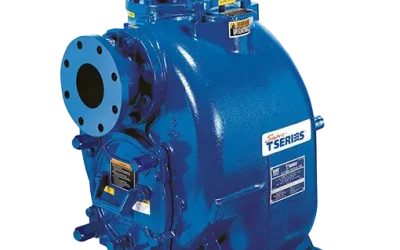
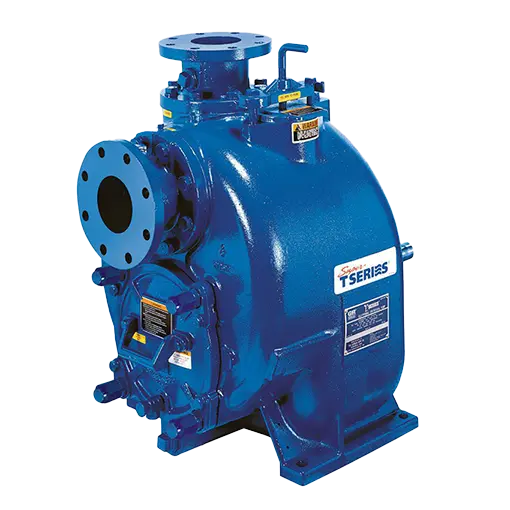
As an example of a product capable of meeting diverse slurry applications—ranging from mining and industrial waste to heavy fluid processing the Gorman-Rupp Super T Series is an excellent solution. These pumps are designed to handle fluids with high solid content and are equipped with self-priming technology that simplifies maintenance and installation.
Slurry Pump Efficiency: A Direct Impact on Productivity
In heavy industries, efficiency means achieving maximum output with minimal energy consumption and maintenance. Slurry pumps play a crucial role in achieving this by:
-
Reducing downtime through wear-resistant design and easy maintenance
-
Optimizing material transfer to ensure uninterrupted industrial processes
-
Lowering energy consumption through efficient hydraulic performance
-
Extending system lifespan by preventing premature failure caused by corrosion or cavitation
The result is a robust, economical, and reliable material transport system—essential for modern heavy industry efficiency.
Conclusion
Slurry pumps may not be the most visible machines in industrial facilities, but their role is undeniably critical.
They serve as the link between production processes and material transportation systems, ensuring smooth flow of solid-liquid mixtures without disruption. Their strong, abrasion-resistant, and efficient design makes them the backbone of heavy industry productivity—from coal mining to mineral processing plants.
Slurry pumps are not merely fluid transfer devices; they are pillars of efficiency and reliability in modern industry.
Winston Engineering Indonesia
As a leader in industrial pump solutions, Winston Engineering Indonesia provides a wide range of heavy-duty slurry pumps designed to handle the most abrasive materials and extreme operating conditions.
With more than three decades of experience in fluid engineering, Winston Indonesia delivers pumps featuring high-efficiency technology, industrial-grade abrasion-resistant materials, and expert technical support from experienced professionals.
From mining, energy, and chemical industries to wastewater treatment, Winston Engineering offers slurry pump solutions that ensure industrial processes remain stable, efficient, and long-lasting.
With its robust construction and efficient design, the Gorman-Rupp Super T Series delivers reliable performance in demanding work environments while minimizing downtime. To learn more about its specifications and advantages.