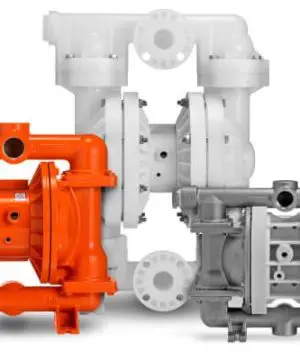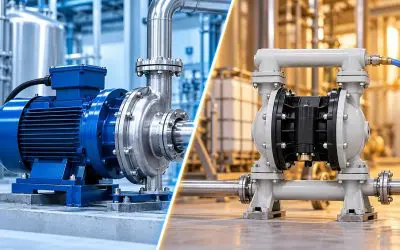
A diaphragm pump is a type of positive displacement pump that uses the reciprocating motion of a flexible diaphragm to transfer fluids. It is commonly equipped with one-way valves to control the flow of fluids and is also known as a membrane pump.
One of the main components of a diaphragm pump is its flexible membrane, which functions as the positive displacement element. The diaphragm can move back and forth and is typically connected to a plunger or other driving mechanism that transfers power to the diaphragm.
What Is a Diaphragm Pump?
A diaphragm pump is a type of positive displacement pump that uses the movement of an elastic diaphragm to transfer liquids. The contraction and expansion of the diaphragm create fluid flow. Basically, the fluid is pushed out of one side of the diaphragm when it contracts and drawn back into the pump when the diaphragm expands.
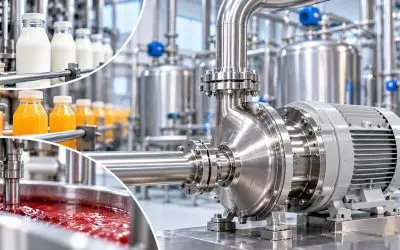
One of the main advantages of a diaphragm pump is its ability to transfer a wide variety of fluids, including hazardous liquids and fluids with different levels of viscosity. Therefore, diaphragm pumps are widely used across various industries and technical applications where reliable and accurate fluid transfer is essential.
How Does a Diaphragm Pump Work?
The working principle of a water diaphragm pump is similar to that of the human heart or a piston pump. It operates through a reciprocating motion, in which the diaphragm moves backward to create suction that draws water into the pump.
During this stage, the inlet valve opens, allowing water to be drawn into the pump chamber. Meanwhile, the outlet valve remains closed to prevent the water from flowing back through the discharge line.
When the diaphragm moves forward, it creates pressure that pushes the water out. The outlet valve then opens, allowing the water to flow from the pump chamber through the discharge line. At the same time, the inlet valve closes to prevent the water from flowing back toward the water source.
The main component of a diaphragm pump is an elastic, water-resistant membrane, which is typically made of rubber or another flexible material. This membrane is connected to components such as a plunger or drive mechanism, which generates the force required to pump the fluid. As a positive displacement pump, the diaphragm moves back and forth to transfer the fluid.
Read also: Types of Centrifugal Pump Impellers You Need to Know
Types of Diaphragm Pumps
After understanding how a diaphragm pump works, it is also important to understand that this type of pump is available in several variations. Diaphragm pumps are designed to meet a wide range of industrial requirements. Each type has specific characteristics that make it more suitable for certain applications.
Contact Us for More Information
Here are some of the main types of diaphragm pumps:
- Pneumatic Diaphragm Pump: This type uses compressed air to move the diaphragm and transfer fluids. Pneumatic diaphragm pumps are commonly used in applications that require high reliability and resistance to hazardous chemicals.
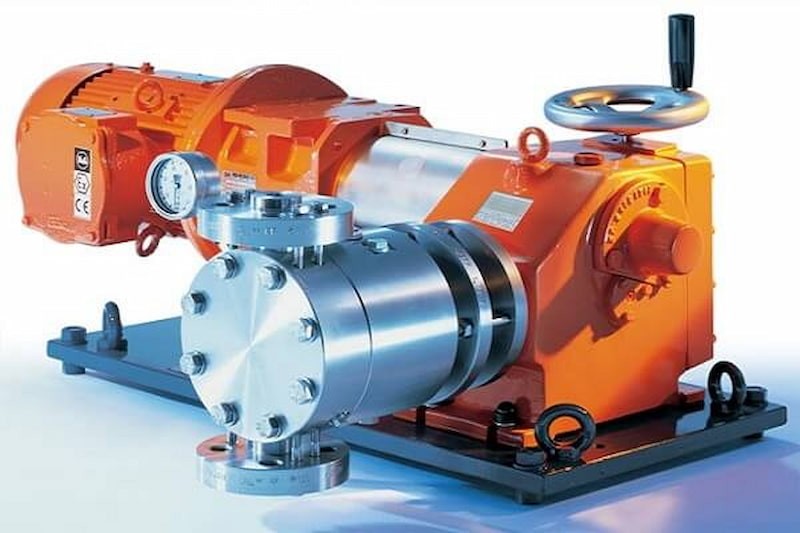
- Hydraulic Diaphragm Pump: A hydraulic diaphragm pump uses hydraulic pressure to move the diaphragm. It is ideal for applications that require high pressure, such as demanding industrial and hydraulic systems.
- Electric Diaphragm Pump: This type uses an electric motor to drive the diaphragm. Electric diaphragm pumps are often used in applications that require accurate dosing and controlled or programmable fluid transfer.
- Solenoid Diaphragm Pump: A solenoid diaphragm pump is a relatively small type of pump that uses a solenoid, or electromagnetic mechanism, to move the diaphragm. It is suitable for applications that require small and precise amounts of fluid to be dispensed.
- AODD (Air-Operated Double Diaphragm) Pump: An AODD pump is a type of pneumatic diaphragm pump that uses two diaphragms. These pumps are widely used for fluid transfer applications and are known for their reliability and versatility.
Read also: Considerations Before Repairing or Replacing an Industrial Pump
Each type of diaphragm pump has its own advantages and limitations and is suitable for different applications. Choosing the right pump depends on several factors, including the characteristics of the fluid being transferred, the required pressure, flow rate, and the specific requirements of the industrial application.
If you are looking for a reliable solution for your pumping needs, Winston Indonesia can help. With experience in providing industrial pumping solutions, Winston Indonesia is committed to assisting customers in finding the right pump for their specific applications.