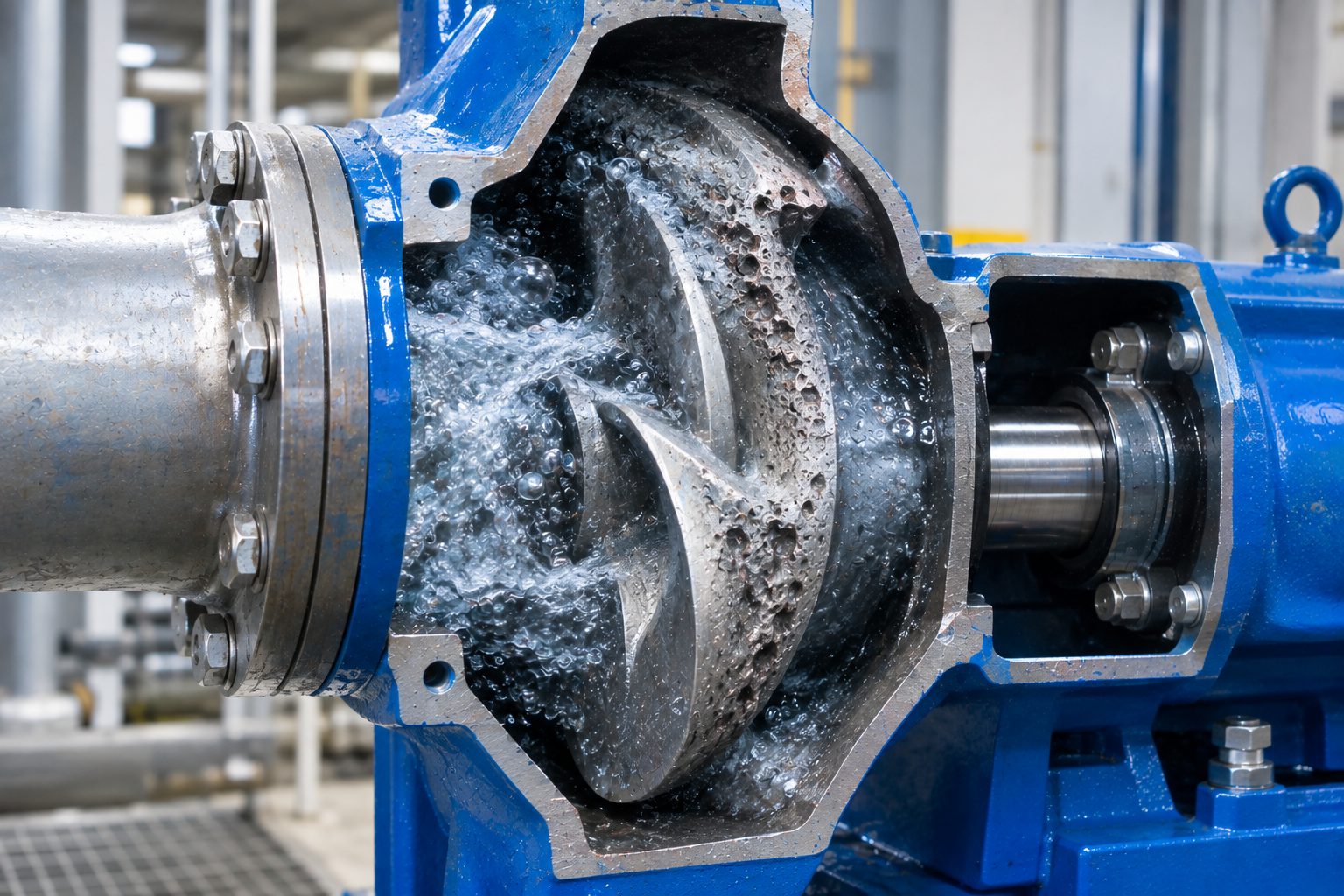
Pump cavitation is a common issue in centrifugal pumping systems. It occurs when the pressure of the liquid falls below its vapour pressure, causing vapour bubbles to form and collapse inside the pump. If left unresolved, pump cavitation can lead to vibration, reduced performance and damage to the impeller.
Understanding the symptoms and causes can help operators identify the problem early and take corrective action.
Common Pump Cavitation Symptoms
Several signs may indicate cavitation in a pump:
1. Excessive Vibration
Cavitation can create irregular forces around the impeller, resulting in increased vibration during operation. A sudden change in vibration should be investigated.
2. Reduced Flow or Pressure
A cavitating pump may fail to deliver its expected flow or pressure. If pump performance has decreased without a major system change, the suction conditions should be checked.
3. Unstable Operation
Fluctuating flow, pressure or pump performance can indicate unstable hydraulic conditions and should not be ignored.
4. Impeller Pitting
Long-term cavitation can cause pitting and erosion on the impeller surface. If visible damage is found during maintenance, cavitation should be considered as a possible cause.
What Causes Cavitation in a Pump?
Cavitation usually occurs when there is insufficient pressure at the pump suction. Common causes include:
- Insufficient NPSH available
- Excessive suction lift
- Blocked strainers or filters
- Undersized suction piping
- Partially closed suction valves
- Excessive flow rate
- High liquid temperature
- Incorrect pump selection
Restrictions in the suction line increase pressure losses and can reduce the pressure available at the pump inlet.
Understanding NPSH
Net Positive Suction Head (NPSH) is an important factor when investigating cavitation in pump systems.
NPSHA is the NPSH available from the system, while NPSHR is the NPSH required by the pump.
The system must provide sufficient NPSHA for the pump’s operating condition. When available suction pressure is too low, the risk of vapour formation and cavitation increases.
How to Troubleshoot Pump Cavitation
If cavitation is suspected, check the entire pumping system rather than immediately replacing pump components.
1. Check the suction side
Inspect suction valves, strainers, filters and piping for restrictions or blockages.
2. Check liquid level and temperature
Low liquid levels or higher-than-expected temperatures can reduce the available pressure margin.
3. Check the operating point
Compare the actual flow and head with the pump performance curve. Operating outside the recommended range can contribute to unstable conditions.
4. Check NPSH
Compare the system’s NPSHA with the pump’s NPSHR under actual operating conditions.
5. Inspect the pump
If the problem continues, inspect the impeller and other components for signs of erosion or damage.
How to Prevent Pump Cavitation
Proper pump selection and system design are important for preventing cavitation. Ensure suitable suction piping, maintain clean strainers, provide adequate suction pressure and operate the pump within its recommended range.
Regular monitoring of flow, pressure and vibration can also help identify problems before serious damage occurs.
Frequently Asked Questions (FAQs)
Q1. What is cavitation in a pump?
Cavitation is the rapid formation and subsequent collapse of vapor bubbles (or cavities) in the fluid, usually occurring near the impeller eye where the local pressure drops below the fluid’s vapor pressure. The collapse of these bubbles generates destructive shockwaves.
Q2. What are the main symptoms or signs of cavitation?
The main signs of cavitation are a distinct loud noise that sounds like pumping gravel or marbles, an increase in vibration, a drop in the pump’s head and efficiency, and eventual physical damage (pitting or erosion) to the impeller and casing.
Q3. What is the primary cause of cavitation?
The primary cause of cavitation is insufficient Net Positive Suction Head Available (NPSHA). This means the pressure in the pump’s suction line is too low, often due to high fluid temperature, excessive suction lift, or blockages in the suction piping.
Q4. What is the relationship between fluid temperature and cavitation?
As the fluid temperature increases, its vapor pressure also increases. When the vapor pressure gets closer to the pressure at the impeller eye, the fluid is more likely to flash into vapor, making the pump significantly more susceptible to cavitation.
Q5. What are three simple ways to prevent or reduce cavitation?
Three simple ways to prevent or reduce cavitation are: lowering the fluid temperature (if possible), reducing the flow rate through the pump (throttling the discharge valve), or raising the level of the liquid source to decrease the suction lift.

Author Bio
Andrew

Andrew is a seasoned marketing professional with over 14 years of experience at Winston Engineering, where he has grown from Marketing Executive to Marketing Manager. With a deep understanding of the industrial and engineering sector, he specialises in brand development, digital transformation, and content strategy. Andrew's expertise spans social media marketing, web content, advertising, and corporate events, making him a key voice in communicating Winston Engineering's solutions to audiences across the region.
See all posts by Andrew »